CEC Protest: SC Issues Key Directions on Detentions, Movement, Metro Services
Supreme Court directs Delhi authorities to lift blanket curbs on metro, rail, and movement during protests.
advertisement
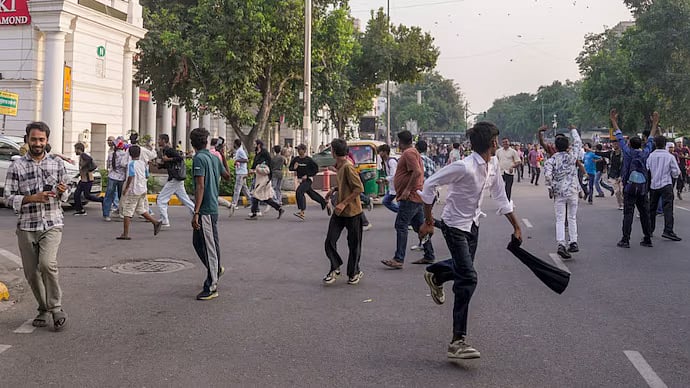
The Supreme Court of India held a special Sunday hearing on 11 October 2026 to address restrictions imposed in Delhi during protests against Chief Election Commissioner Gyanesh Kumar. The Court directed that metro and rail services run normally and that authorities not illegally detain individuals participating in peaceful gatherings. Authorities were instructed to review and relax barricades and ensure free movement of people and traffic, subject only to necessary regulations for public order.
According to Financial Express, the Supreme Court’s intervention followed widespread detentions and extensive security measures during the Cockroach Janta Party (CJP) protests. The Court’s directions led to the reopening of all Delhi Metro stations and the restoration of interchange facilities, with the Delhi Metro Rail Corporation confirming that commuters could access stations without restrictions.
As reported by Siasat Daily, the Supreme Court bench, comprising Justices Joymalya Bagchi and V Mohana, agreed to hear all parties on a contempt plea alleging violation of its earlier order against a complete shutdown of metro and train services. The plea named senior officials, including the Union Home Secretary and Delhi Police Commissioner, as respondents, and referenced the closure of 57 metro stations and train cancellations.
As highlighted by Hindustan Times, the Supreme Court clarified that while authorities may regulate metro and rail services to maintain public order, outright prohibition is not permissible. The Court also stated that barricades and traffic restrictions must be reviewed immediately, and that free movement should be permitted except where specific law and order concerns exist.
“Metro and rail facilities shall function normally, unless regulations are required to be imposed, keeping in mind disturbance to public order as envisaged under Article 19(2) of the Constitution,” the Court stated.
Coverage revealed that, despite some relaxation, Delhi Police maintained that groups of five or more in the New Delhi area would be detained. While traffic flows eased on certain roads, key routes to Parliament Street remained sealed, and only individuals with valid identification were allowed entry. Buses for detaining protesters were still present, though in reduced numbers compared to the previous day.
Stringent traffic restrictions continued across central Delhi as detailed by advisories affecting major intersections and thoroughfares. The Delhi Traffic Police stated that diversions would be regulated or relaxed based on real-time assessments, and commuters were advised to avoid non-essential travel and allow extra time for journeys through affected areas.
Protesters and opposition leaders challenged the detentions and curbs in the Supreme Court according to legal filings. The Court was informed that, despite its previous order, 57 metro stations remained closed and several trains were cancelled, causing significant disruption. The bench reiterated that regulation, not prohibition, was the appropriate standard, and directed authorities to publish traffic advisories widely.
On the day of the protests, over 41,000 security personnel were deployed and approximately 7,000 people were detained as morning updates indicated. Detentions included political leaders, students, and activists, with stadiums and community centres used as temporary holding facilities. Despite the clampdown, sporadic protests continued in various parts of the city.
Authorities were instructed to file compliance reports within four days as proceedings concluded. The Supreme Court emphasised that security concerns could justify regulation but not a blanket halt of essential public services, and that all measures must be proportionate and transparent.
Note: This article is produced using AI-assisted tools and is based on publicly available information. It has been reviewed by The Quint's editorial team before publishing.