Supreme Court To Hear Case on Aravalli Hills' Definition Today Amid Protests
Supreme Court to hear Aravalli Hills case today after protests over new definition and mining ban.
advertisement
The Supreme Court of India is scheduled to hear the Aravalli Hills matter today, following widespread protests over the court-approved definition of the hills and a ban on new mining leases.
The case, titled ‘In Re: Definition of Aravalli Hills and Ranges and Ancillary Issues’, will be heard by a three-judge vacation bench led by Chief Justice of India Surya Kant, with Justices JK Maheshwari and Augustine George Masih. The hearing comes after the court took suo motu cognisance of the issue, which has significant environmental and legal implications.
According to Hindustan Times, the Supreme Court had previously accepted a uniform definition of the Aravalli hills and ranges on 20 November 2025, which led to protests across several states. The court’s order banned the grant of fresh mining leases in the Aravalli areas of Delhi, Haryana, Rajasthan, and Gujarat until expert reports are submitted.
The definition, based on recommendations from the Ministry of Environment, Forest and Climate Change (MoEF&CC), classifies an ‘Aravalli Hill’ as any landform in designated districts with an elevation of 100 metres or more above local relief.
The report highlighted that the court also defined an ‘Aravalli Range’ as a collection of two or more such hills within 500 metres of each other.
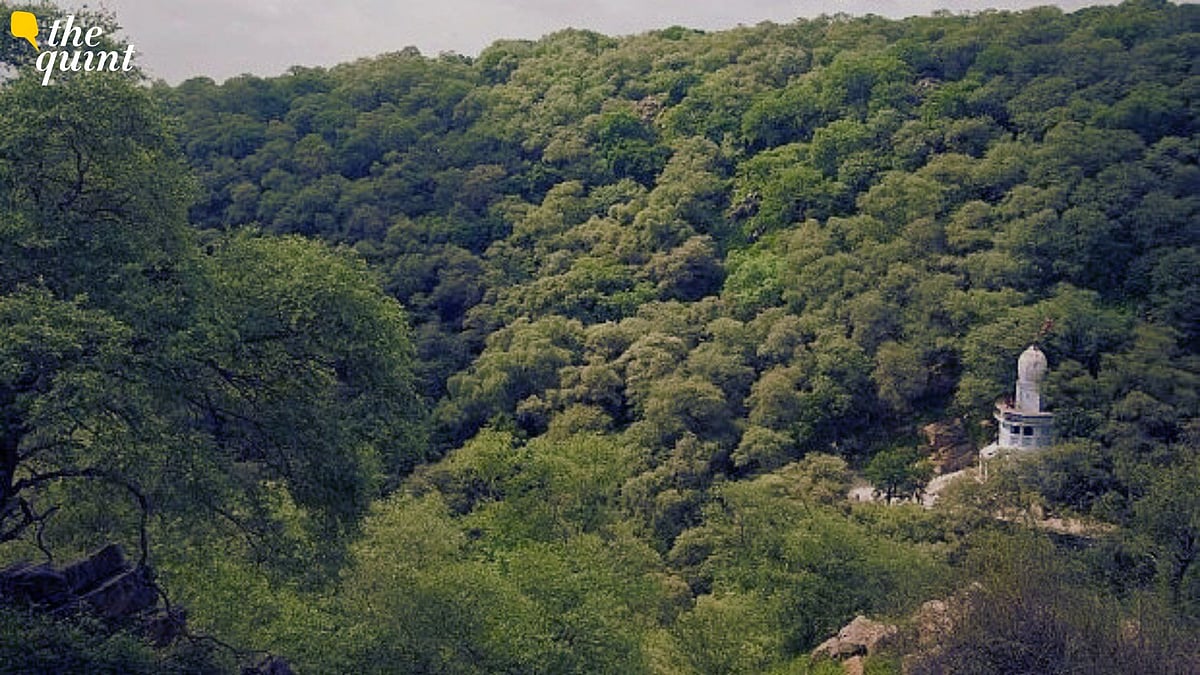
The bench directed that no new mining leases be granted until a Management Plan for Sustainable Mining is finalised by the MoEF&CC, with existing mines allowed to operate only in strict compliance with committee recommendations. The Aravallis were described as a “green barrier” against desertification and biodiversity loss.
Protests erupted after the new definition was implemented, with environmental activists and opposition members expressing concern that mining in areas with hills below 100 metres would still be permitted. Large groups of students, lawyers, and social activists held demonstrations in Gurugram and parts of Rajasthan, carrying banners such as “Save Aravalli, Save the Future” and “No Aravalli, No Life.” Protesters argued that the decision could harm the region’s ecological balance.
“We believe this decision could be detrimental to its ecological balance,” a protester was quoted as sayingby the Hindustan Times, reflecting the concerns of many environmental groups.
The Supreme Court’s 29-page judgment was delivered in a suo motu matter linked to the long-running TN Godavarman Thirumulpad environmental litigation. The court accepted a ban on mining in core or inviolate areas, while allowing limited exceptions as outlined by the expert committee.
The mapping of the Aravalli hills has already begun as per the new definition.
The Supreme Court’s intervention followed recommendations from the MoEF&CC committee, which aimed to protect the Aravallis, considered the world’s oldest mountain system. The court’s directions are expected to have a significant impact on mining activities and environmental conservation in the region.
The article added that the court’s decision to bar new mining projects while allowing ongoing operations under strict conditions was intended to balance environmental protection with existing economic activities.
Note: This article is produced using AI-assisted tools and is based on publicly available information. It has been reviewed by The Quint's editorial team before publishing.