'Attempt to Change Electoral Map, Not Women’s Empowerment': Rahul On Quota Bills
Rahul Gandhi criticises the women’s quota bill, calling it a diversion from true women’s empowerment.
advertisement
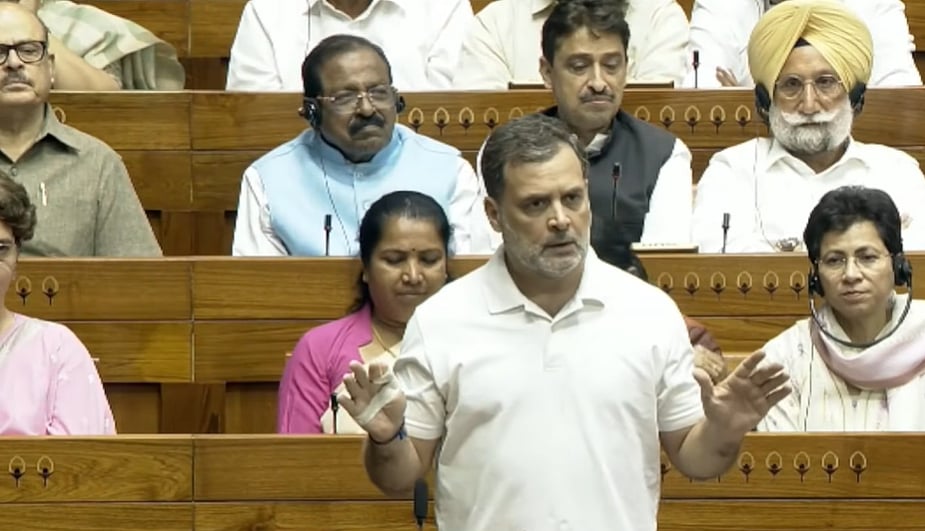
Rahul Gandhi, Leader of Opposition in the Lok Sabha, strongly criticised the women’s reservation bill during the parliamentary debate on 17 April 2026. He argued that the bill, which links women’s reservation to the delimitation process, is not genuinely about empowering women but is instead an attempt to alter the electoral map of India. Gandhi asserted that the bill bypasses the caste census and fails to address the representation of Dalits, OBCs, and minorities.
According to The Hindu, Rahul Gandhi stated in the Lok Sabha that the bill “has nothing to do with women empowerment” and is an effort to “bypass the caste census.” He accused the government of attempting to change the country’s electoral map under the guise of women’s reservation, and described the move as a “panic reaction” by the ruling party.
As reported by Hindustan Times, Gandhi told the House, “There are some truths that need to be told here today in this House. The first truth is that this is not women’s bill. This is nothing to do with the empowerment of women.” He further argued that the original women’s reservation bill, passed in 2023, should be implemented immediately without linking it to delimitation.
During the debate, Gandhi emphasised that the bill is an attempt to “change the electoral map” and accused the government of “hiding behind India’s women.” He said, “What is being attempted here is a bypass of the caste census. Here, they are trying to avoid giving power and representation to my OBC brothers and sisters and taking power from them.”
In his speech, Gandhi also recounted a lesson from his grandmother, former Prime Minister Indira Gandhi, about the importance of seeking truth even in darkness. He described women as a “central and driving force” in the country and reiterated his party’s support for genuine women’s empowerment, but not through what he called a diversionary bill.
“This is not a women’s bill; this has nothing to do with empowerment of women. This bill is an attempt to change country’s electoral map; using and hiding behind India’s women,” Gandhi said in the Lok Sabha.
Analysis showed that the government’s move to notify the 2023 Act and bring the new bill to a vote was seen by opposition leaders as a “desperate attempt” to secure passage amid concerns about the government’s numbers in the House. The opposition questioned the timing and the linkage of women’s reservation to the delimitation process, arguing that it could postpone equality and fair representation indefinitely.
Gandhi’s criticism was echoed by other opposition leaders, who argued that the bill’s implementation should not be tied to the next census and delimitation. Coverage revealed that Gandhi accused the government of attempting to reduce the representation of southern and smaller states, and described the bill as “anti-national” for allegedly depriving Dalits and OBCs of their rightful place in society.
At the end of the debate, reporting indicated that the government maintained the necessity of linking the reservation to delimitation for implementation by 2029, while the opposition continued to demand immediate enforcement based on the existing parliamentary strength.
“Bring that old bill back right now and we will help you pass it for implementation from this second. That is the women’s bill and this is something else,” Gandhi asserted during his address.
Gandhi’s remarks and the opposition’s stance contributed to a heated debate in Parliament, with the government and opposition sharply divided over the bill’s intent and its implications for representation and empowerment as details emerged.
Note: This article is produced using AI-assisted tools and is based on publicly available information. It has been reviewed by The Quint's editorial team before publishing.