'PM Modi Sold Nation': Rahul Gandhi On India-US Trade Deal
Rahul Gandhi claimed the agreement would harm Indian farmers and undermine the country’s energy security.
advertisement
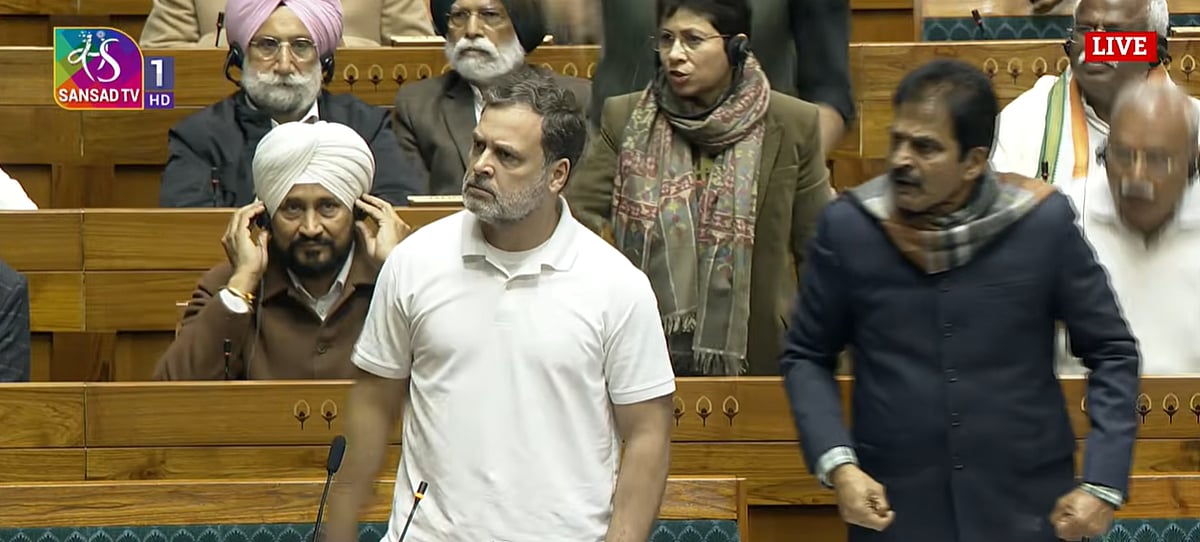
During the Budget session of Parliament on 11 February 2026, Leader of the Opposition Rahul Gandhi accused Prime Minister Narendra Modi of "selling the nation" in relation to the recent India-US trade deal.
Gandhi claimed the agreement would harm Indian farmers, compromise the textile industry, and undermine the country’s energy security. The government rejected these allegations, asserting that the deal benefits India’s development and economic interests.
According to Deccan Herald, Rahul Gandhi stated in the Lok Sabha that the Modi government had "sold India" and questioned whether the government was ashamed of its actions. He argued that the deal was one-sided, would adversely affect Indian farmers and the textile sector, and claimed, "You have sold our mother, Bharat Mata." Gandhi further alleged that the agreement would allow US agricultural products to enter Indian markets, impacting local producers.
As reported by The Indian Express, Gandhi highlighted that India’s tariffs had increased from 3 percent to 18 percent, while US tariffs had dropped from 16 percent to zero. He also emphasised the importance of Indian data, calling it the country’s most valuable asset in global trade negotiations. The Congress party staged a walkout in protest after being denied the opportunity to raise further questions.
In the Rajya Sabha, debate continued as opposition parties criticised the government’s handling of the trade agreement and its economic policies. Treasury benches countered that the opposition was "wilfully ignorant" and pointed to India’s economic growth and recent international trade agreements as evidence of sound policy. Questions were also raised about the impact of the deal on India’s traditional partners and the agricultural sector.
As coverage revealed, Gandhi alleged that India had "buckled under pressure" on tariffs and surrendered control over digital trade rules. He warned that the US would have influence over India’s energy purchases, including oil from Russia and Iran, and described this as a threat to India’s energy security. Gandhi also stated, "PM Modi surrendered future of Indians because he wanted to protect BJP's financial architecture."
"This is a complete surrender. PM has surrendered future of 1.5 billion Indians for BJP's financial architecture," Rahul Gandhi said on the India-US deal.
In response, government representatives, including Kiren Rijiju, rejected the accusations, stating that "no one can buy or sell India." Statements from the government emphasised that the trade deal was designed to support India’s development and economic growth, not to compromise national interests.
Midway through the controversy, analysis showed that the US revised its official factsheet on the trade deal, softening language about India’s commitments and removing references to digital services taxes and certain agricultural products. The updated factsheet clarified that India "intends" rather than "commits" to purchase $500 billion in US goods, and dropped mention of "certain pulses" from the list of products subject to tariff reductions.
Further reporting indicated that these revisions were significant for Indian farmers, as pulses are a sensitive category. The removal of digital services tax commitments also addressed concerns about data sovereignty and the ability to regulate technology companies operating in India.
"India will eliminate or reduce tariffs on all US industrial goods and a wide range of US food and agricultural products, including dried distillers’ grains (DDGs), red sorghum, tree nuts, fresh and processed fruit, soybean oil, wine and spirits, and additional products," the updated factsheet read.
At the end of the session, further statements from the government reiterated that the trade deal was not a "surrender" but a step towards economic progress. The opposition, however, maintained its stance, with Gandhi and other leaders continuing to criticise the agreement’s impact on key sectors and national sovereignty.
Note: This article is produced using AI-assisted tools and is based on publicly available information. It has been reviewed by The Quint's editorial team before publishing.