INDIA Bloc Meets in Delhi; Takes Crucial Decisions for the Alliance's Future
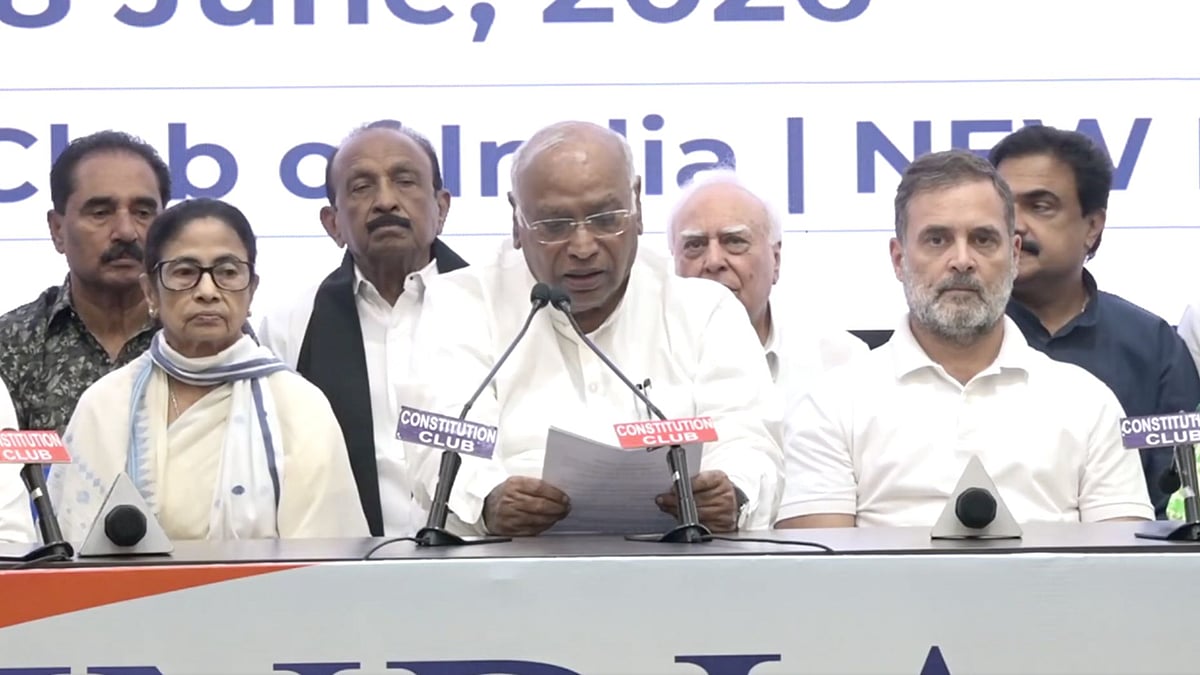
In a meeting in the Constitution Club, the Bloc decided upon bi-monthly meetings, along with other decisions.
advertisement
On 8 June 2026, leaders from 23 opposition parties convened at the Constitution Club in New Delhi for a key meeting of the Indian National Developmental Inclusive Alliance (INDIA) bloc. The gathering aimed to address internal differences, recent electoral setbacks, and to strategise for upcoming national and state elections. Notably, the Dravida Munnetra Kazhagam (DMK) and Aam Aadmi Party (AAP) did not attend, citing alliance disagreements.
According to Hindustan Times, the INDIA bloc took five key decisions during the meeting, including increasing the frequency of their meetings, with the next session scheduled for Hyderabad in August. The alliance also discussed the need to present a united front against the Bharatiya Janata Party (BJP) in the 2029 Lok Sabha elections and addressed the recent losses of the Trinamool Congress (TMC) and DMK in their respective states.
As highlighted by Siasat, Congress president Mallikarjun Kharge urged the alliance to strengthen unity and confront what he described as political, economic, social, and foreign policy challenges under the current government. Kharge alleged that investigative agencies were being used to intimidate political opponents and pointed to economic concerns, including a negative investment climate and mismanagement of the examination system affecting youth aspirations.
Deliberations at the meeting focused on recalibrating the bloc’s strategy and addressing internal rifts, as coverage revealed. Leaders from Congress, TMC, Samajwadi Party, Rashtriya Janata Dal, National Conference, and other parties participated, while Shiv Sena (UBT) chief Uddhav Thackeray joined virtually. The absence of DMK and AAP was attributed to recent alliance realignments and disagreements over Congress’s partnerships in Tamil Nadu.
During the session, Congress president Mallikarjun Kharge stated, “Now we must strengthen that same spirit even further and move forward, so that we can confront the many political, economic, social, and foreign policy challenges facing the country due to the Modi government's misgovernance.”
As noted in an article by The Indian Express, Kharge criticised the government for rising prices, alleged misuse of investigative agencies, and what he described as discrimination against non-BJP state governments. He also highlighted concerns over the Special Intensive Roll exercise, which he claimed affected voting rights, and pointed to challenges faced by micro, small, and medium enterprises (MSMEs).
Internal disagreements were evident, particularly regarding the exclusion of Tamilaga Vettri Kazhagam (TVK) from the meeting. Analysis showed that TVK was not invited due to its lack of parliamentary representation and its status as a non-formal member of the INDIA bloc, despite Congress’s alliance with TVK in Tamil Nadu.
Efforts to project unity were emphasised, but the meeting also highlighted ongoing challenges, including the TMC’s internal split and the DMK’s withdrawal following Congress’s new alliances. Reporting indicated that the bloc aimed to address these issues while preparing for future electoral contests and strengthening coordination among its members.
Twenty-three parties reaffirmed their commitment to the alliance’s objectives, with Congress general secretary Jairam Ramesh stating that the bloc remains united despite its diversity. The meeting concluded with a focus on shaping a common political strategy and enhancing cooperation ahead of the 2029 general elections as details emerged.
“Meeting with a common purpose and clear intent. INDIA united. Many parties look forward to meeting in the spirit of camaraderie,” said TMC MP Derek O’Brien, reflecting the alliance’s stated commitment to collective action.
Note: This article is produced using AI-assisted tools and is based on publicly available information. It has been reviewed by The Quint's editorial team before publishing.