Rains Bash Delhi-NCR for Second Consecutive Day, Water-logging In Several Areas
Heavy rainfall caused severe waterlogging and traffic disruptions in Gurugram, with alerts in Delhi and Ghaziabad.
advertisement
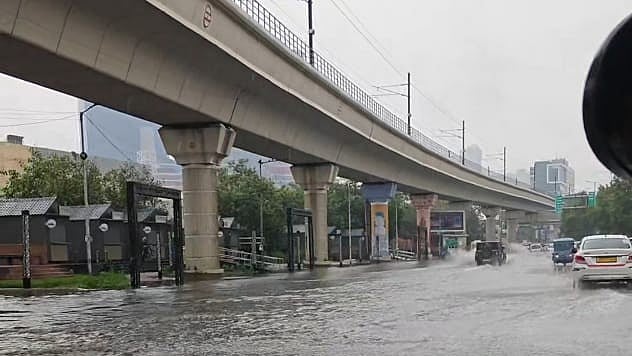
Heavy rainfall on 8 July 2026 led to widespread waterlogging and significant traffic disruptions in Gurugram, with the city recording nearly 80 mm of rain by late afternoon. The downpour caused a portion of National Highway-48 to cave in near Narsinghpur, resulting in massive traffic jams and the diversion of vehicles. Delhi and Ghaziabad also experienced heavy rain, prompting weather alerts and advisories for residents and commuters.
According to The Hindu, the cave-in on NH-48 occurred on the Delhi-Jaipur carriageway, forcing authorities to divert traffic at Rajiv Chowk and Hero Honda Chowk. Commuters from Delhi were advised to use the Dwarka Expressway, while several arterial roads and underpasses in Gurugram were submerged, causing vehicles to break down and further exacerbating congestion.
As reported by Hindustan Times, rain continued to disrupt normal life in both Delhi and Gurugram, with severe waterlogging and traffic jams across the National Capital Region. The main carriageway of NH-48 was closed in two lanes due to the cave-in, and authorities implemented extensive measures to restore normalcy, including traffic advisories and diversions.
In response to the adverse conditions, officials issued a work from home advisory for Gurugram, urging corporate and private establishments to allow employees to work remotely for the next few days. The advisory cited the strong possibility of continued waterlogging and severe traffic congestion, emphasizing public safety and the need to reduce unnecessary travel.
“We strongly urge the corporate sector and private establishments to encourage Work from Home arrangements for their employees for the next few days,” Gurugram Police stated in their advisory.
Midday rainfall in Gurugram coincided with school dispersal, leading to school buses and private vehicles being stranded in waterlogged areas. Further details indicated that Sector 15, Patel Nagar, and Civil Lines were among the worst affected, with incidents of vehicles getting stuck in submerged pits and a shopping mall experiencing a ceiling collapse due to water accumulation.
Delhi also faced significant rainfall, with the India Meteorological Department (IMD) escalating its alert from yellow to red in the afternoon. Analysis showed that while the Safdarjung weather station recorded 11.9 mm of rainfall, other stations such as Najafgarh and Ridge reported 76 mm and 50.1 mm respectively. The rainfall brought relief from high temperatures, with the heat index dropping significantly during the afternoon.
Efforts to manage the situation included the deployment of additional police personnel, coordination with municipal and development authorities, and the use of pumps, cranes, and recovery vehicles to clear waterlogged areas and assist stranded commuters. Coverage revealed that the municipal corporation prioritized speedy drainage and traffic flow, utilizing tractor-mounted pumps and other machinery at key locations.
“The municipal corporation’s primary objective during heavy rainfall was to ensure speedy drainage of water and maintain smooth traffic flow,” stated an official press release.
In Ghaziabad and other parts of Delhi-NCR, the IMD maintained weather alerts, warning of continued rainfall and the risk of localized flooding. Reporting indicated that authorities advised residents to avoid waterlogged areas, monitor traffic updates, and take necessary precautions during thunderstorms.
Additional measures included the mobilization of private resources and continuous regulation at major intersections and underpasses. The situation remained dynamic, with officials monitoring rainfall patterns and preparing for further interventions as needed as details emerged.
Note: This article is produced using AI-assisted tools and is based on publicly available information. It has been reviewed by The Quint's editorial team before publishing.