Gold, Silver Hit New All-Time Highs as Global Markets Turn Volatile
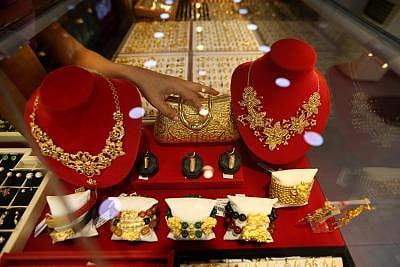
While the price of 10 grams of 24-carat gold has breached the Rs 1.5 lakh mark, silver has crossed Rs 3 lakh per kg.
advertisement
Gold and silver prices have surged to unprecedented levels, with gold breaching Rs 1.5 lakh per 10 grams and silver surpassing Rs 3.23 lakh per kilogram in India. Simultaneously, equity markets have experienced significant declines, with the Nifty falling to 25,000 and the Sensex plunging over 1,000 points. The downturn is attributed to escalating global trade tensions, particularly following new tariff threats from the United States targeting European nations.
According to Financial Express, Indian equity markets extended their losses on 21 January 2026, with all major indices and sector stocks moving lower. The Sensex dropped over 1,000 points and the Nifty slipped to 25,000, driven by weak global cues, persistent foreign investor selling, and heightened trade-war concerns linked to geopolitical developments involving the United States and Europe.
As reported by Deccan Herald, silver futures for March delivery surged to Rs 3,19,949 per kilogram, while gold futures reached Rs 1,48,199 per 10 grams on the Multi Commodity Exchange. The rally in precious metals is attributed to investors seeking safe-haven assets amid deepening geopolitical uncertainties, including tensions around Iran, US military actions in Venezuela, and renewed NATO-related concerns following President Donald Trump's remarks on Greenland.
As highlighted by The Guardian, European stock markets also experienced declines, with France’s CAC, Germany’s DAX, and Italy’s FTSE MIB all falling. Gold rose to $4,689 per ounce and silver climbed to $94.08 per ounce, as investors responded to the US president’s announcement of new tariffs on eight European countries until a deal is reached regarding Greenland. European carmakers were among the hardest hit, and the dollar weakened against other major currencies.
“With Trump throwing tariffs into the mix, it is clear that his threat to Greenland is real. Geopolitical tensions have given the gold bulls yet another reason to push it to new highs,” said Matt Simpson, a senior analyst at StoneX.
As noted in an article by Hindustan Times, the announcement of tariffs on Denmark, Norway, Sweden, France, Germany, the United Kingdom, the Netherlands, and Finland led to immediate responses from European leaders, who warned of a potential downward spiral in transatlantic relations. The prospect of a trade war between major economies has further shaken markets, with safe-haven assets like gold and silver extending their gains.
Analysis showed that the broader Indian market, including midcap and smallcap stocks, faced sharper corrections, with both indices declining by more than 2%. Sectoral indices such as automobiles, information technology, media, metals, and financials all traded in the red, reflecting widespread investor caution amid global uncertainty.
Gold and silver prices continued to set new records following strong demand in both domestic and international markets. Gold of 99.9% purity traded at Rs 1,53,200 per 10 grams in the national capital, while silver reached Rs 3,23,000 per kilogram. Spot gold and silver also hit new highs in overseas trade, with gold at $4,737.40 per ounce and silver at $95.88 per ounce.
Market volatility is expected to remain elevated as investors monitor further developments in global trade tensions and upcoming policy decisions. The ongoing uncertainty has led to increased flows into safe-haven assets, while equity markets continue to face downward pressure.
Political reactions have also emerged, with Samajwadi Party chief Akhilesh Yadav attributing the surge in gold and silver prices to alleged economic mismanagement and corruption as coverage revealed. Yadav claimed that the rise in precious metal prices is linked to the conversion of illicit cash into gold and silver, further fueling demand and price increases.
"The solidification of corruption is a new economic concept under BJP rule, where a rise in price does not decrease demand, but rather increases it. This increased demand then leads to a further increase in price," Akhilesh Yadav stated.
Note: This article is produced using AI-assisted tools and is based on publicly available information. It has been reviewed by The Quint's editorial team before publishing.