HC Denies Interim Relief To Vinesh Phogat Over Wrestling Championship Trials
Delhi High Court denies Vinesh Phogat interim relief to participate in wrestling trials.
advertisement
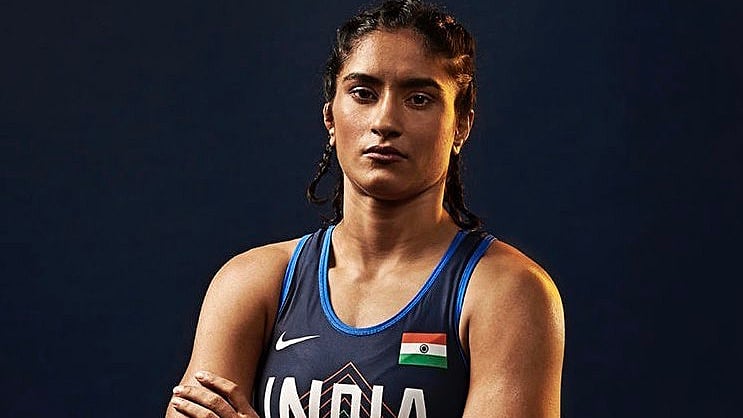
The Delhi High Court on 10 September 2026 declined to grant interim relief to wrestler Vinesh Phogat, thereby preventing her from participating in the selection trials for the 2026 Senior World Wrestling Championships. The court determined that the eligibility criteria set by the Wrestling Federation of India (WFI) would not be relaxed solely for Phogat at this stage. The selection trials are scheduled for 14 September 2026 in New Delhi, and the World Championships will be held in Astana, Kazakhstan, from 24 October to 1 November 2026.
According to Bar and Bench, Justice Swarana Kanta Sharma stated that the eligibility criteria prescribed by the WFI could not be relaxed exclusively in Phogat’s favour at the interim stage. The court emphasised that the interest of the country in ensuring a fair, uniform, and performance-based selection process is paramount.
As reported by Hindustan Times, the court highlighted the broader challenges faced by women athletes, particularly those whose careers are interrupted by pregnancy and childbirth. The bench observed that sporting rules must balance national interest with the circumstances of women returning to competition after maternity leave.
As noted in an article by The Hindu, the court clarified that Phogat’s circumstances relating to pregnancy, childbirth, and postpartum recovery would require consideration when examining the validity of the policy. However, this did not, at the interim stage, entitle her to a direction permitting participation contrary to the eligibility criteria.
The court held that the eligibility criteria, outlined in the WFI’s circular dated 7 September 2026, applied uniformly to all athletes. Coverage revealed that the criteria included performance in events such as the 2025 Senior Nationals, 2026 Senior Open Ranking Tournament, 2026 U-23 Nationals, Federation Cup, National Coaching Camp, and the 2026 U-20 World Championships.
The court reasoned that granting interim relief to Phogat alone, without adjudicating the policy itself, could result in unequal treatment of similarly situated athletes. The order stated, “Permitting the petitioner to participate by granting her a special dispensation, therefore, would not only be unfair to other athletes across the country who may have a similar grievance against the policy but are not before this Court, but would also have the effect of opening a Pandora’s box, with other athletes seeking similar exceptions from the prescribed eligibility criteria.”
“The interest of the country in ensuring that its representatives are selected through a fair, uniform and performance-based process is of paramount importance. At this interim stage, therefore, this Court is of the view that the eligibility criteria applicable to all athletes ought not to be relaxed in favour of the petitioner alone, particularly when such relaxation may have consequences for other similarly situated athletes who are not before this Court,” the court observed.
The court also noted that Phogat had previously been permitted to participate in the Asian Games Selection Trials in May, where she reached the semi-final in the 53 kg category but was not ultimately selected. Analysis showed that a subsequent show-cause notice concerning alleged misconduct during those trials remains pending.
Phogat’s petition challenged the WFI’s selection framework, arguing that it created a closed pathway by making eligibility dependent on participation and performance in specified qualifying competitions. She contended that the framework contained no mechanism to account for athletes unable to participate due to maternity-related reasons. The plea also sought a stay on the WFI’s circular and the formulation of a fair and structured framework for women athletes returning from maternity leave. Following reports, the court reiterated that the validity and applicability of the selection policy itself must be adjudicated before any special dispensation can be granted.
The bench acknowledged the need for guidelines to enable participation of female athletes returning after maternity leave. During the hearing, the court orally remarked that a balance must be struck between the interests of the country and the athlete. The court’s decision was based on the principle that the eligibility criteria were not framed specifically against Phogat but were to apply uniformly to all athletes seeking to participate in the selection trials. The implications of this ruling extend to all athletes in similar circumstances as details emerged.
Note: This article is produced using AI-assisted tools and is based on publicly available information. It has been reviewed by The Quint's editorial team before publishing.