Centre Claims Wangchuk Wanted Nepal and Bangladesh-Like Situation in Ladakh
The government accused him of inciting violence during protests in Ladakh in September 2025.
advertisement
The Centre on Monday, 2 February argued before the Supreme Court that Wangchuk’s speeches and actions indicated a desire for Ladakh to become like Nepal or Bangladesh. The Solicitor General, representing the government, stated that Wangchuk’s references to the Central government as “them” and his calls for referendums in the region were interpreted as secessionist tendencies.
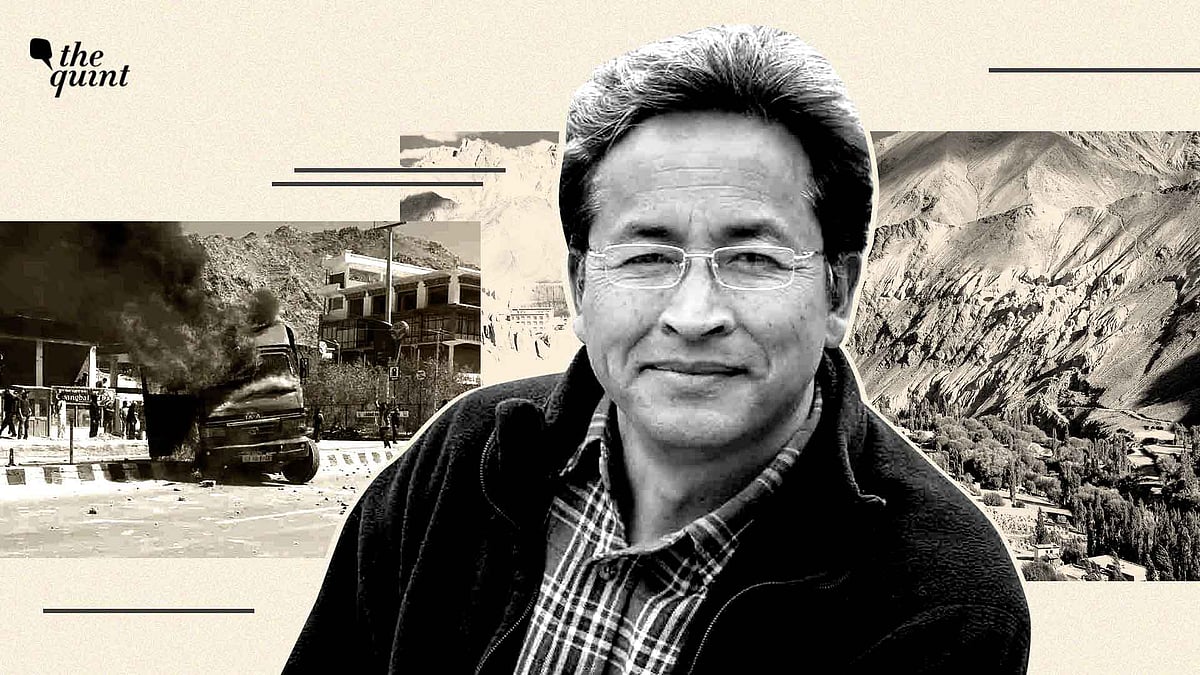
Wangchuk, a climate activist from Ladakh, was detained under the National Security Act on 26 September 2025 following protests demanding statehood and Sixth Schedule status for the region. The government accused him of inciting violence during these protests, which resulted in four deaths and ninety injuries. The Supreme Court is currently hearing a plea challenging his detention, with arguments centering on the nature and context of his public statements.
According to The Indian Express,
As reported by Bar and Bench, the government further alleged that Wangchuk attempted to instigate the youth, particularly Generation Z, by drawing parallels to events in Nepal and Bangladesh. The Solicitor General claimed that Wangchuk’s speeches included references to civil unrest and self-immolation, which were seen as attempts to provoke agitation similar to those countries.
The Centre’s submission included the assertion that Wangchuk’s language of “us” versus “them” was sufficient grounds for his detention under the NSA.
Wangchuk’s legal counsel and his wife, Gitanjali Angmo, have denied the allegations, stating that his remarks were taken out of context and that he advocated for mindful development and environmental protection in Ladakh. Coverage revealed that Angmo described the government’s actions as an attempt to silence dissent and prevent local participation in policy-making for Ladakh.
During the Supreme Court hearing, the Solicitor General also referenced Wangchuk’s mention of the Arab Spring and self-immolation, arguing that these statements were intended to bring international attention to the Ladakh agitation. The government insisted that such actions amounted to secessionist activity and justified preventive detention following reports presented to the court.
“He is misleading the young generation to do what Nepal did. In Arab revolution, there was self immolation. This is what he wants the GenZ to do. It is an invitation to indulge in civil war with bloodbath,” Solicitor General Tushar Mehta stated.
The Supreme Court bench, comprising Justice Aravind Kumar and Justice Prasanna B Varale, is reviewing the sufficiency of the grounds for Wangchuk’s detention. The district magistrate’s assessment of Wangchuk’s speeches and the broader context of the protests are central to the ongoing legal proceedings as analysis showed.
Arguments from Wangchuk’s side emphasize his right to dissent and the need for policies tailored to Ladakh’s unique ecological and cultural context. The Supreme Court is expected to continue hearing the matter, with further submissions scheduled in subsequent sessions.
Note: This article is produced using AI-assisted tools and is based on publicly available information. It has been reviewed by The Quint's editorial team before publishing.