Police Use Tear Gas, Lathis to Disperse Protesting Students in Bihar
The Patna protest was directly linked to the events at Delhi, where similar police action had taken place.
advertisement
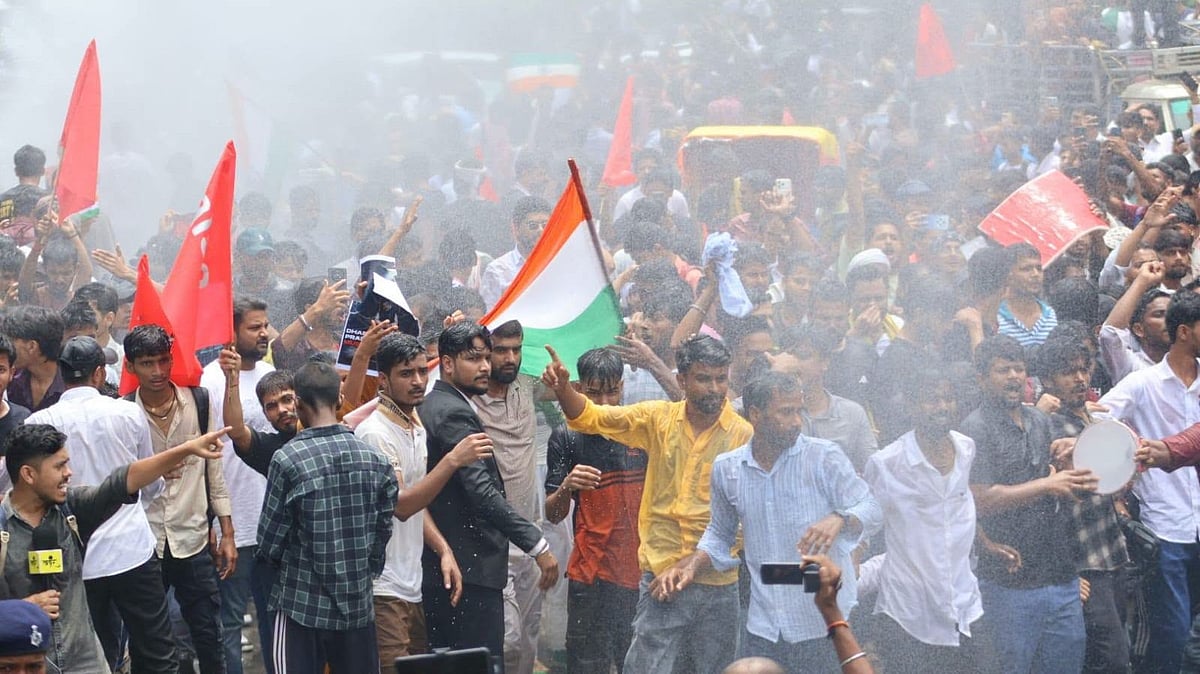
On 22 July 2026, Patna witnessed violent clashes as police deployed water cannons, tear gas, and lathi-charge to disperse student protesters at JP Golambar.
The demonstration, led by the All India Students Association, was in response to recent examination paper leaks and alleged corruption in the education system.
Protesters demanded the resignation of Union Education Minister Dharmendra Pradhan and expressed solidarity with ongoing student agitations in Delhi. Despite repeated police warnings, sections of the crowd attempted to breach barricades, resulting in forceful police action.
According to The Indian Express, the Patna protest was directly linked to the events at Delhi’s Jantar Mantar, where similar police action had taken place. Hundreds of protesters in Patna continued their sit-in even after the lathi-charge, raising slogans against the central government. Senior police officials remained at the site, attempting to persuade demonstrators to disperse peacefully.
As reported by Hindustan Times, the use of force against students has drawn criticism from public figures, including actor Imran Khan, who described the incident as a failure of the system. He expressed solidarity with the students, stating, “These students who worked hard, only to be failed by the system. These people who asked to be heard, only to be met with silence.”
Political leaders have also condemned the police action. As noted in an article by The Hindu, Andhra Pradesh Congress vice-president Kolanukonda Shivaji criticised the suppression of student voices and called for a comprehensive investigation into all paper leak cases. He demanded the resignation of Union Education Minister Dharmendra Pradhan and the establishment of a transparent examination system.
A civil rights organisation strongly condemned the lathi-charge and tear gas use, describing the government’s response as undemocratic and anti-student. The group highlighted that students had been protesting peacefully for a month, demanding accountability for alleged mismanagement in the education sector.
“Never before have students had to face such police lathi-charge during a protest,” said Bhagwan Dipke, father of a protest leader, reflecting the distress felt by families of those involved.
Family members of student leaders expressed concern over the safety and well-being of the protesters. They emphasised that the agitation was peaceful and that the government should have addressed the students’ demands rather than resorting to force.
Political protests in other states have echoed similar sentiments. In Himachal Pradesh, Chief Minister Sukhvinder Singh Sukhu led a demonstration against the lathi-charge, demanding accountability for the deaths linked to the NEET paper leak and the withdrawal of cases against protesting students.
Public figures and activists have continued to support the student movement. Actor Naseeruddin Shah urged students not to lose hope, stating that many people stand in solidarity with them and encouraging them to persist in their fight for justice.
“Aap log apni ladayi ladte rahein, hum aapke saath hain,” Shah said, reinforcing the message of support for the protesting youth.
Student protests have also spread to other cities, with celebrities joining demonstrations and expressing admiration for the resilience of the participants. Coverage from Mumbai showed actors like Shalini Pandey and Shabana Azmi participating in solidarity marches, highlighting the national scale of the agitation.
Note: This article is produced using AI-assisted tools and is based on publicly available information. It has been reviewed by The Quint's editorial team before publishing.