
Behind The 'Boys Will Be Boys' Trope Lies The Failure to Raise Compassionate Men
When will we realise we are not just raising boys today, we are raising the men they will become?
advertisement
(Trigger warning: This article contains description of violence and sexual assault of minors.)
Last week, Uttarakhand police in Dehradun arrested three teenage boys for the alleged gang rape of a 14-year-old girl. This comes just over a month after a similar incident was reported in Bhajanpura, northeast Delhi. A six-year-old girl was allegedly lured and gang-raped by three minor boys known to her, aged around 10, 13 and 15 years old.
The child returned home in a distressed and injured state, initially telling her mother that she had fallen before revealing the horrific truth.
Like in the Dehradun case, all three accused were arrested under the Bharatiya Nyaya Sanhita (BNS) and the Protection of Children from Sexual Offences (POCSO) Act.
The horror in such cases is undeniable. But the most distressing detail remains: The rapists, in both cases, were children.
This means something in our ecosystem of parenting, education, and socialisation is profoundly broken.
It is easy to condemn children as monsters. It is harder to reckon with the egregious failures in upbringing and lessons they’ve been given on bodies, respect, power and consent.
The Silence Around Sex Is Not Protection, It’s Neglect
Incidents like these force us to confront a pervasive failure in how we raise children. In most Indian households and schools, sex education is either outsourced to biology textbooks or erased entirely.
Curiosity about our bodies is dismissed as “inappropriate” or “indecent.” Boundaries or healthy relationships are never discussed. Conversations around physical or emotional intimacy are negligible.
And yet, children grow up in a hypersexualised digital environment where pornography is accessible long before emotional maturity develops.
If the first “lesson” about sex comes from porn, peers, or distorted online narratives, what framework do boys have to understand agency, boundaries, or power? Porn does not teach mutuality.
It does not teach respect but rather transactional portrayals of intimacy. It devalues consent entirely and de-humanises bodies as commodities. Without adult intervention, it becomes the curriculum by default.
It’s about time we realise that silence does not preserve innocence. It creates ignorance which in a power-skewed culture becomes dangerous.
To See The Change, Be The Change
Comprehensive sex education that includes topics such as puberty, desire, consent, boundaries, healthy relationships, emotional literacy, and media awareness must become standard, not exceptional.
Sex education is not about corrupting innocence. It’s about providing kids with critical tools to understand their bodies, their feelings, their autonomy, and the autonomy of others.
All children, of all genders must be taught the difference between curiosity and coercion.
That consent is not just non-negotiable but can also be revoked at any time.
Mutual respect is a prerequisite for intimacy.
That pornography is not a model for real relationships.
And, most importantly, desire does not entitle anyone to another person’s body.
This education needs to be pervasive across class, caste, geography, and schooling systems.
Toxic Masculinity Is Learned, Not Innate
Before all else, boys learn about power at home. They watch who speaks and who is silenced, observe whose labour is invisible, and internalise who eats first. They see whether their mother is respected, whether their sister’s ambitions are encouraged, and whether the female domestic worker is addressed with dignity.
Boys are often raised to believe that women exist to accommodate them - to cook, to care, to compromise, and this is how hierarchy is normalised.
In fact, even when well-intentioned parents or festivals such as “Rakhi” and “Bhai Dooj” instruct brothers that their sisters must be protected, it inadvertently creates an imbalanced power dynamic. In many households, mothers sacrifice while fathers decide, girls must dress “appropriately” to avoid provoking boys and feminism is maligned as an attack on men. Every day we teach boys that they are central and women are conditional.
Want To Protect Your Girls? Transform Your Boys
I grew up in a feminist household where my parents taught my brother respect, consent and boundaries, instead of teaching me to shrink myself or adjust to the male gaze. But beyond, that was not the norm. In society and in schools, power dynamics were reinforced in small but telling ways.
Even today, girls’ skirt lengths are scrutinised, their bodies discussed, their make-up treated as evidence of “character.” Boys are reprimanded for untucked shirts or unpolished shoes, never for the length of their shorts. The problem is not girls’ clothing; it is the conditioning that treats their bodies as public sites of regulation while boys’ behaviour is excused as instinct. That narrative is not protection. It is permission.
Protecting girls cannot mean asking them to be silent, cautious, and accommodating. True protection lies in transforming how we socialise boys—teaching kindness, empathy, accountability, and equality.
Feminism and Compassion Are Not Gendered Traits
Raising feminist boys does not mean they need to be ashamed of being male. It means they understand equality and see women as peers, not property. Feminism isn’t superiority, it’s parity.
Yet, one of the most damaging myths we perpetuate is that kindness, softness, and vulnerability belong only to women.
The ability to feel, understand, and respect others’ experiences is essential for ethical human beings.
When boys are not taught emotional vocabulary, anger becomes their only socially acceptable expression. Gentleness being shamed makes domination a substitute for intimacy. A boy who is unable to identify his emotions simple cannot be expected to regulate them.
Raise Girls to Expect Respect, Not Tolerance
Transforming boys is only half the task but modelling equality for girls is just as essential. Girls learn what to expect from daily interactions - how fathers speak to mothers, whether disagreement are respectful, if moms who are homemakers are acknowledged, whose ambitions bend and whose don’t.
When daughters are told to be quieter, smaller, or in India “adjust kar lo,” they internalise that shrinking is virtuous. But when they see partnership, shared responsibility, and mutual respect lived out at home, they learn that equality is a right.
Accountability Begins At Home
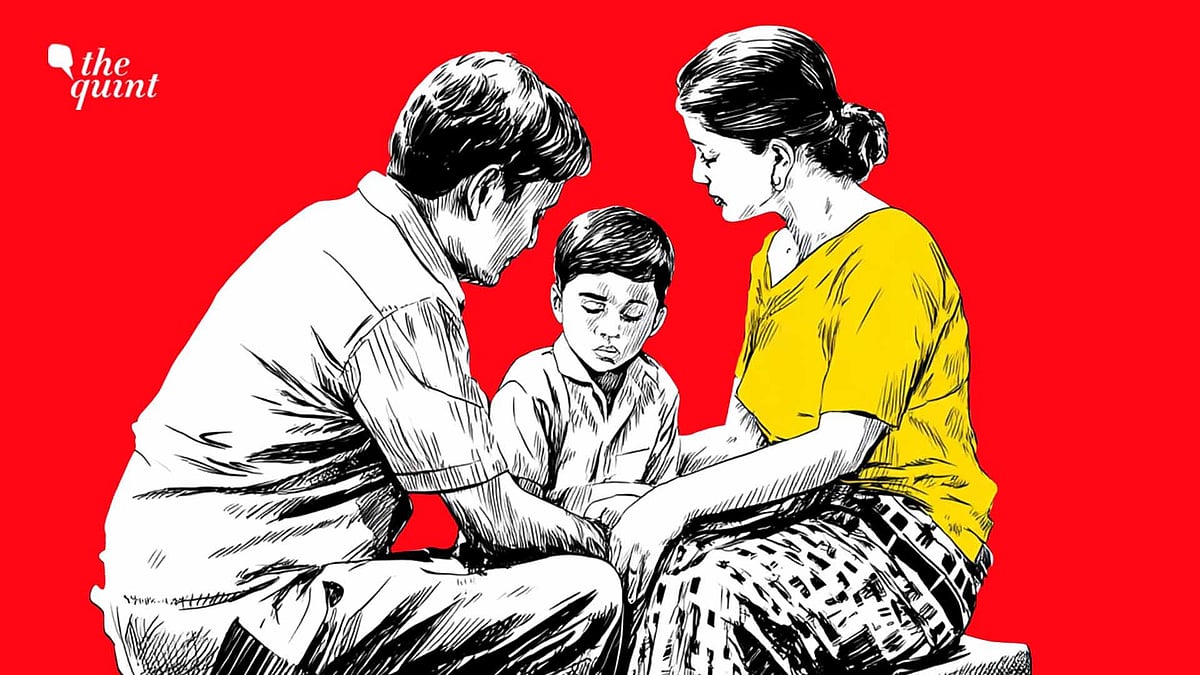
It is easy to blame patriarchy in abstraction. Harder to examine it at home, yet a child’s family is their first classroom. Mothers sometimes raise sons differently from daughters, excusing behaviour that would never be tolerated in girls. Fathers may replicate the models they inherited. But cycles only break when someone interrupts them.
Amid the Bhajanpura rape horror, one detail stands out: the mother of one of the accused, reportedly the youngest, handed her own son over to the police after seeing the survivor’s condition.
That difficult yet morally clear act should not be treated as an exception but as a benchmark for responsible parenting. A response that says - what is wrong is wrong, no matter who commits it.
In contrast, in January 2026, an American woman was allegedly groped by a teenage boy at a Delhi Metro station. According to her account, his mother and sister defended him, saying he had “got carried away” and even criticised her reaction. Such defence, especially by a parent, sends the message that consequences are optional. But when a mother hands her own child to the police, she teaches more than accountability. She teaches integrity.
If we want a safer, kinder, more just society, where children grow into adults who respect dignity rather than exploit vulnerability, we must start with how we raise them.
The world needs more than well-behaved boys. It needs good, compassionate, feminist men.
(The author is a senior communications leader. This is an opinion piece and the views expressed are the author’s own. The Quint neither endorses nor is responsible for them.)
- Access to all paywalled content on site
- Ad-free experience across The Quint
- Early previews of our Special Projects
Published: undefined