
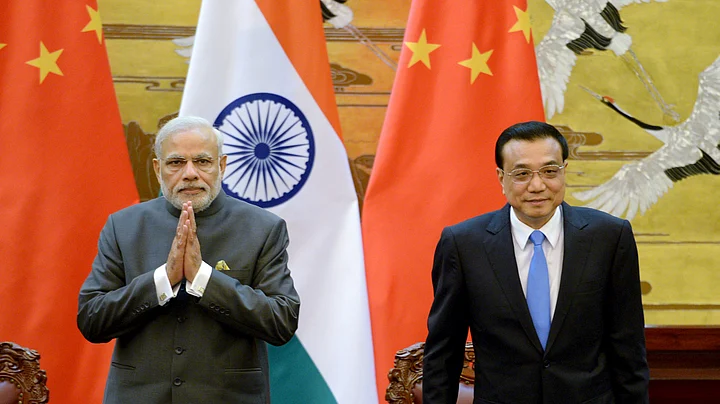
India and China are linked by wounded tangents of history. Because of their sheer size, they accounted for half of global GDP in the 17th century, in a world that was largely agrarian. Both were viciously colonised in the next 250 years, their economies denuded and people impoverished.
Both became free after an epic struggle — a violent war in China, and a largely peaceful independence movement in India — in the late 1940s. China came under Mao’s communist thumb, while India adopted a liberal democratic structure, inspired by Westminster.
Starting off equally under-developed, China took wing under Deng Xiaoping’s aggressive state capitalism in the 1980s.
Today, it is five times richer than India; it also boasts of overwhelming military superiority and geopolitical heft when compared with us. No surprise then that every Indian prime minister who has visited China since that country’s renaissance — Rajiv Gandhi, Narasimha Rao, Atal Bihari Vajpayee and Manmohan Singh — has been shy, restrained, almost sahmahua (to use that wonderfully evocative Hindi phrase) in his words and body language. This was not the case with Prime Minister Narendra Modi.
Modi was supremely confident through his Chinese sojourn. His style was firm and easy. His words were polite but blunt, in a lexicon and tenor that protruded above diplomatic niceties.
Asking China to “reconsider its approach on some of the issues that hold us back” and suggesting that it “should take a strategic and long-term view”, he was reprimanding it, in pretty plain-speak, for being inflexible and tone-deaf on border negotiations. “I have proposed resuming the process of clarifying the Line of Actual Control. We can do this without prejudice to our positions,” he added for good measure.
His last punch was allowing e-visas for Chinese tourists, much against the warnings of his security advisers. With one stroke, he showed up China’s stapled visa policy on Arunachal Pradesh to be curmudgeonly and out of synch with 21st century realities. He even had the gumption to hold a 7,000-strong public rally in Shanghai to the ringing cry of Bharat Mata Ki Jai on Chinese soil.
Clearly, Modi is buoyed by the prospects of an ascendant India, something his sahmahua predecessors never enjoyed. He has rejuvenated India’s alliance with America and Japan; is engaging vigorously with global stalwarts from Europe, Australia, Canada and South-East Asia; India’s economy is rebounding and logging in an eye-catching higher growth rate than China, allowing him an assertive bonhomie.