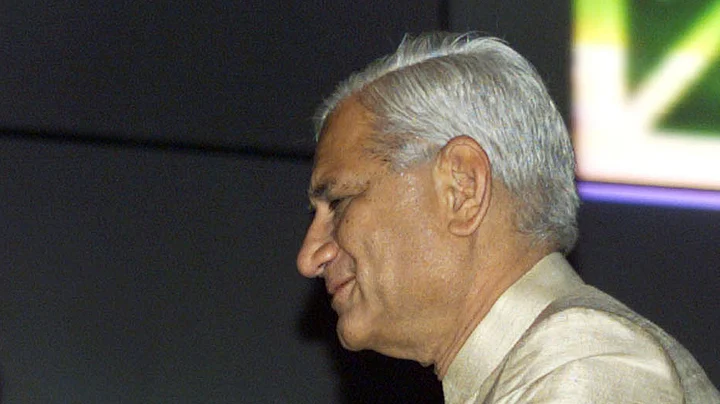
Charles Correa, arguably one of India’s greatest architects, passed away at 11.45 pm on Tuesday in Mumbai. The 84-year-old veteran’s death came after a brief illness.
In a career spanning over four decades, Charles Correa was particularly well known for his ‘activist’ style of architecture – he utilised his urban planning schemes to better the lives of the poorer inhabitants of India. Forever stressing the need for social equality, Correa’s buildings ranged from institutional to public, memorials to low-income housing projects.
Here are some of the structures that shall remain a legacy of this great man.
1. Jawahar Kala Kendra, Jaipur
Inspired by Jaipur’s original city plan, Jawahar Kala Kendra adapts and applies concepts from ancient architectural principles called ‘Vastu Vidya’. prepared by Maharaja Jai Singh in 17th century based on the ancient Vedic science of the nine planets.
2. Ismaili Centre, Toronto
Charles Correa’s vision, according to the Ismaili Centre, was to “create a building that responds to the traditions of Islamic architecture in a contemporary design using modern materials.” Correa produced a building with a series of structures that house a library, social and prayer halls, classrooms and an entrance foyer.
3. Champalimaud Centre for the Unknown
Built in 2013 on the outskirts of Lisbon, Champalimaud Centre for the Unknown is a state-of-the-art facility for research and diagnostics.
The building’s contemporary architecture, along with its functionality, offers outstanding conditions to investigators, academics and health professionals, from Portugal and beyond, to carry out work oriented towards excellence and practical results.
- Champalimaud Foundation.
4. Sabarmati Ashram in Ahmedabad
A tribute to Mahatma Gandhi, the Sabarmati Ashram and the Gandhi Smarak Sangrahalay museum was built in 1963 in place of the ashram where Mahatma Gandhi stayed between 1917 and 1930.
Architexturez notes, “the modular simplicity of the structure is continued in the use of basic materials: stone floors, brick walls, wooden doors and louvred windows devoid of glass, and riled roofs.”
5. British Council Office in New Delhi
The landmark building situated in central Delhi was built in 1993. It houses one of Delhi’s best libraries and acts as a link between India and UK for educational opportunities and cultural relations.