Sixth World T20 in 9 Years! Has Cricket World Cup Lost Its Aura?
With the sixth World T20 round the corner, is there an overdose of World Cups in cricket?
advertisement
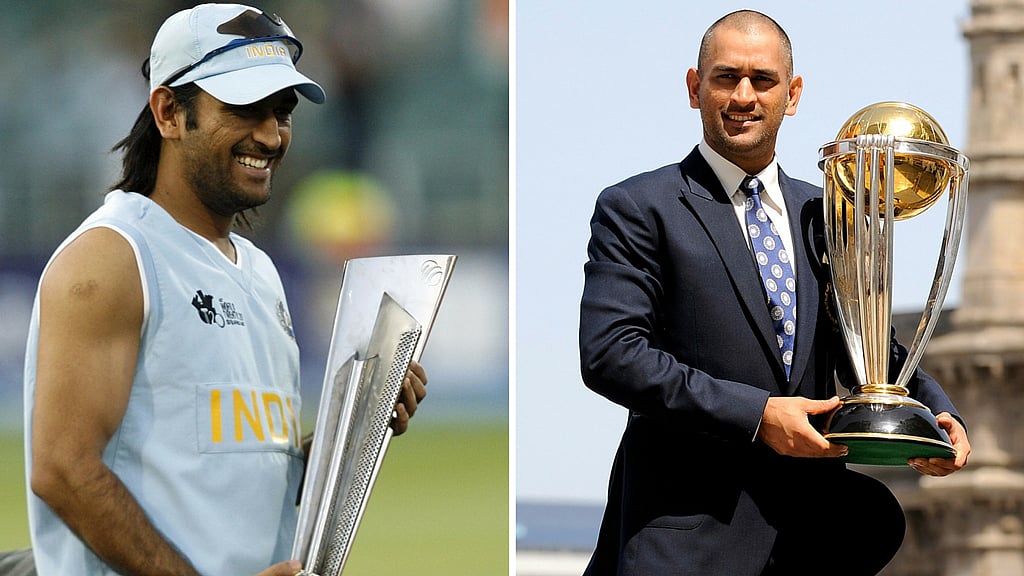
Another T20 World Cup is round the corner and this will be the sixth one in nine years. YES! The sixth T20 World Cup. What does a Cricket World Cup even mean anymore? With so many World Cups, the most prized tournament seems like just another competition.
Prior to the 2015 50-over World Cup, there was the 2011 50-over World Cup, T20 World Cup in 2012, Champions Trophy (played among the best eight teams) in 2013 and the T20 World Cup in 2014.
Practically, we had a World Cup every year. So, when the 2015 World Cup came along, the prized tournament seemed redundant instead of being exclusive.
Why do we need a T20 World Cup every two years? Remember the first World T20 in 2007, has any other T20 World Cup been so exciting?
Just because it draws crowds, doesn’t mean the tournament has to be played.
The happiness of winning a trophy is directly proportional to the amount of excitement that precedes the tournament. If there is no excitement, there is no ecstasy after winning.
Every Series Needs to Make Sense
It’s not only about World Cups, there is too much cricket being played in general. The various cricket boards cannot see their players sit freely, and keep squeezing in small series here and there to keep them busy and maximise their profits.
The best example: after West Indies abandoned their India tour mid-way in 2014 due to a payment structure dispute between the players and West Indies Cricket Board. The BCCI quickly arranged a five-match ODI series against Sri Lanka in India to fill the void.
There’s no harm with entertainment being the primary objective, but every series needs to make sense.
Nowadays, a series win or loss hardly makes any difference. It has a very small effect on the ICC rankings and the teams move on, like the recently concluded India-Sri Lanka T20 series. The rankings have become irrelevant since all teams are not playing the same number of matches.
Proper Structure is Required
The ICC has formulated a Future Tours Programme from 2014 to 2019, but all teams are not allocated the same number of matches and it remains subject to changes.
Between 2014-2019, India is scheduled to play 12 Tests with Australia, whereas South Africa will play 8 Tests against the Baggy Greens.
The ICC needs to formulate a proper structure and ask the boards to give more importance to the players’ welfare than to their revenue.
Within a period of four years, each of the Test playing nations should play the same number of Tests against each other, and all the cricket playing teams (countries with Test status and associate members) should play the same number of limited-overs matches against each other at home and away, and finally they should play the 50-over World Cup.
At the end, the deserving team will be number one in the ICC rankings and every series will make sense.
As far as the World Cup is concerned, to maintain exclusivity, the ICC should make it clear that the 50-over World Cup is the main World Cup and the biggest prize in cricket by hosting it every four years as usual, giving less importance to the T20 World Cup.
For example, if the T20 World Cup is played every six years, then the anticipation and the excitement for the tournament will increase and we won’t have an overdose of World Cups.
Gilchrist and Anderson Speak Up
Over the years, even players of the game have started to speak up about the amount of workload a cricketer has to manage. Former Australian wicket-keeper Adam Gilchrist said in 2009 that there is too much cricket being played. He expressed his concerns over the future of ODIs after Twenty20s began threatening to become the primary format of the sport.
England’s fast bowler James Anderson also admitted that too much cricket is being played, on The Clare Balding Show in 2014. He said, on an average an English cricketer spends about 310 days in a hotel per year. His kids were five and three years old respectively at the time, he joked that he will see them next when they are six and four.
Former West Indies legend, Michael Holding told ESPNCricinfo in 2014 that fast bowling will not survive under the current circumstances. He said he is worried about the health of the game since even batsmen are missing matches to recover from the workload.