Tim Paine: Once Forgotten, Now Australia’s Immediate Future
11 months ago, Tim Paine was in Australia’s cricketing wilderness. Today, he helms the future of a proud nation.
advertisement
As of November 2017, Tim Paine had played four Tests – the last of which back-dated to more than seven years earlier. Nearing 33, the keeper-batsman appeared set to be just another number – probably a forgotten one – in Australian cricket history.
Then came a call-up from nowhere, for the Ashes, at that.
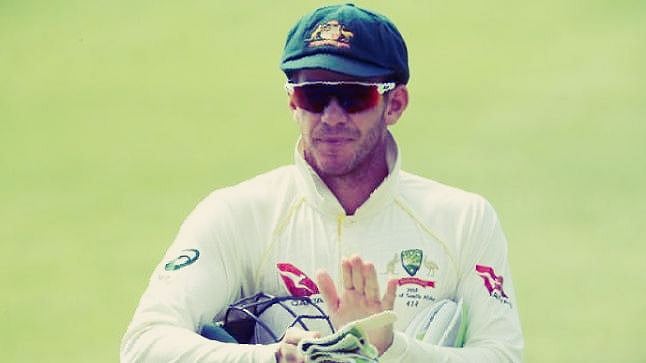
On 23 November 2017, Paine donned the baggy green for the first time since October 2010. Four months and change later, he was captain of the Australian cricket team.
And not just any captain – one tasked with helming the side as it attempted to come out of the darkest hour of the country’s proud cricketing history.
A Revised Statement of Intent
In his first Test in-charge, Australia’s first foray on to the field after Cape Town and all it brought with it, Paine introduced a ‘custom’ of shaking hands with the opposition at the start of a series.
“I thought cricket is the gentlemen’s game and I spoke to our players about how it was something I wanted to bring in,” he had said at the time. “I just think it’s a good show of sportsmanship and respect. It’s something we want to take forward and if other teams want to do we’ll do it to start every series.”
It wasn’t a ‘revolutionary’ move. It’s not like any action from the Australian camp was going to win any brownie points. But it was a measured move, the first steps on a lengthy road to redemption – from a man who had redeemed his own career just months earlier.
Winning: No Longer Everything
At the start of the year, the idea of a captain rejecting the notion of ‘winning at all costs’ would likely have triggered a reaction of disbelief in Australian cricket (disgust even, in some quarters). But then again, this has been, possibly, the longest year faced by any team in modern-day cricket.
It’s not like other teams haven’t had falls from grace. India had their own issues around ball-tampering, and even match-fixing, at the start of the 2000s. But they were no premier force in the game at the time. Pakistan had their wrongdoings towards the end of the decade; guns weren’t trained too hard on a team ranked outside the top-5 in both Tests and ODIs.
But Australia, no way. While they built their burgeoning empire through that same decade, crushing all in sight – on scorecards and in minds – they had the rest of the world waiting for their fall. And then it arrived.
The mitigation of any disaster is directly proportional to the reaction of the immediate response team. Paine was Australia’s immediate response team, and he continues to fire-fight.
Leading Australia Into The Light?
Steve Waugh. Ricky Ponting. Michael Clarke. Steven Smith.
Tim Paine.
This isn’t, in any way, to belittle Australia’s 46th Test skipper. If anything, it’s just to point out the sheer magnitude of the task at hand for the soon-to-be 34-year-old.
Coming into the job without the air of top-flight success, perhaps, worked well for everyone in the Australian cricket environment.
It’s a sobriety well-timed in the cricket corridors Down Under; a grounded style the best tonic in times when a nation finds its top dogs grounded.
There were two debutants for Australia the first time Paine donned the baggy green, against Pakistan at Lord’s in 2010. While Paine’s career nosedived into the wilderness after four outings, his fellow debutant featured a bit more often until March 2018.
As Steven Smith, Australia’s once-earmarked future, tries rising from the abyss, Australian cricket rests in the hands of Tim Paine.