Dead-Balling Shiva Singh’s 360° Delivery Curbs Bowlers’ Innovation
If batsmen are encouraged to innovate and think out of the box, bowlers also need to be cut some slack.
advertisement
Till Thursday the only thing synonymous with 360-degree in cricket was former South African cricketer AB de Villiers and his shot-making skills, which was all around the ground.
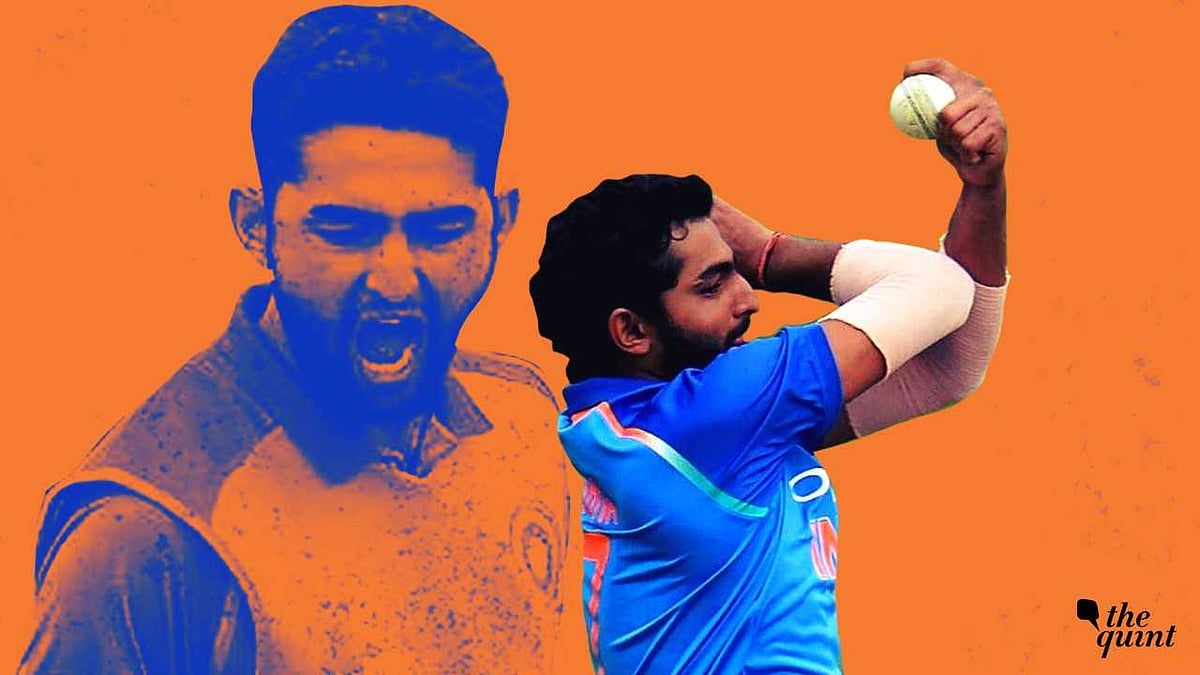
But since Uttar Pradesh’s Shiva Singh exhibited his unique run-up against Bengal in the Under-23 CK Nayudu Trophy, the cricketing world has been divided over the left-arm spinner’s 360-degree twirl before he released the ball. The on-field umpire may have found it illegal, but the legality issue has left many scratching their heads.
Everything about the delivery was spot-on despite Shiva’s antics before the release. The pitch, the length of the ball, the trajectory and the follow through all checked the right boxes. But wasn’t good enough for umpire Vinod Seshan.
The MCC, custodian of the game, had to jump into the debate to explain the scope of the law under which Shiva’s delivery was dead-balled.
MCC Laws Department’s detailed analysis was supported by Law 41.4.1, which states, it is unfair for any fielder deliberately to attempt to distract the striker while he/she is preparing to receive or receiving a delivery.
They also quoted Law 41.4.2. which said, if either umpire considers that any action by a fielder is such an attempt, he/she shall immediately call and signal dead ball and inform the other umpire of the reason for the call."
Here, we may question the fact that the law applies only to fielders but in the same blog MCC has stated that a bowler is also regarded as fielder, so he/she also falls under the purview.
But the most astonishing part of the law blog was the following explanation:
“Unless the 360-degree twirl was part of the bowler’s run-up for every ball, the umpire may need to consider whether he/she feels that the twirl was done in an attempt to distract the batsman in some way. This is particularly so if there was no apparent advantage to be gained from the twirl, unlike, for example, the bowler varying the width of the release point or the length of his/her run-up, which are entirely lawful.”
According to this, the bowler should make the 360-degree twirl a regular feature of his/her bowling run-up and action or otherwise shouldn’t try it all. Basically, a bowler is being asked to make sure there shouldn’t be a surprise factor in his/her armoury, because it might be an unfair advantage to the bowler.
According to Former ICC Umpire manager and Elite Panel umpire, Simon Taufel, the dead-ball decision was valid and that the only reason for such an action would be to distract or put the striker off.
Taufel’s argument of ‘intent’ is also vague. Speaking to Cricketnext, Taufel said, "The intent of the reverse shot is different. One is necessary to play the shot the other is not in order to maintain the same mode of delivery."
This also may be flawed because of the same reason mentioned above. A gain in speed and momentum might be involved with such a move.
Since the power is solely with the umpires, they should use it more responsibly. The laws are there to protect the game and not to curb innovation, at least with the ball because it looks like the umpires are not much bothered as far as the innovation is concerned with the bat and shot-making.
Debate is still on, the die is yet to be cast. But when the final decision is taken the custodian of the game should be careful whether they still want it to be ‘The Gentleman’s Game’ or ‘The Batsmen’s Game’.