From Team Hotel to Toss to First Over: What Goes On in Between?
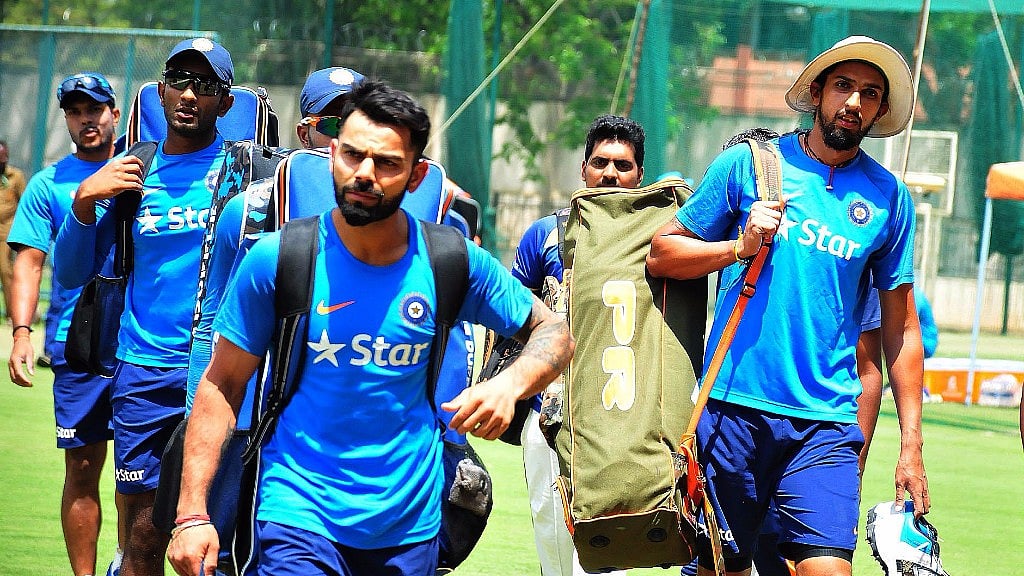
Here’s an insider’s view on what happens from the time the team reaches the ground to the start of a match.
advertisement
The best time for fans to get a glimpse of their cricket stars is on the day of the match; when they see players getting out of the team bus, followed by few clips of their warm up, leading to the toss, and then the umpires calling ‘play’ for the start the match.
What’s hidden and surely ‘the talk of the town’ is what lurks behind the scenes. What happens in those 90 minutes – from players entering the field to eventually taking the field.
Match days are like appearing for your exam day – preparations are done in advance with copious amount of hard work. Match day is the time when preparation is finally put into execution.
And everyone has different ways of approaching their exam. Some people focus by listening to music and some may just close their eyes and visualise what lies ahead of them. In some cases, a player dealing with form and fitness issues, goes a bit early with a batting or bowling coach to spend some extra time before the rest of the squad comes in.
Sometimes, the team management takes a last minute look at the wicket to get the team combination right, for the conditions at disposal.
Most of the players come into the dressing room and get their gear sorted before moving out for their team warm-ups, under the watchful eyes of their fitness trainer and physio. Here also, some players come out just in time, while others like to be on the ground as soon as they reach the stadium.
Before the start of the warm-up, there is a team huddle where a coach or captain or player would quickly remind everyone about their roles and responsibilities. The ceremony of handing over the India cap to the debutants also takes place at this time.
Normally, team warm-ups are structured in two formats. One is a combined warm up, where the basic idea is to mobilise the muscles. Lots of new innovative ideas have come up to help the players to activate their bodies. Rubber rollers and TheraBands, along with yoga, are some of the ways of warm-up.
The second format is where players are divided as per their skill set. Fast bowlers will have a different kind of routine from the batsmen or wicket-keeper, as they would like to put in some extra effort on their back and legs. All this while, the players get the preferred treatment, and the extra players join the support staff to help their colleagues.
Second station deals with fielding in the 30-yard circle, where players prepare to attack the ball and stop singles, aim at the stumps, and take sharp catches coming their way at positions like cover or mid-wicket. Their station is boundary fielding and high catches.
Straight after this, bowlers start wicket to wicket bowling on a single stump. Batsmen also walk out to knock a few balls to get the feel of the ball.
During the warm-up sessions, the captain picks up two copies of the team sheet – one for the match referee and one for the captain of the opponent team, and leaves his team for the toss.
The fourth umpire comes with the box of the balls and bowlers pick the ball that they will use in the match; the job is mostly done by the senior bowlers of the team.
If the team is batting first, then the top four batsmen in the batting order pad up.
From getting down to the bus to the umpires calling play, the entire period is used collectively as well as individually, to ensure that the team is prepared to the best of their abilities.
The more you sweat in peace, the less you bleed in war. It’s as simple as that.