India v Eng Series Stats Wrap: Kohli v Anderson, KL Rahul’s Record
Here’s a look at the five-match Test series between India and England through some interesting statistics.
advertisement
Opener KL Rahul and Rishabh Pant's heroics went in vain as England defeated India by 118 runs in the fifth and final Test to clinch the series 4-1 at the Oval in London on Tuesday.
With India chasing a massive 463-run target, the last day of the series saw a bit of drama as centuries by Rahul and Pant gave India a slim hope of clinching, or at least saving the Test.
Rahul played a fighting knock of 149 runs before a spectacular delivery by England spinner Moeen Ali ended his resistance.
Pant, who scored 114, gave him excellent support from the other end as the duo built up a partnership of 204 runs to frustrate the England bowlers for a long time.
However, their fall bought the hosts back in the contest and the English bowlers then made no mistakes as they performed the last rites with ease, scalping the remaining three Indian wickets of Ravindra Jadeja (13), Ishant Sharma (5) and Mohammed Shami (0) in quick succession.
Here’s a look at the five-match Test series through numbers.
Difference Between the Two Teams in the Series
On several occasions in the series, England were rescued by their lower order and carried to a position from where they could force a win. The runs scored by the England lower order and the failure of the Indian bowling attack to polish off the lower-order had a significant impact on the outcome of the series.
The other telling difference between the two teams was the performance of the spinners. Much to the surprise of cricket fans, the England spinners outbowled their Indian counterparts. The English spinners not only picked up more wickets, but also picked up wickets at a quicker rate.
Kohli vs Anderson
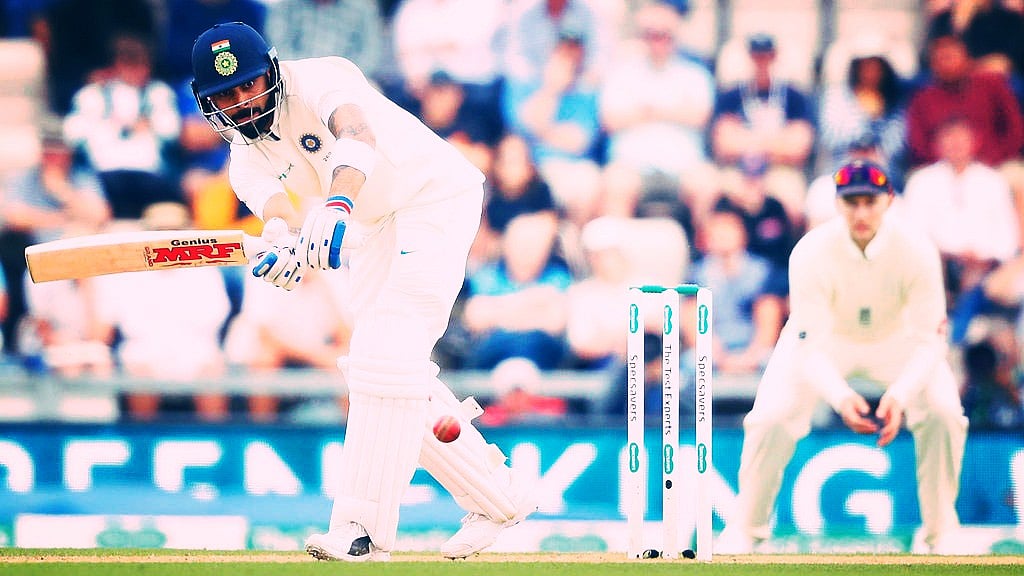
The Test series between England and India was billed as the big battle between James Anderson and Virat Kohli. After a dismal performance in the 2014 series, Kohli redeemed himself by not losing his wicket to Anderson even once in the Test series.
The Indian captain led the team's batting charge from the front. Virat Kohli would finish the series as the top run-scorer from both sides. Kohli's aggregate of 593 runs was the second-highest by an Indian batsman in a Test series played in England.
Indian Bowlers Led the Way
The Indian team could challenge England in the series predominantly because the bowling attack dismissed the hosts time and again. India picked up a total of 87 wickets in the series; 61 of the wickets came from the pace attack – which was the largest haul of wickets for an Indian pace bowling attack in a series.
The Anderson Effect
Though he did not dismiss the most-priced wicket in the Indian line-up, James Anderson still had a very successful series – collecting a total of 24 scalps in the five Tests. He broke several records and set new highs during the course of the series.
In the final innings of the series, when he dismissed Mohammed Shami, he surpassed Glenn McGrath's tally of wickets to become the most successful quick bowler in Test cricket.
When Anderson dismissed Cheteshwar Pujara in the first innings of the final Test match, he became the highest wicket-taker in Tests against India – surpassing Muttiah Muralitharan's tally of 105 wickets.
Rahul & Pant’s Epic Partnership
England began the final day needing 7 wickets to take the series 4-1. The hosts picked up two wickets in the morning session, but were thereafter denied for more than 44 overs by the sixth wicket pair of KL Rahul and Rishabh Pant, who stitched together a 204-run partnership – which would be India's only second 200-run partnership in the fourth innings.
Rahul, who had a tough tour overall, finished with a flourish – batting to his potential and scoring his first Test century in more than 20 months. The 26-year old opener made 149 in the fourth innings – only the seventh century by an Indian opener batting in the fourth innings.
Rahul's partner in that mammoth partnership – Rishabh Pant – would go on to become the first Indian wicket-keeper to score a Test century in England.
Pant's stroke-filled 114 also made him the youngest wicket-keeper to score a Test century in England. The previous youngest wicket-keeper to score a Test century in England was West Indies’ Ivan Barrow, who was 22 years old when he scored 105 against England more than 74 years ago in 1933!
Rahul’s Excellent Catching
KL Rahul set a new record for the most catches taken by an Indian fielder in a Test series. He broke the record set by Rahul Dravid, who had taken 13 catches as fielder in the 2004-05 tour of Australia.
(With inputs from IANS)