BJP's Meghalaya Expansion: What 8 UDP MLAs Switching Sides Means for 2028
The BJP is now the second largest party in the state Assembly, writes Sagarneel Sinha.
advertisement
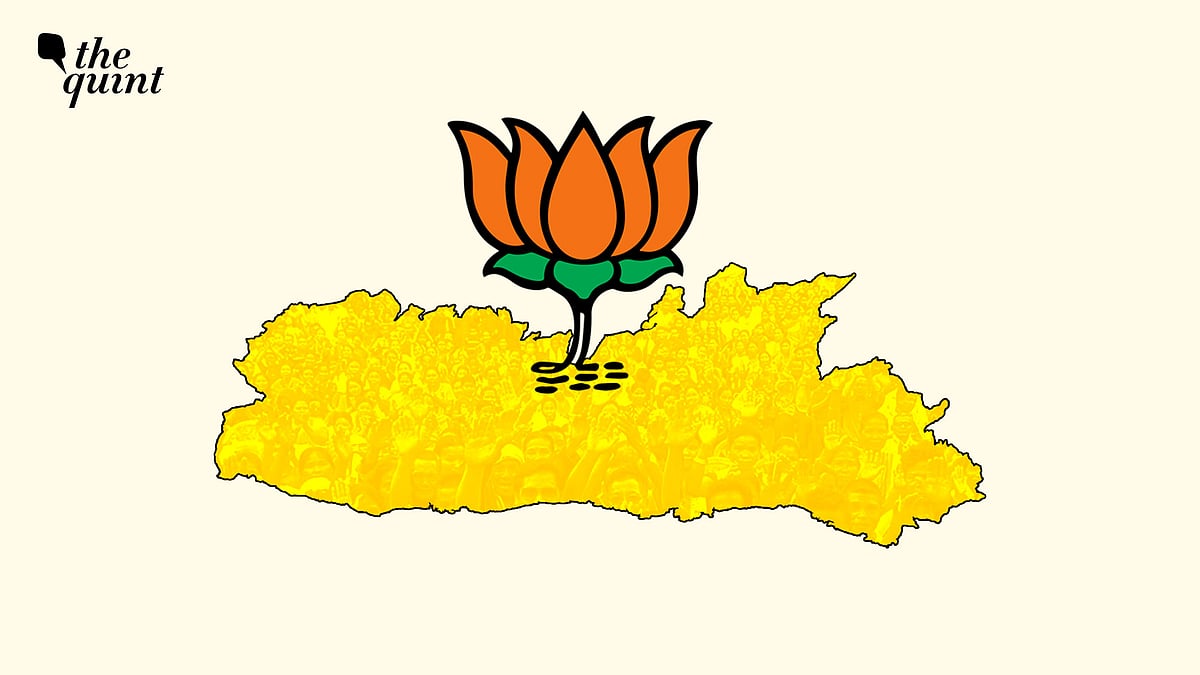
Last week, the political alignment took a new shape in Meghalaya after eight of the 12 MLAs of the United Democratic Party (UDP) joined the Bharatiya Janata Party (BJP) in Delhi in presence of Union Minister Kiren Rijiju and national spokesperson Sambit Patra, who is also the party’s northeast coordinator.
As a result, the saffron party's tally has risen from two to 10, making it the second largest party in the state Assembly.
This political shift assumes significance particularly in the Khasi-Jaintia belt, as all these legislators come from this region, and which has highest representation at 36 of the 60-member state Assembly. It should be noted that the next Assembly polls in the state in 2028 are less than two years away.
BJP Follows the Congress Template
In the first state election held in 1972, the All Party Hill Leaders Conference (APHLC) won an absolute majority by securing 32 seats in the state Assembly, while the Congress secured nine.
Academic SK Chaube, in his book, Hill Politics in Northeast India, writes, “In 1974 the Congress launched what may be called an ‘Operation Absorption’ (in the northeast).... The APHLC was split in 1976, the bulk of its Garo component and a section of its Khasi component following Williamson A Sangma into the Congress”.
This is how the Congress gained strength in the state after absorbing leaders and legislators from the APHLC, and ascended to the power of the state in 1976, despite not winning the 1972 elections.
The BJP also seems to be following its arch-rival Congress’s strategy in this northeast state by absorbing leaders and legislators of regional parties. Let’s not forget in Assam, Arunachal Pradesh and Tripura, the saffron party—utilising its influence of being the ruling party at the Centre—absorbed legislators of the Congress and other parties to strengthen itself and even gained power.
Declining UDP
The regional party, currently led by Mairang (ST) legislator Metbah Lyndoh, is already in decline. While the party was able to increase its tally from 6 to 12 seats in the last elections of 2023, it faced decline in the Lok Sabha elections of 2024, where the newly formed Voice of the People's Party (VPP) swept the region and secured the Shillong Lok Sabha seat.
It led in 32 out of the 36 seats of the Khasi-Jaintia belt while the UDP failed to secure a lead in any assembly seat of the belt. One year later, the VPP secured the Khasi Hills Autonomous District Council polls by winning 17 out of 29 showing its consolidation in the Khasi hills, which has 29 seats in the state Assembly. The UDP came a distant second with 5 seats.
These results clearly indicate the declining fortunes of the UDP in the region where it was one of the dominant parties.
What Will This Bring for the BJP?
The BJP won three seats, its best performance till date, in the 1998 Assembly elections. Two of those seats (unreserved) were from the Khasi region. In the last Assembly election, the party won two seats. Notably, both the seats come in the Khasi hills, and were unreserved ones.
After this joining, the saffron party not only became the second largest party but also automatically increased its representation in the Cabinet to two as one of the eight UDP MLAs—Lahkmen Rymbui—is a Cabinet minister.
In this northeastern state, where victory margins of some constituencies are decided by 500 to 2,000 votes, a legislator's individual popularity also matters. The saffron party's strategy—as seen in other northeastern states—is to utilise the resources and influences of these MLAs to strengthen its organisation on the ground. There is still time left for elections, providing a window for these legislators to connect with their voters.
That’s where lies the importance of these MLAs—and they were accepted by the saffron party's central leadership. The MLAs have already stated that they have joined the BJP after getting assurances from the central leadership regarding the inclusion of Khasi and Garo languages in the Eighth Schedule, easing of procedures related to coal mining, amendment of the Meghalaya Residents Safety and Security (MRSSA), and relocation of Dalit Sikhs from Them lew Mawlong before the 2028 state elections.
Now, it depends on how they communicate with their own voters to convince them to accept them as leaders of BJP and vote for them too.
Importantly, the UDP is also part of the same National People’s Party (NPP)-led Conrad Sangma government, where the BJP is also a constituent. The poaching of ally MLAs by the BJP is likely to ring alarm bells for the NPP. This development while increasing the saffron party’s leverage may also increase its friction with the NPP. Another interesting thing is that the NPP itself has been trying to penetrate in the Khasi hills, where currently VPP remains the clear dominant party. Now, along with these parties, the BJP has also entered the fray in the Khasi hills as a serious player.
While the saffron party faces the challenge of acceptability, this joining of eight UDP MLAs, nevertheless, provides an opportunity to the party to strengthen its organisation on the ground. Now that the party is a significant player in the Sangma cabinet, it has the opportunity to play a crucial role in the formulation of government policies while maintaining coordination with its senior ally NPP—and this will decide the party's prospects in the next elections.
(Sagarneel Sinha is a political commentator and tweets @SagarneelSinha. This is an opinion piece and the views expressed above are the author’s own. The Quint neither endorses nor is responsible for them.)