
Goodbye Xavi: Legacies of a Great Player & Memories of Revolution
An eventful chapter closes at FC Barca with the leaving of Xavi Fernandez.
advertisement
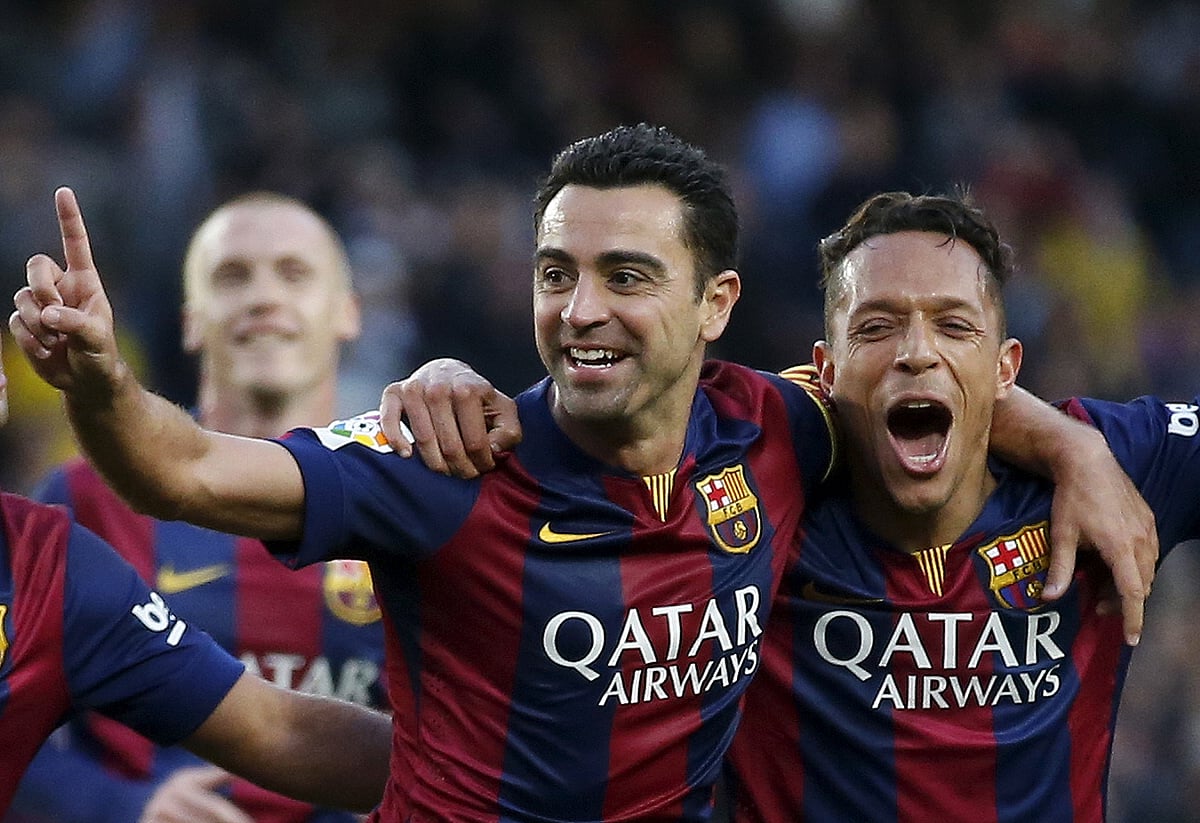
Last Thursday, Xavi Hernandez announced his retirement from FC Barcelona. He’s 35, a decent age for an established footballer to leave the game. He moves to a Qatar club for undisclosed millions.
Xavi joined Barcelona when he was a 11-year-old stripling at their famed academy, entered the first team at age 18, and had to battle the likes of formidable midfielders like Pep Guardiola to carve out a place in the great outfit taking shape in 1998.
Yet, it wasn’t till 2003 that Xavi, under coach Frank Rijkaard, former Dutch International, found his real place in the team — playing a high midfield, at the centre — as conductor of the beautiful, flowing game that we fell in love with.
A lot of that happened when Pep, his former rival, returned to coach the team and made Xavi the fulcrum — along with Andres Iniesta and Leo Messi — of the possession-and-attack game.
The Magical Midfielder
It was almost magical to see him in action: Xavi, high up on central midfield, a magnet, all balls coming to him and dispatched with laser-like accuracy to any player on the flank or up forward who had an inch to manoeuvre against opposing defences.
“I must have 100 touches of the ball every match,” he told Graham Hunter, the chronicler of the team around 2011, in Barcelona: The Making of the Greatest Team in World, “If I had to go back to the dressing room with only 50, I’d be ready to kill someone.”
The stats say it all: with 764 appearances, Xavi has the highest number of games in the club’s competitive matches, far ahead of Puyol’s 593 and Iniesta’s 546. Puyol has retired, Iniesta might yet break Xavi’s record.
An Inimitable Tour de Force
But his triumphs with the club as player and captain are unlikely to be surpassed in a long time. One World Cup win with Spain, two Euro Championships, eight League wins, two King’s Cups, two UEFA Super Cups, two FIFA Club World Cups and six Spanish Super Cups: 23 trophies in 17 seasons.
But what business do we have, sitting in Delhi, with the Indian football team ranked 146 out of 209 football associations recognised by FIFA, to agonise over the passing of a Spanish legend? Or, to support faraway Barcelona?
The answer to the second probably solves the first riddle. Of all the great teams in world class club football, FC Barcelona is probably the only team to succeed at the top level after revolution and a civil war that drew the entire world’s attention — and sucked several great intellectuals — into it.
Talking ’Bout a Revolution
This was the Spanish civil war, between 1936-39, fought between the Republicans, supported by western intelligentsia and the Left and the Nationalists of General Franco, supported by Nazi Germany.
One of the first victims of the Nationalist pogrom was the gentle Spanish poet Federico Garcia Lorca, who was summarily executed.
Among the first ‘grown up’ books I read as a kid was George Orwell’s Homage to Catalonia, a first-hand account of the war where he volunteered. Coming home, in 1938, he writes of his memories, “…the smell of the trenches, the mountain dawns … the frosty crackle of bullets, the roar and glare of bombs; the clear cold light of the Barcelona mornings… when people still believed in the revolution…”
The Catalans were on the righteous, and losing, side of that war, but its rebellious spirit lives on in Barcelona. That is why its jersey has, apart from the red and gold colours of Spain, the prominent blue of the Catalan flag.
And what they lost on the battleground 75 years ago, they more than made up for in the football fields of modern Europe. That is why we cheer for Barca, and feel downcast when Xavi leaves.
But perhaps he will return one day, as Pep did, to coach the team where he grew up, gave his all, and won every honour possible.
- Access to all paywalled content on site
- Ad-free experience across The Quint
- Early previews of our Special Projects
Published: undefined