
2016 Was the Year Bollywood Stood At a Crossroads
2016 wasn't a golden year for Hindi cinema, but it was a threshold year. Bollywood still had room for contradiction.
advertisement
The year 2026 began with a lot of nostalgia for 2016.
People, like grandpas who have lived through the war, waxed eloquent about how times were so much simpler back in those days. Twenty-something folks made memes and reels about the good ol’ times. Some even went so far ahead to say that 2016 was the last good year humanity had collectively.
If you keep your rose-tinted glasses on, that sentiment might still ring true, but there is no denying that the year 2016 was indeed a phenomenal one for Bollywood cinema. It wasn’t a perfect year, of course. But it was a dense one. The range itself now feels startling.
Bollywood in 2016
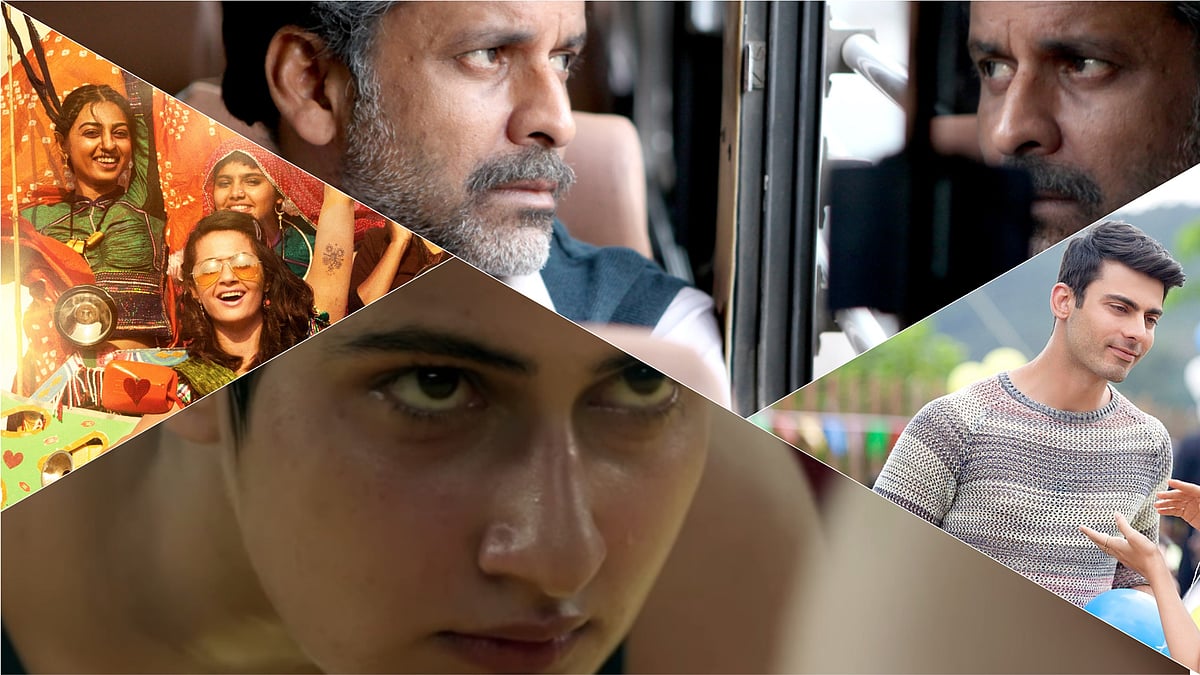
There was Dangal, Kapoor & Sons, Udta Punjab, Aligarh, Pink, Neerja, Nil Batte Sannata, Dear Zindagi, Parched, and Raman Raghav 2.0 to name just a few.
Even the flawed ones had something going on: Ae Dil Hai Mushkil may have been overwrought in premise and performance but it was sonically sound, Baar Baar Dekho was misguided but conceptually ambitious, Ki & Ka was earnest, if ideologically confused, and Akira was a remake trying very hard to brand itself feminist, but ultimately ended up equating empowerment with physical aggression.
It was a year in which progressive themes, franchise fatigue, nationalism, sex comedies, prestige indies, and superstar vehicles all coexisted without suffocating each other.
What stands out about 2016 is how many films were preoccupied with interiority, particularly women’s interiority. Aniruddha Roy Chowdhury’s Pink turned the very nitty-gritties of consent—implied, enthusiastic, and otherwise—into courtroom drama. Ram Madhvani’s Neerja offered heroism without hypermasculinity. Ashwiny Iyer Tiwari’s Nil Batte Sannata and Nagesh Kukunoor’s Dhanak centred aspirations beyond the confines of class. With Parched, Leena Yadav confronted rural patriarchy and sexual repression head-on. Gauri Shinde and Dear Zindagi made therapy and mental health a conversion accessible through mainstream cinema.
Even Dangal, a sports biopic anchored by Aamir Khan, sold itself as a story about daughters breaking patriarchal ceilings. And while the film ultimately reaffirmed paternal authority by revolving mostly around Khan’s Mahavir Singh Phogat’s emotions and ambitions (just like Pink relied on Amitabh Bachchan’s moral authority to legitimise its message), Dangal’s marketing leaned unapologetically into gender politics like Bollywood had hesitated in doing for years.
Of course, the men of the industry were not held to similar standards despite being the main proponents and beneficiaries of the patriarchal system Bollywood operates within. Their answers were often evasive or muddled. “I believe in equality but not feminism,” became a familiar refrain everyone from Kareena Kapoor Khan to Alia Bhatt touted.
However, the fact that the question was unavoidable suggested a shift. Feminism had entered the promotional vocabulary of mainstream Hindi cinema. It may not have caused overt changes in the industry, but there were ripples felt across the board affecting attitude shifts towards things like gender pay disparity, female representation in front as well as behind the scenes, and championing more stories with female protagonists of varying ages.
Yes, Bollywood was trying to capitalise on contemporary discourse but these films were not ideologically neutered. And, in hindsight this feels significant.
Politics and Censorship
It is impossible to isolate 2016 culturally from 2016 politically. This was the year of demonetisation in India. We were already two years into Narendra Modi’s prime ministership. This was also the year Donald Trump won the presidential race in the United States.
Udta Punjab became a censorship battleground before it even reached audiences, exposing how precarious political critique had become. Aligarh quietly documented institutional homophobia but also faced pushback. The opposition largely emerged from local organisations in Aligarh, Uttar Pradesh, which claimed that a film recounting the real-life ordeal of a gay professor at AMU would tarnish the reputation of both the city and the university.
At the same time, hypermasculine nationalism was becoming more streamlined as spectacle with films like Airlift and Dishoom. In 2016, nationalism was less partisan; it was not yet as overtly ideological or state-aligned as it would become post-2019. The ideological consolidation that would later become more explicit had not yet hardened. But its outlines were visible.
From Rock On 2 and Kya Kool Hai Hum 3 to Mastizaade, there was already a trend to remix, reboot, remake, in order to minimise risk through recall value. The tonal contrast between something like Aligarh and the aggressively juvenile humour of certain franchise entries was jarring to say the least. The industry was clearly hedging its bets in every direction.
And then there were prestige misfires like Ashutosh Gowarikar’s Mohenjo Daro, which signalled the visible decline of a director once touted to be a visionary. A film like MSG: The Warrior Lion Heart, existing in its own surreal cinematic universe, trying to deify a convicted rapist and murderer Gurmeet Ram Rahim Singh Insan, now feels like a strange recall through time of the Epstein files horror of now.
Lost Potential
Nonetheless, through uneven quality and inconsistent ambition, Bollywood’s ecosystem somehow still allowed disparate forms to collide. Today, that middle ground of the mid-budget, theme-driven, star-adjacent film seems to have pushed further to the margins. The space between mega-budget ideological spectacle and streaming-bound nepo baby launches has narrowed.
There was, undeniably, a sense of possibility in 2016. Films about consent, addiction, queer persecution, therapy, female desire, and small-town aspiration were thriving. The warning signs were also embedded in the same year.
What makes 2016 compelling isn’t that it was uniformly excellent. It wasn’t. It demonstrated how porous the mainstream still was.
Gradually, though, the low to mid-scale social dramas became less bankable. Seen this way, 2016 is less a lost paradise and more a hinge. After all, when the present feels creatively repetitive and ideologically rigid, the past looks bountiful by default.
The industry was not as ideologically transformed the way it is today. A film like Kapoor & Sons, a family drama that treated queerness with such care, could be both critically acclaimed and commercially successful. Now a film like Homebound can only race to the Oscars with its producer endlessly complaining to the media about it being a "bottomless pit" of expenses.
So, it is no surprise that the machinery of formula filmmaking, big budget Hindutva propaganda, and action have become the norm. It was already being foreshadowed, we simply did not want to see it coming.
(The author is an independent film, TV and pop culture journalist who has been feeding into the great sucking maw of the internet since 2010. This is an opinion piece. The views expressed above are the author’s own. The Quint neither endorses nor is responsible for them.)
- Access to all paywalled content on site
- Ad-free experience across The Quint
- Early previews of our Special Projects
Published: undefined