Zimbabweans Go Hungry as Drought Hammers Southern Africa
Hit by massive drought and acute crop failure, thousands go hungry in Zimbabwe.
advertisement
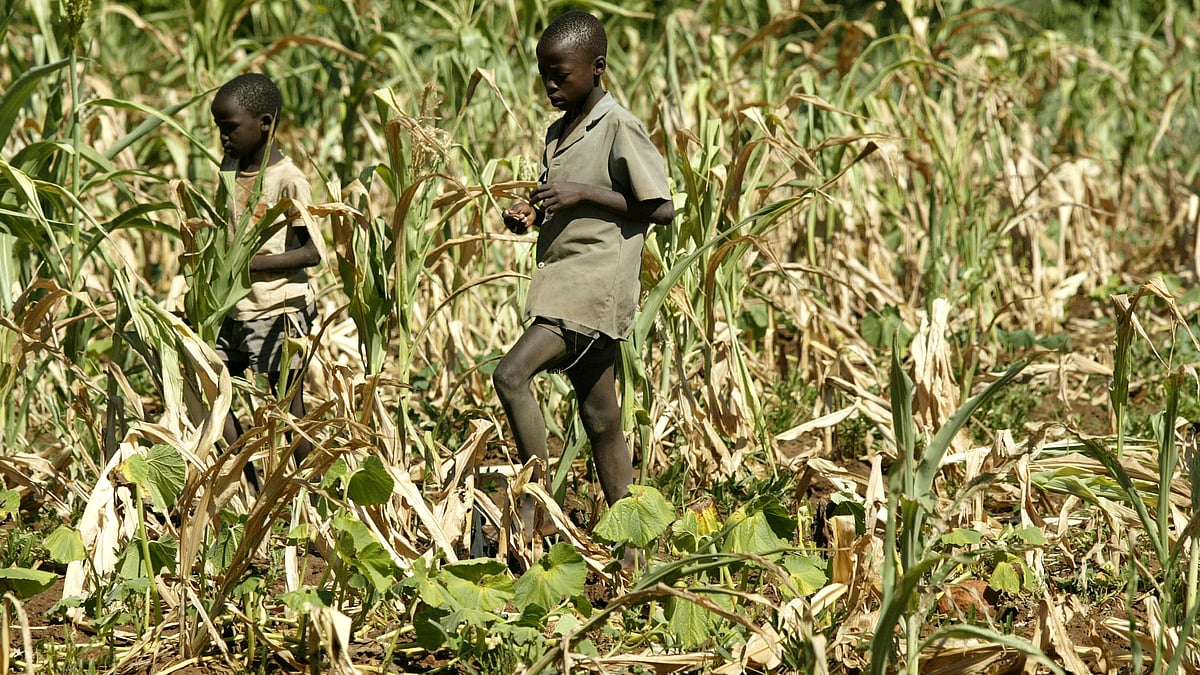
Even in the best of times, life is harsh in Siyagijima, a desolate village in south-west Zimbabwe. After the worst regional drought in nearly a decade and the failure of nearby crops, it is likely to be even harsher.
31-year-old Mejury Tererai’s maize and cotton crops have been decimated. She has been forced to feed her children nothing but scarce maize and ground nuts.
She would be lucky to get 50 kilos of maize this year – enough for just over a month. Her cotton is a write-off and she owes $27 to the firm that provided her with chemicals. If she fails to pay, they will sell her single goat or chickens or rip the corrugated iron roof from her two-room house.
She hopes President Robert Mugabe’s government can provide basic support, but it is far from clear if it has the means.
Our request is that we need help with food so that our children are able to go to school and concentrate. Last year we had a good harvest but this year we got very little. It was too hot and we received little rain.
– Mejury Tererai
The drought is likely to damage harvests across southern Africa – from southern Angola to Botswana, Lesotho, Malawi, Mozambique and Namibia, the World Food Programme (WFP) claimed.
Zimbabwe Worst Hit
The impact is looking particularly serious in Zimbabwe, where the economy has been struggling for five years to recover from a catastrophic recession that was marked by billion percent hyper-inflation and widespread food shortages.
The government and foreign relief agencies are still assessing needs but one official said up to 1.8 million people – more than a tenth of the population – may require food aid.