Live: Trilateral Agreement Signed Between India, Iran, Afghanistan
Prime Minister Narendra Modi will be receiving an official ceremonial welcome on the second day of his visit to Iran.
advertisement
PM Modi has departed from Tehran for Delhi after a two-day visit.
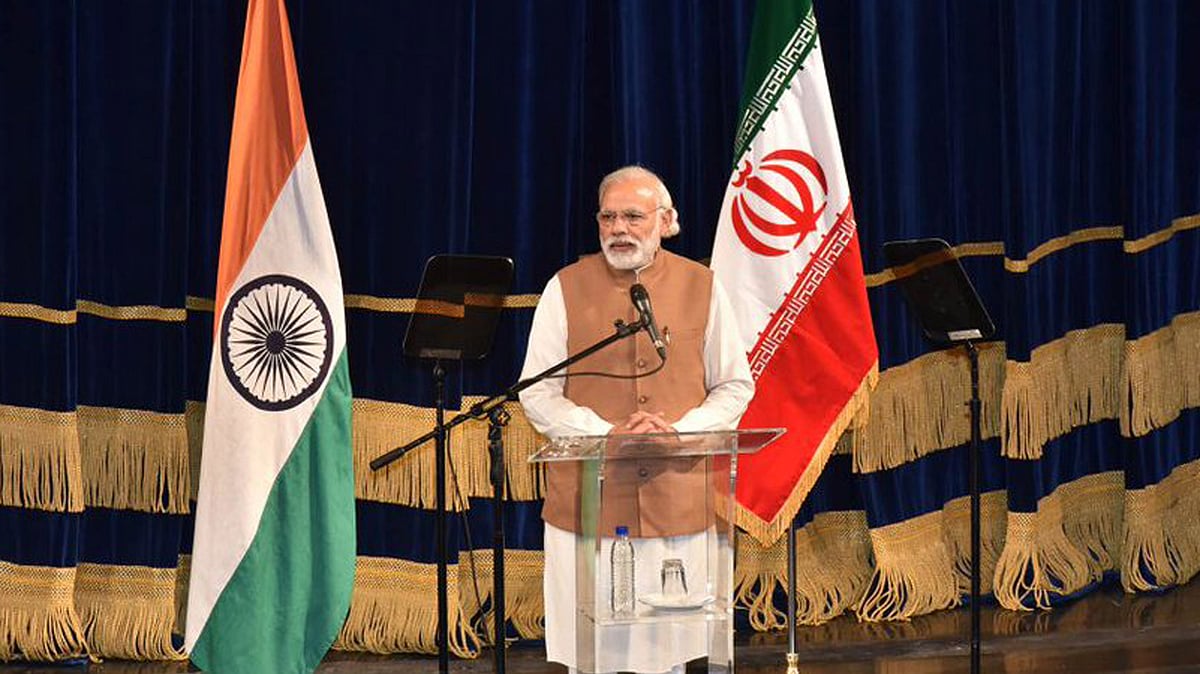
PM Narendra Modi spoke at the inauguration of international conference in Tehran, Iran. Modi also released a rare manuscript which is the Persian translation of the Panchatantra.
Here are the highlights of his speech:
- It is an occasion to recall and renew India-Iran’s centuries old association.
- It is also in perfect response to those who preach radical thoughts in our societies.
- A part of Iranian culture lies in every Indian heart and, part of Indian heritage is woven into Iranian society.
- Richness of Persian heritage is an integral part of the fabric of Indian society.
- The great medieval poets of India have called Persian and Sanskrit as sisters.
- In the richness of Iranian culture, who can forget the poetry and beauty of its Persian language.
- India’s religious epic Ramayana which has seen over a dozen translations in Persian is known to have about 250 words of Persian.
- The spirit of Sufism is also reflected in the Indian concept of ‘Vasudhaiva Kutumbakam’, the World as one family.
- Our ancients heroes and epics bear striking parallels,dargahs of Ajmer Sharif and Hazrat Nizamuddin in India are equally revered in Iran.
- Mahabharata and Shahnama, Bhima and Rustam, Arjuna and Arsh exhibit similarities in our world views & values. It served as a court language in medieval India. But, its popularity is also because it is written on the hearts of the Indians.
- Your deliberations indeed provide a body of strength to our literary, academic and people to people ties.
- Crafts like Zardozi, Guldozi and Chanderi maybe a part of Iranian Society. They’re equally common in India too.
The Pact Can Alter the Course of Region’s History: Modi
Talking about the trilateral Transport and Transit Agreement involving Iran and Afghanistan, Narendra Modi said, “It will open new routes for India, Iran and Afghanistan to connect among themselves.”
Highlights from Modi’s speech:
- Today we are witnessing history being created in the region.
The agenda for economic engagement is a clear priority for us (India-Iran).
- We want to link with the world but better connectivity among ourselves is also a priority.
Even through the turmoil of history, our societies never lost touch with each other.
- In-flow of capital and technology can lead to new industrial infrastructure in Chabahar.
- The Trilateral Transport and Transit Corridor will be a corridor of peace and prosperity for our people.
- The Chabahar Agreement will expand trade, attract investment, build infrastructure, and create jobs for our youth.
- It is a place to realise the imperative of better connectivity, establish peace, build economic prosperity and engineer new trade ties.
- It is a place to realise the importance of curbing radicalism, removing the shadows of terror, and spreading the sweetness of familiarity between our people.
PM Modi Meets Afghan President Ashraf Ghani
Modi, Rouhani Deliver a Joint Statement
Prime Minister Narendra Modi and Iranian President Hassan Rouhani deliver a joint statement in Tehran.
In his statement, Modi said that Iran and India have been old friends “as old as history” connected through art, architecture and commerce.
Voicing the countries’ shared concerns over issues of terrorism, Modi said that the countries have agreed to consult closely and regularly on combating threats of terrorism, radicalism, drug trafficking and cyber crime.
Strategic Chabahar Port Agreement Signed
The crucial Chabahar port agreement has been signed between India and Iran.
Under the agreement, India will develop two terminals and cargo berths at Chabahar, on the Gulf of Oman. India will make an initial investment of more than $200 million in the port, of which India’s Exim Bank would provide a credit line of $150 million. In the next phase, India plans to build a 500-km railway line between Chabahar and Zahedan.
The port will allow India to bypass Pakistan to transport goods to Afghanistan and central Asia using a sea-land route.
Modi and Rouhani hold delegation level talks along with other Iranian and Indian leaders.
Modi Gets a Ceremonial Welcome
President Hassan Rouhani receives Prime Minister Narendra Modi in a ceremonial welcome on the second day of his visit to Iran. He will be attending a meeting with the President after the ceremony.
Modi’s Iran Visit
Prime Minister Narendra Modi arrived in Tehran, on a two-day bilateral visit on Sunday night. Modi’s maiden visit to Iran, the first by an Indian Prime Minister in 15 years, comes four months after sanctions on Iran were partially lifted.
The prime minister’s visit comes four months after the sanctions on Iran were lifted and the international community is re-engaging with the nation.
The signing of the trilateral Chabahar Port Agreement will be on top of the Prime Minister’s agenda but there’s a lot else on his plate.
Agenda for Day Two
- Modi will be accorded an official welcome, following which he will hold talks with Supreme Leader Ayatollah Sayyid Ali Hosseini Khamenei and President Hassan Rouhani.
- Bilateral talks with Iranian President Rouhani will focus on regional connectivity, infrastructure and energy as well as terrorism and extremism in the region.
- Discussions on the mode of clearance of the $6.4 billion that Indian refiners like Essar Oil and MRPL owe Iran in past oil dues. (Ahead of the visit, refiners cleared $1.2 billion debt in a haste.)
- India will sign the trilateral Chabahar Port agreement where apart from Modi, Road Transport, Highways and Shipping Minister, Nitin Gadkari will also be present.
- As part of this agreement, Indian Ports Global Pvt Ltd will sign a contract with Arya Bandar Company of Iran for developing two terminals and five multi-cargo berth in Phase-1.
Chabahar Port Agreement
India will invest billions of dollars in setting up industries in Iran’s Chabahar free trade zone after it signs the pact to operate a strategic port on the Persian Gulf nation’s southern coast.
The pact will help India gain a foothold in Iran and win access to Afghanistan, Russia and Europe, thus circumventing Pakistan, Road Transport, Highways and Shipping Minister Nitin Gadkari told PTI.
Gadkari said Nalco will set up the aluminium smelter while private and co-operative fertiliser firms are keen to build urea plants provided they get gas at less than $2 per mmBtu. Railway PSU IRCON will build a rail line at Chabahar to move goods right up to Afghanistan, he said.
India Ports Global Pvt, a joint venture of the Jawaharlal Nehru Port Trust and the Kandla Port Trust, will invest USD 85 million in developing two container berths with a length of 640 metres and three multi cargo berths, he added.
The Indian consortium has signed the port pact with Aria Banader Iranian.
Schedule of Modi’s Second Day in Iran
- 10:00-10:15 – Attending a ceremonial welcome Saadabaad Palace
- 10:15-10:45 – Meeting with President Hassan Rouhani
- 10:45-11:45 – Holding delegation level talks
- 11:45-12:20 – Signing of agreements
- 14:00-15:00 – Attending luncheon hosted by President Rouhani
- 14:15-15:40 – Holding a trilateral meeting
- 16:15-16:40 – Signing ceremony and press statements
- 18:30-19:00 – Speech on cultural ties, release of Kalileh-Wa-Dimneh Persian manuscript of translated panchatantra and Jataka tales
- 19:30 – Meeting with Ayatollah Khameini
Highlights of Day One
Prime Minister Narendra Modi arrived at Tehran, on Sunday on a two-day visit, during which a crucial agreement is expected to be signed on developing the strategic Chabahar port.
He was received at the Mehrabad International Airport by Iran’s Finance and Economic Affairs Minister Ali Tayyebnia.
He also visited the Bhai Ganfa Singh Sabha Gurudwara to inaugurate an International Conference on ‘retrospect and prospect’ of relations between India and Iran.