How Media Influences Public Perception During a Health Crisis
We looked at how the media reported on past viral outbreaks and what we can learn from past mistakes.
advertisement
For a generation that experienced the COVID-19 outbreak, when news of a Hantavirus outbreak aboard the MV Hondius cruise ship broke, the feeling was immediately familiar. Stories about three lives lost, and rumours about the virus spread across social media feeds and front pages within hours. It was not just grief but the complete cycle of news headlines stacking up, the familiar vocabulary of crisis and misinformation spreading before facts.
We have seen this multiple times since the COVID-19 pandemic. A disease surfaces, claims lives, draws attention, and the media ecosystem shapes public perception; how millions of people understand, react to, and in some cases, survive what follows. Misinformation and misreporting during a pandemic are as consequential as the disease itself.
At The Quint, we debunked health misinformation around COVID-19 and the vaccination process and ensured our readers were only exposed to fact-checked and accurate information.
But each new viral outbreak brought another wave of similar misinformation, which forced us to ask the question: how does media influence public opinion during a health crisis?
How the Media Coverage Evokes Emotions
While looking at how the media covered the COVID-19 pandemic, we found a study published in the British scientific journal Nature, ‘Sentiments and emotions evoked by news headlines of coronavirus disease (COVID-19) outbreak’.
It analysed over one lakh headlines published by English news outlets around the world between 15 January and 3 June 2020, having the keyword ‘corona’. The purpose of the analysis was to understand the sentiment that the headlines evoked in people. According to the study,
The terms that recurred the most in headlines discussing coronavirus were ‘covid’, ‘lockdown’, ‘case’, ‘trump’, and ‘death’.
Most common words in coronavirus news headlines.
(Source: Nature/Screenshot)
Almost 52 percent of the headlines evoked negative emotions, 30 percent positive, and 18 percent were neutral.
The test showed that overall, 3833 words were negatively polarised or contributed to evoking negative emotions. Some of the most common among these were ‘pandemic’, ‘trump’, ‘outbreak’, ‘virus’, ‘death’, ‘crisis’, ‘fear ’, and ‘fight’
Screenshots of headlines
Interestingly, the same study noted that while the COVID-19 virus resulted in a high death toll, other illnesses caused by viruses, such as HIV or influenza, had resulted in larger death tolls. However, the extent of media attention the coronavirus had received was much greater.
Let’s follow a similar method to look at the headlines related to other outbreaks, such as Hantavirus, Monkeypox (Mpox) and Ebola. We can see a similar pattern in the keywords that appear often.
Popular keywords such as ‘death’, ‘pandemic’, ‘outbreak’, ‘crisis’ and ‘fear’ were common in the headlines for articles covering outbreaks such as Mpox, Ebola and Hantavirus.
Keyword search for articles related to the Ebola virus showed numerous headlines having words such as ‘death’,’ case’, ‘outbreak’, ‘deadly’ and ‘virus’.
(Source: Altered by The Quint)
Hantavirus also received significant media reportage, with headlines including words such as ‘outbreak’, ‘death’, case, and ‘pandemic’.
(Source: Altered by The Quint)
Looking at the headlines related to Mpox was slightly more complicated since the last outbreak began in 2022 and is still ongoing.
To understand the nature of the headlines, we looked at headlines of articles published between May 2022 and July 2022, the initial phase. Most of the headlines were devoid of keywords such as death, crisis, pandemic, outbreak, etc.
We also noticed that numerous articles were explainers, that discussed the symptoms, precautionary measures and what the disease is.
(Source: Altered by The Quint)
In times of health emergencies, the framing of these articles affects how people react to the situation. Articles that are negatively polarised or have headlines that are negatively inclined can cause panic among the readers.
However, the reports that are explanatory in nature keep the public informed without creating unnecessary fear in individuals. It is important to maintain a balance by informing the citizens about the severity of the situation without causing panic. Similarly, a reliance on emotions also plays a part in people falling for misinformation.
While the above study focused on the nature of emotions headlines evoked in readers, another study published in the Journal of Medical Internet Research used a different method to understand the sentiments evoked by the news reports.
Instead of looking at the emotion each headline or report conveyed, they compared the sentiment of a given article with other articles published by the same news source.
The purpose of this was to calculate how negatively or positively polarised a particular headline was relative to other non-COVID topic articles. The study included both the headline and the description in its analysis.
For example, the coverage of cancer was completely negatively polarised, meaning that the majority of reports conveyed negative sentiments, while on the other hand, a disease such as COVID-19 saw a more heterogeneous coverage. This doesn't disprove the fact that the media coverage of the disease evoked negative emotions.
What Impact Does It Have?
The study published in the Journal of Medical Internet Research states that 25 percent of all front page articles in traditional newspapers from the early phase of COVID-19 were related to the pandemic.
(Source: Journal of Medical Internet Research/ Screenshot)
While covering a pandemic extensively kept the public informed, it also led to information overload and could have an impact on the mental health of citizens, along with hindering their reaction to precautionary measures. According to Swapnil Mishra, an Assistant Professor at Saw Swee Hock School of Public Health, National University of Singapore, the COVID-19 pandemic was a ‘sustained infodemic’.
Since we now know what kind of emotions were conveyed by the media reportage during the pandemic, we also looked at how people reacted to pandemic-related news.
An online study in which participants were divided into three groups: one group was shown positive news, one was shown negative news, and the third was shown neutral news, which had no relation to the pandemic was conducted. They were asked to fill out self-report questionnaires to assess their reactions.
They observed that people who were exposed to positive news were shown to have higher psychological resilience compared to people who were exposed to news with negative content.
They concluded that if just a one-time exposure can create such a result, then, in the long run, exposure to news with negative sentiments can affect people’s ability to cope with adverse situations.
Other Forms of Misreporting
It is not uncommon to find ourselves browsing the internet and going through reports and blogs to find out how to stay safe during a pandemic and what medicine to consume to be cured of the illness. However, it has proven to be unreliable at times.
According to a 2021 study by researchers at The George Institute for Global Health, almost 40 percent of media coverage during the initial phase of COVID-19 about treatment methods in India provided misleading information.
The study covered the top five English-language publications in India and examined the articles that mentioned ‘COVID-19’ or ‘Coronavirus’ published during the initial phase of the pandemic. Here are some of the findings:
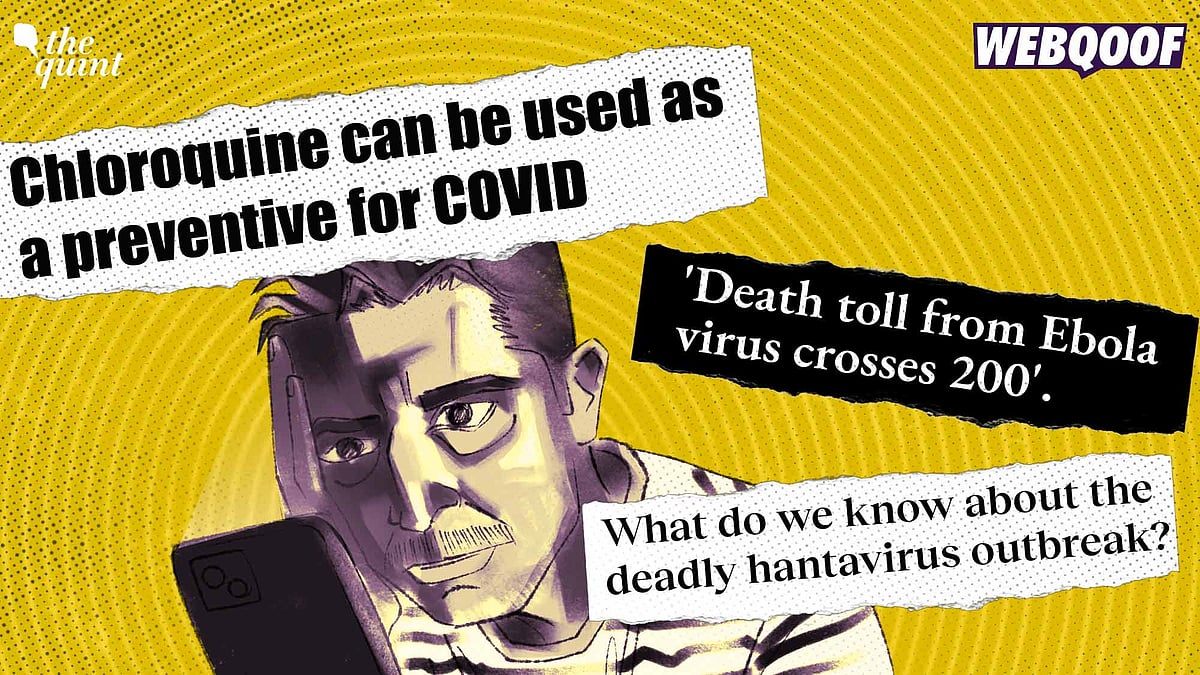
Among articles discussing the cure and treatments for COVID-19, 66.7 percent suggested chloroquine, an antiparasitic medicine, as a preventive for the disease, although the World Health Organisation (WHO) did not recommend it.
Plasma therapy was another cure that numerous reports cited without scientific backing.
7.5 percent of articles recognised pregnant women and 11.8 percent recognised children to be at risk of severe illness, despite it not being explicitly stated by the WHO, and only limited evidence existed about this. Overstating risk factors can cause panic among citizens and have lasting mental health consequences.
This was one form of misreporting that was observed during the COVID pandemic.
While health reporters tried to learn from past mistakes, cases of misreporting were still observed during other viral outbreaks, although not to the same extent as COVID.
Multiple studies that focused on how the UK news media reported Mpox during the 2022 outbreak discussed biased reporting, which included using stigmatising language. The study suggested that the media often portrayed mpox as exclusively affecting queer men.
How the UK media outlets covered the Ebola outbreak back in 2014, long before COVID-19, is a story of inconsistency, sensationalism and selective coverage.
A study stated that during the initial stage of the outbreak, even when the epidemic was growing in scale across Africa, the media outlets were sparsely covering it. However, the coverage grew extensively once the virus became a threat to the Global North.
There was also a sudden shift in media framing after September 2014, when the volume of articles increased, along with the virus suddenly being referred to as a "global security threat". This led to an increase in panic among the citizens, amplifying the situation.
(Source:Sage Journals/Screenshot)
It is still too early to predict how the media will cover the Hantavirus outbreak in the coming weeks.
What Do We Learn From Past Crises?
The past crises, apart from teaching us not to believe the cure for COVID from a WhatsApp forward, have also shown us what not to do while reporting a health concern.
Whether it be reporting on treatment methods for COVID that have not been backed by evidence or relying on unverified sources, there is a lot to learn from the reporting done during the pandemic.
Let’s look at a checklist of what to do to ensure that we don’t spread false information or cause panic while reporting a health concern :
(Photo: The Quint)
1. Include Only Verified Statements
The example of how chloroquine was suggested as a preventive or plasma therapy for COVID treatment without an official WHO statement is what not to do during a pandemic. While it is important to keep the public informed on WHO updates, the information needs to be fully verified before it is published.
2. Contextualise the Information
Reporting on the death toll, number of cases and severity of cases without proper context can cause panic among the citizens. It is important to provide context on who is getting affected and what the overall threat is to the public. According to a researcher from a public health organisation based in Delhi, who did not wish to be named, most media reports on Ebola or Hantavirus focus on incidents and cases due to the virus without addressing the questions readers would have and what can be done about it.
She said, "These articles are not contextual to the audience, such as addressing what it means for the reader."
3. Maintain a Balance Between Simplifying and Oversimplifying
The use of medical or epidemiological jargon can cause panic or confusion among the readers. On the other hand, oversimplification can reduce the severity of the threat. The information should be communicated while maintaining a balance between simplifying the jargon and providing context as well.
4. Avoid Sensationalism or Clickbait Headlines
The language used in reporting a health crisis is crucial in not causing panic among the citizens. Headlines should effectively get the point across to the readers without creating unnecessary dread. The repeated use of certain negative keywords, such as ‘public health emergency’ or ‘deadly virus’, can also create fear among the public and negate the goal of communicating the severity of the threat and preventive actions.
As we have experienced disease outbreaks and learnt from them, we can not only ensure that we don’t fall for false news but also avoid being the cause or the origin. Although communication is the anchor in a crisis, it is important not to let it mislead us.