Vulture Safe Zones to Be Set Up in Tamil Nadu, Forest Department Tells Madras HC
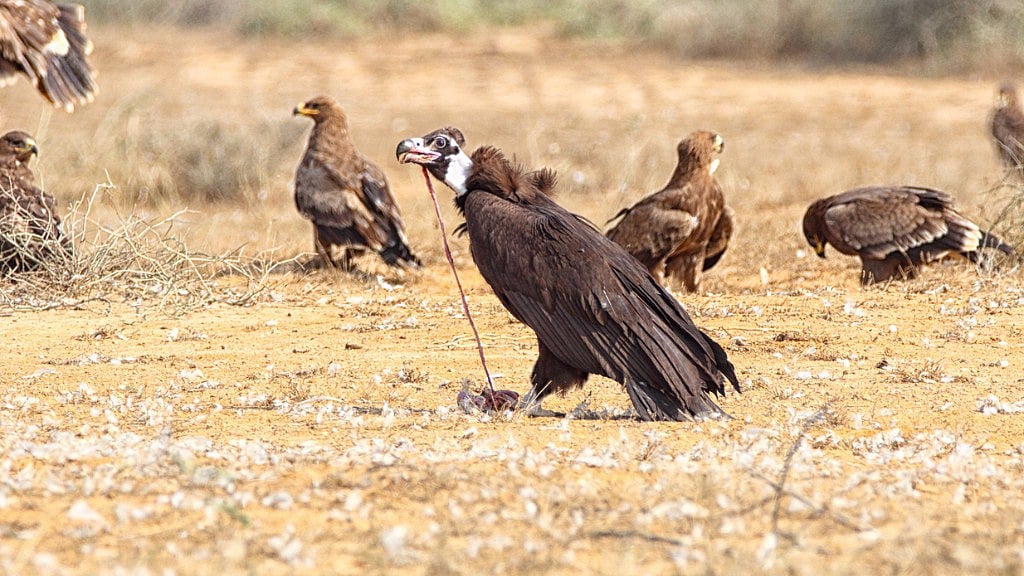
The committee has been instructed to map vulture nesting and habitat sites and monitor carcass hotspots.
advertisement
The Tamil Nadu Forest Department has commenced the process of establishing Vulture Safe Zones (VSZs) in the state.
The initiative aims to create protected areas for vultures, focusing on eliminating threats such as exposure to toxic veterinary drugs, particularly non-steroidal anti-inflammatory drugs (NSAIDs) like diclofenac, which have been a significant cause of vulture mortality in India.
According to The Hindu, the Forest Department submitted a status report to the Madras High Court, detailing the steps being taken to establish the first VSZ around the Moyar River Valley in the Nilgiris Biosphere Reserve. This action is part of the “Vision Document for Vulture Conservation (VDVC) in Tamil Nadu 2025-30.”
A field-level monitoring committee, chaired by the Field Director of Mudumalai Tiger Reserve, has been formed to oversee the establishment of these zones as coverage revealed. The committee includes district forest officers from the Nilgiris, Gudalur, Coimbatore, and Erode, as well as deputy directors from Mudumalai, Anamalai, and Sathyamangalam Tiger Reserves, and a representative from the Advanced Institute for Wildlife Conservation (AIWC) in Vandalur.
The committee has been instructed to map vulture nesting and habitat sites and monitor carcass hotspots that meet the criteria for declaring an area as a Vulture Safe Zone.
Additionally, a system will be implemented to collect and analyse carcass samples for traces of banned NSAIDs, and inspections of veterinary retailers will be conducted with the assistance of the Drugs Controller following these developments.
“Necessary instructions have been issued to the above committee to take action and to create and submit a map, duly marking the vulture nesting and habitat usage sites and for monitoring carcass hotspots, which meet our conditions for declaring an area as a Vulture Safe Zone,” stated Principal Chief Conservator of Forests-cum-Chief Wildlife Warden Rakesh Kumar Dogra.
A 100-kilometre radius around the Moyar vulture nesting population will be monitored for two years, during which scientific data will be generated. Approximately 800 carcasses will be sampled and tested for the presence of banned NSAIDs as analysis showed.
The Forest Department also plans to request similar action from neighbouring states Karnataka and Kerala after detailed mapping is completed.
The Madras High Court has granted time until 2 February 2026 for further suggestions on the VDVC 2025-30, after reviewing the status report and the conservation plan prepared by the AIWC as details emerged.
“A sampling of around 800 carcasses will be done during this period for testing the prevalence of the banned NSAIDs. Similar action would also be requested from the neighboring States of Karnataka and Kerala.
A specific request would be sent to them after a detailed mapping is done by the committee,” the status report stated.
Note: This article is produced using AI-assisted tools and is based on publicly available information. It has been reviewed by The Quint's editorial team before publishing.