
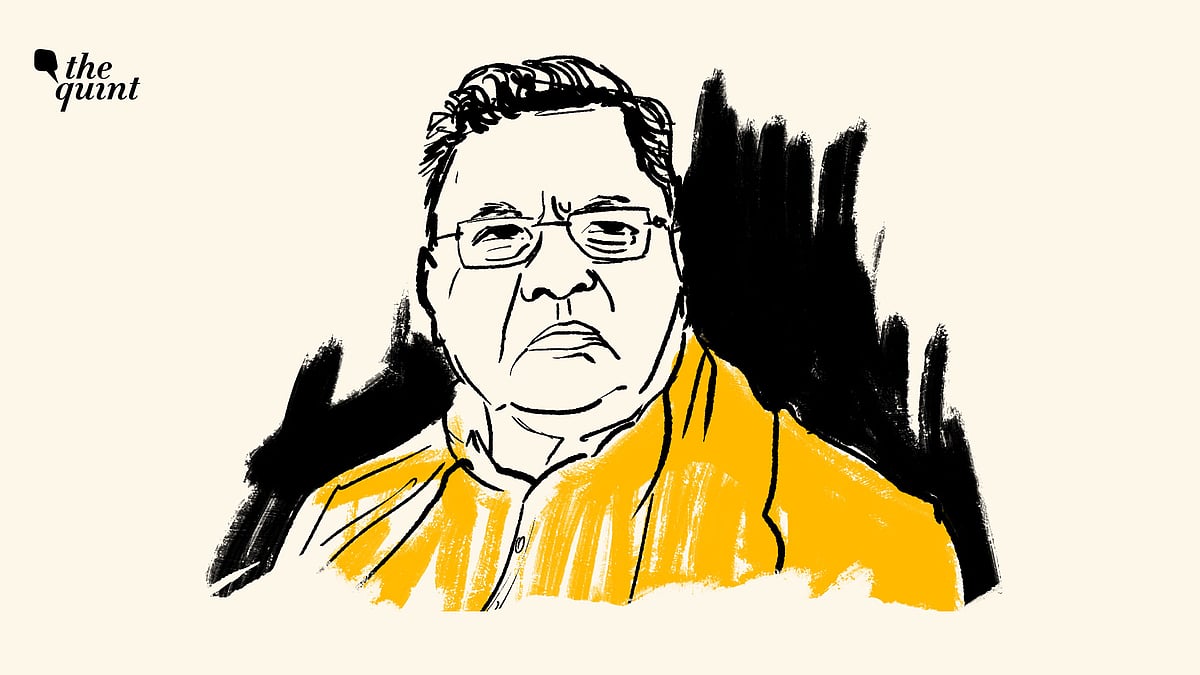
1,000 Days of Siddaramaiah's Second Term: Where Did the Zest Go?
In contrast to his first term, Siddaramaiah 2.0 has been driven by political compulsions and charges of corruption.
advertisement
Last week, Siddaramaiah made history as the longest-serving chief minister of Karnataka. As he is now inching towards completing 1,000 days of his second term in office in mid-February, attention has turned to comparing his administrative journey across both terms in office.
Siddaramaiah's first term from 2013 to 2018 saw the launch of his flagship 'Bhagya' (welfare) schemes: Anna Bhagya, which assured 30 kg rice at one rupee per kg; Bhagyalakshmi in support of the girl child from economically disadvantaged families; and Ksheera Bhagya, which provided milk to school children to overcome malnutrition. During this period, Siddaramaiah also faced no internal political challenges.
By contrast, Siddaramaiah 2.0—from 2023 to now—has been driven by political compulsions, strain over the five Congress guarantees, charges of corruption, and speculation of a change of guard.
‘No Centrality to Administration Anymore’
In 2023, Siddaramaiah returned to power after the Congress won a comfortable majority, winning 136 of the 224 seats in the Karnataka Assembly elections.
But, as a Congress leader told The Quint on condition of anonymity,
Substantiating his observation, he said during Siddaramaiah’s first term, no one dared to question him. Additionally, within the Congress, the chief minister faced no serious leadership challenges, with aspirants like Shivakumar and G Parameshwara looking to the next Assembly elections.
Another Congress functionary, who was privy to the government formation talks after the 2023 results, opined Siddaramaiah could have felt "demoralised" as it took a week for the party high command to name him the CM.
Apart from the presence of a Deputy CM in Siddaramaiah's second term, Sandeep Shastri, a political analyst who's vice-president of Nitte University (Bengaluru campus) highlighted another difference between his two terms.
All of them underline that Siddaramaiah's downturn stems from a tenure overshadowed by controversies involving corruption and abuse of power.
Woes of Siddaramaiah 2.0
The 40 percent commission in the award of government contracts—a campaign on which the Congress rode to power two years ago—has come back to haunt the Siddaramaiah regime.
In September 2025, the Karnataka State Contractors’ Association, which had earlier accused the previous Bharatiya Janata Party (BJP) government of demanding a 40 percent commission, claimed that commission rates had doubled under the present regime.
The letter highlighted that government institutions like Nirmithi Kendra and the Karnataka Rural Infrastructure Development Corporation were awarding projects to followers of MLAs and party leaders, who then sub-contracted them in return for a cut.
After the 2024 Lok Sabha polls, in which the Congress bagged just one of the 28 seats, allegations of large-scale land allotment by the Mysuru Urban Development Authority involving officials, politicians, and Siddaramaiah's family surfaced. Though a judicial commission and the Lokayukta gave a clean chit to Siddaramaiah and his family members, the Enforcement Directorate (ED) has initiated investigations.
The five guarantees implemented by the Congress government in Karnataka are welfare schemes for social and economical support, namely Gruha Jyothi (provides electricity support), Gruha Lakshmi (monthly cash assistance to women head of every family), Gruha Shakti (free travel for women), Yuva Nidhi (unemployment support), and Anna Bhagya (free rice).
"Though rolling out the five guarantees was a compulsion, the corruption level has gone up," said the Congress leader.
Shashtri added, "Despite the five guarantees being implemented, the government has done little to showcase its achievements. As a result, Siddaramaiah's tenure is marked by a sense of drift. There's also a reduced focus on administration and fiscal prudence," referring to Karnataka's weakening financial position.
Guarantees That Still Deliver
Of the five guarantees, the brighter side of Siddaramaiah’s regime are Gruha Shakti and Gruha Lakshmi.
Gruha Shakti, which allows women to travel free on non-premium government buses run by the four state transport corporations, has seen around 500 crore women passengers between 11 June 2023 and 25 July 2025.
There have also been success stories of the Gruha Lakshmi scheme, which provides Rs 2,000 to the woman head in a family, though complaints persist about delayed payments.
Siddaramaiah's economic advisor and Yelburga MLA, Basavaraj Rayaraddi, told The Quint that Karnataka's fiscal position was sound during the first term as the government did not have pending bills to clear nor were there parallel power centres. However, Siddaramaiah 2.0 had to take on the BJP government's Rs 2.47 lakh crore in uncleared bills on top of the Congress five guarantees.
As the economic advisor, he wanted Siddaramaiah to take the lead in administrative and electoral reforms.
“The political system is demoralised with election expenses mounting, which have a cascading effect on the administration. Siddaramaiah should now focus on touring the state extensively to monitor developmental works,” Rayaraddi added.
What Parallel Power Camps Say
A section of Congress MLAs hold the party high command responsible for letting the uncertainty over leadership change drift.
On Shivakumar’s pursuit of the alleged power-sharing deal, party sources said if he becomes CM, he would have only one year in office as in May 2026, the government completes three years. Shivakumar will have only one year up to March 2027 to govern, as the following months will be right before the 2028 Assembly elections in the state. Next year is not about administration but party building, said the sources.
His assets include a steady political rise—from an Independent MLA to the Janata Party, Janata Dal (Secular), and finally the Congress, where he carved his niche as an AHINDA leader, which remains his key strength. Across roles, his administrative skills and clean image stood out, except in his current term. His biggest strength was his ability to stay connected with the public.
In his liabilities, a few merit attention. Though a people’s person, he evoked strong support and equally intense opposition. He had favourites and sidelined others, Shastri noted.
The BJP, meanwhile, has mocked Siddaramaiah’s longest-serving CM record.
“It’s not just about the number of days, but also records have been set in high corruption rates, zero development, more loans, and other issues. Under Siddaramaiah’s tenure, corruption is rampant, government schools are shutting down, assaults on women and farmer suicides are increasing, there is high unemployment, and there is appeasement politics,” the BJP Karnataka's handle posted on X.
(Naheed Ataulla is a senior political journalist based in Bengaluru. This is an opinion piece, and the views expressed above are the author’s own. The Quint neither endorses nor is responsible for the same.)
- Access to all paywalled content on site
- Ad-free experience across The Quint
- Early previews of our Special Projects
Published: undefined