
Making of The Muslim Suspect: Fake Names Used For 'Spying' & Conversion Cases
"Pakistan zindabad" slogans raised during Muharram. But in reality, the accused turned out to be two Hindu men.
advertisement
(Exposing hate and communalism is a key focus area in The Quint's reportage. Become a member and support our journalism.)
On 21 June, a reel showing a Muslim child chanting “Pakistan Zindabad” in a Muharram procession was circulated online. Another man, behind the camera, can also be heard raising the same slogan. In India’s politically volatile environment, the video could have led to hostilities in only a matter of time.
But, the police probe revealed that the video, from Uttar Pradesh’s Bareilly, was staged and two Hindu men had forced the child to raise the slogans.
They made the child raise the slogans with “malicious intent”, said the police, which lodged an FIR against the two men soon after.
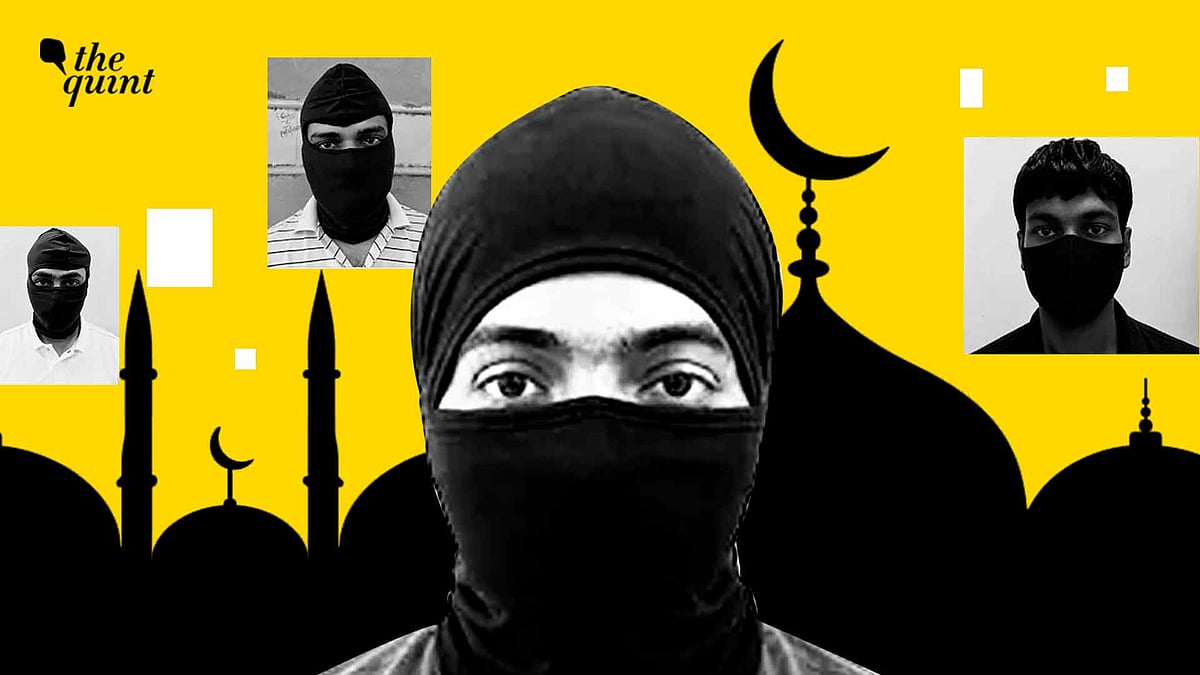
This is not an isolated event. This story is a follow up after our report last year, deep diving into how fake Muslim names have become a tool for criminal activities.
“This is a very old pattern, very very old pattern,” says Prof. Apoorvanand, a Hindi professor at Delhi University, and a political commentator, while linking such incidents to the RSS.
“These instances might seem new to people but if you dig the archives of newspapers and social media platforms one can see that they often do this. They plant their own people in Muslim processions and raise slogans like Pakistan Zindabad. So, this is a very old and familiar playbook used by RSS,” adds Apoorvanand.
In another case on June 18 in Uttar Pradesh’s Bijnor, an altercation over an alleged cow slaughter turned out to be a set-up. A local village headman, Jagpal (who is referred to by his first name in police statements) conspired against his political rival Hasan by trying to frame him in a case of cow slaughter and possibly, incitement of communal violence. Jagpal had arranged for a calf and brought in three people for the slaughter, according to the police.
The police managed to diffuse the situation as members of Hindu organisations gathered to protest against the alleged slaughter. Cow-related violence is one of the leading reasons of anti-Muslim violence in India.
Between May 2015 and December 2018, at least 36 Muslims were killed in attacks by gau-rakhshaks (literally, cow protectors), vigilantes notorious for intercepting and attacking vehicles on suspicion of cow trade and slaughter. Cows are sacred to many Hindu sects and castes, and cow slaughter, possession and sale of beef has been banned in many parts of India to respect their religious sentiments.
According to a 2024 study by the Armed Conflict Location and Event Data (ACLED), a non-profit funded by the UN, 22 percent of documented anti-Muslim violence was related to suspicions of cow slaughter and/or possession of beef, between years 2019 to 2024 (the second run of the BJP government at the centre).
Bajrang Dal Weaponises a Muslim Name
On 15 June, Bajrang Dal functionary Yogesh Renwal registered a complaint against a Moin Khan in Rajasthan’s Kota, alleging that he was involved in an online nexus with Pakistani links that targeted Hindu women for religious conversion.
According to the Additional Superintendent of Police, Subhash Chandra, "Neither the investigation nor the medical examination has revealed any indication of religious conversion," adding that there was no evidence that Sharma adopted the name 'Moin Khan.'
Police also stated that there were no links found to a conversion network with Pakistan, just the accused attempts to access pornographic content.
In another recent case, an NDTV report that named seven individuals arrested in connection with an alleged Delhi-based spy network linked to Pakistan was widely circulated on social media, with claims that all of those named were Muslims.
One user reposted saying, “all bloody Muslims”.
An Alt News fact check disproved these claims, with reports and records that show that at least five of the arrested individuals were Hindus.
“The list circulating on social media therefore misrepresents the identities of the accused and seeks to give the alleged crime a communal colour,” reads the Alt News report.
Despite strict laws in place, instances of crimes being committed under false Muslim identities have become frequent in the recent past.
On Eid-al Adha, communal tensions loomed in Maharashtra’s Brahman Galli as CCTV footage showed a burqa-clad woman dumping meat in the Hindu colony, after residents found the dumped meat. People were furious.
Police soon intervened and after a two week investigation, it was revealed that the woman was not Muslim.
According to the police, the woman, Swati Bhosale, claimed that she was seeking alms from Muslims on Eid. She discarded the meat she had received, because she did not want it. Many questioned the need for the burqa for begging, and why Bhosale chose to dump the meat in Brahman Galli.
“These incidents are undeniably illegal and constitute cognisable offences, yet they continue to gain traction because of the sheer volume of anonymous accounts and the algorithmic amplification of polarising material,” says Areeb Uddin, an Advocate based in Uttar Pradesh.
“The viral nature of social media ensures that misinformation spreads faster than any official clarification can be issued,” adds Uddin.
'Public Tends to Believe Crime Is Done By Muslims'
Apoorvanand noted, “Public memory is very short. The public tends to believe that all this is done by Muslims, and even if they discover that it was done by Hindus, the Hindu public doesn't mind. Once the first video has done its work, the clarifications hardly change the opinions."
An old CCTV clip of a man dragging another with a rope tied around his neck was circulated recently. Though the incident was old, claims were made on social media that the assaulter in the video is a Muslim and he’s dragging a Hindu priest in Haryana’s Kurukshetra, because a nearby dargah was receiving lower footfall because of the priest’s temple.
According to a fact check, the assaulter was a Hindu man named Pankaj Saini, who was aided by his wife Manpreet; and the couple had been arrested.
In another case from 2020, a false communal claim was debunked, wherein three teenagers stabbing a man to death were accused to be Muslims. A copy of the FIR and confirmation with the Delhi Police proved that the accused were not Muslims.
Last year in January, a 22 year old from Bihar was arrested for making threats online to bomb the Kumbh Mela. Ayush Jaiswal, the accused had used the ID “Nasir Pathan” to make the threats.
In 2024, two Hindu men threatened to bomb Yogi Adityanath and the Ayodhya Ram Temple, under email IDs, 'alamansarikhan608@gmail.com' and 'zubairkhanisi199@gmail.com'. A Special Task force traced the emails to residents Tahar Singh and Omprakash Mishra of Lucknow.
Similar to the incident in Bareilly, seven Hindutva activists were arrested in 2021 for hoisting a Pakistani flag in front of a government office in Karnataka, while laying the blame on the town’s Muslim community. The police linked the accused with Sri Ram Sene, while SRS alleged that the accused belonged to the RSS.
“Every case of communal incitement and disinformation disseminated through fake identities on social media is governed by a multi-layered legal framework in India,” says Uddin.
The Bharatiya Nyaya Sanhita, 2023, directly criminalises acts that promote enmity between religious or other groups, outrage religious feelings, or constitute hate speech communicated through any electronic medium.
“Simultaneously, the Information Technology Act, 2000, penalises identity theft, cheating by impersonation, and the transmission of misleading or offensive content online,” adds Uddin.
Dressing Up As Muslim To Incite Hate
These false accusations and allegations are validated and vindicated by other anti-Muslim media that has already been circulating in the public domain.
Staged sketches and plays have already stereotyped Muslims and created mass distrust against them by the time the false allegations are levelled.
The Quint has previously reported on these videos. Nearly 50 percent of the videos fact-checked were communal in nature, and had no disclaimer about being scripted.
These fictional ventures have taken an exploitative and predatory turn in Hindu sammelans, where plays, depicting tropes of violent and conniving Muslims, are enacted by minors.
One such case is from Dehradun, where a play depicts a girl being made to convert and then killed by people covering their heads. In another Sammelan, a group of girls depict burqa-clad women armed with AK-47s killing Hindus in a scene meant to resemble the Pahalgam terror attack. Later, they stand with a banner of Operation Sindoor.
“When children are used to enact staged plays, the organisers of such events bear primary criminal responsibility for abetment and incitement, as they consciously design and script the performance to spread communal hatred,” says Uddin.
He also emphasises on the responsibility of parents and teachers in protecting the rights of children.
Parents can be held liable for failure in their duties of care while teachers and school authorities, if involved, can be held liable for professional misconduct and for violating the child’s right to a healthy, non-prejudiced education, potentially attracting penalties under the Juvenile Justice (Care and Protection of Children) Act, 2015, which prohibits using children for unlawful or harmful purposes.
“Ultimately, the state not only has the jurisdiction but also the constitutional duty under Article 19(2) to impose reasonable restrictions on free speech in the interest of public order, decency, and morality, ensuring that no individual or group can misuse digital platforms or child participants to destabilise social harmony without facing the full force of the law,” he adds.
Why Do We Still See Such Cases?
According to Apoorvanand, these incidents continue to be carried out with impunity because the Indian state apparatus has an anti-Muslim bias.
“Often in such cases, perpetrators are charged with light allegations and they come out on bail and repeat that offense,” says Apoorvanand.
Uddin, on the other hand, highlights other factors at play that delay justice. The volume of anonymous accounts is compounded by the algorithmic amplification of polarising material.
“There is often a reluctance among investigating agencies to pursue high-profile or politically sensitive cases aggressively, leading to a perception of impunity. The absence of swift and visible punishment in many instances, coupled with the overcrowded judicial system that delays trials, significantly diminishes the deterrent effect of the law and emboldens repeat offenders,” he says.
According to the final report of the Sri Krishna Commission, which was headed by Justice BN Sri Krishna, Shiv Sena organised the attacks against Muslims in Bombay. However, the Shiv Sena government rejected the findings of the Commission, and its recommendations were never implemented with full force and intent.
- Access to all paywalled content on site
- Ad-free experience across The Quint
- Early previews of our Special Projects
Published: undefined