
‘Compulsive Contrarians’ Discovered New Balakote: Arun Jaitley
Jaitley said “compulsive contrarians discovered a new Balakote” which lies within Indian territory – Poonch.
advertisement
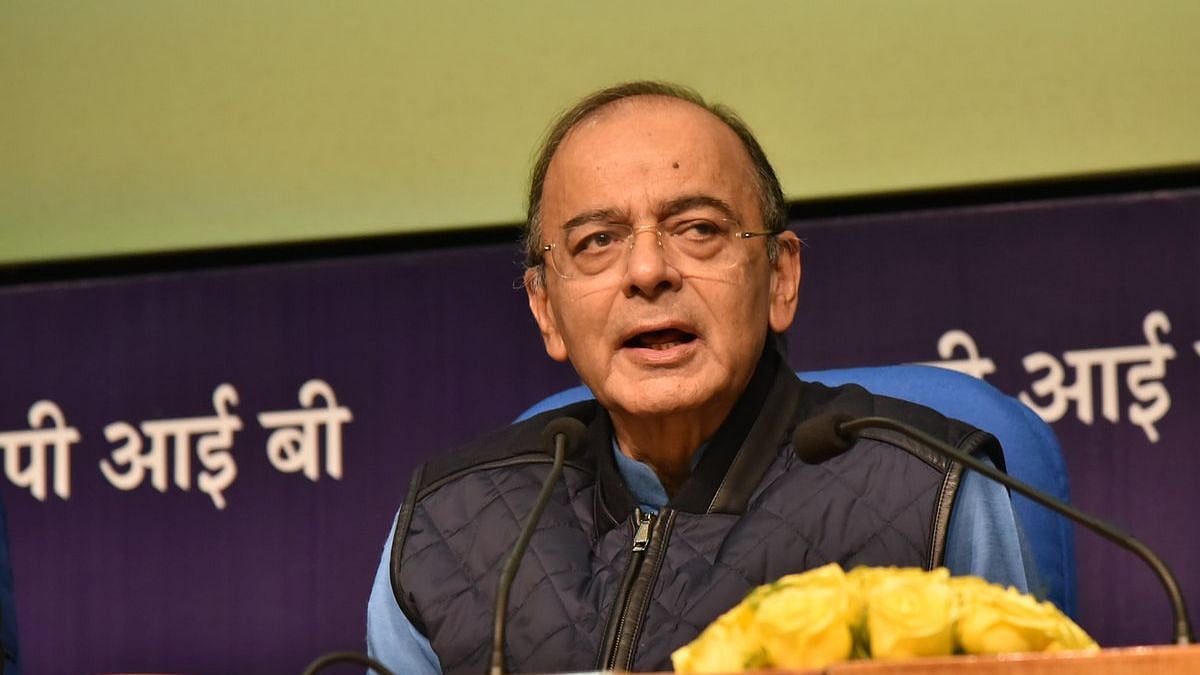
Union Minister Arun Jaitley on Saturday, 2 March, said "compulsive contrarians discovered a new Balakote" which lies within Indian territory and without checking facts, referred to it as the target of the Indian Air Force when it struck the Jaish-e-Mohammed terrorist camp in Balakot in Pakistan's Khyber Pakhtunkhwa province (KPK).
He also took a sharp dig at news channels, saying they are increasingly resorting to "agenda setting" instead of reporting.
"Why will our own Air Force attack our own territory," Jaitley said at a function in New Delhi to release a book titled Mann Ki Baat – A Social Revolution on Radio which is based on Prime Minister Narendra Modi's monthly radio broadcast.
This, he said, presents a golden opportunity for print media and radio to strike back and regain its place.
"From the mid-90s, private television channels started. Initially, they had panel discussions, some news bulletins and thereafter the competition which began (among them) has a very small universe, that now setting the agenda is our job,” he said.
"The conventional role of the media was to report and present views on the editorial page, but (now) we will not report the country's agenda but set it," Jaitley added.
He said since this journey began, one has to search with a remote for news while the agenda is everywhere.
"I recall when Prime Minister Narendra Modi became chief minister of Gujarat in 2001, there were (state) polls in 2002 and at the time the local media and national media was not exactly a friend of his. It was very aggressive against him,” he said.
"I was looking after those elections on behalf of my party (BJP). Even at that time, the strategy was that when there is agenda setting instead of reporting, you cannot communicate with people through this medium," Jaitley added.
He highlighted the power of radio, its impact as a source of both news and entertainment, its huge geographical reach and as a mode of learning language.
Jaitley said Prime Minister Modi started using the medium of radio for governmental communication in order to establish direct communication with people by identifying its wide reach.
The book sheds light on various aspects of Prime Minister's outreach, the remarkable response it continuously received from the people, the mass movement it has inspired and the profound impact it ingrained in the minds and hearts of the youth of India, an official release said.
It also gives insight into behind-the-scene research work done on the massive public feedback received through various channels after every episode of ‘Mann Ki Baat’, which had aired first on 3 October 2014, it said.
(With inputs from PTI)
- Access to all paywalled content on site
- Ad-free experience across The Quint
- Early previews of our Special Projects
Published: undefined