
Amcha Dada Gela: Ajit Pawar's Politics Was Born in Baramati, He Died on Its Soil
For many across Baramati, Ajit Pawar's death is personal. For them, he was the chief minister Maharashtra never had.
advertisement
One may not have been a staunch supporter of Ajit Pawar, and may have disagreed with some of his political decisions, but one common perception across Maharashtra’s political spectrum was this: "Ajit Dada had the potential to be the chief minister."
The images and headlines from Baramati airport, showing the crash of his private jet, stunned the nation—'Ajit Pawar no more'. For many who knew Pawar or had followed his political journey over the years, disbelief was the initial reaction.
As is often the case with political leaders described as "grassroots leaders," the term was central to Pawar’s political identity. It was, in many ways, the very foundation of his public life.
NCP workers mourn the death of party leader and Maharashtra Deputy Chief Minister Ajit Pawar, at the party office in Mumbai, Wednesday, Jan. 28, 2026. Pawar and four others were killed after an aircraft carrying them crashed near Baramati on Wednesday.
(Photo: PTI)
The political legacy he leaves behind is best understood by tracing it back to his grassroots in Baramati — a region where his politics was born and where it tragically ended on 28 January.
'My First Ever Vote Was For Dada'
As a politician, Ajit Pawar was a staunch believer in his leaders' "personal clout," a quality that helped him navigate even the most tumultuous times within the Nationalist Congress Party.
In rural Baramati, nearly every household has a personal anecdote to share about Ajit Pawar.
"I had always seen dada growing up. He was charismatic, inspiring, and he could deliver speeches that stayed with you. I can't believe I will never hear him speak at a podium again," said Milind Kate, former deputy sarpanch of Katewadi village in Baramati, the birthplace of Sharad Pawar and the heart of the Pawar family's political influence in the region.
The Pawars had personally invested in transforming Katewadi into a 'model village,' an initiative championed by Ajit’s wife, Sunetra Pawar.
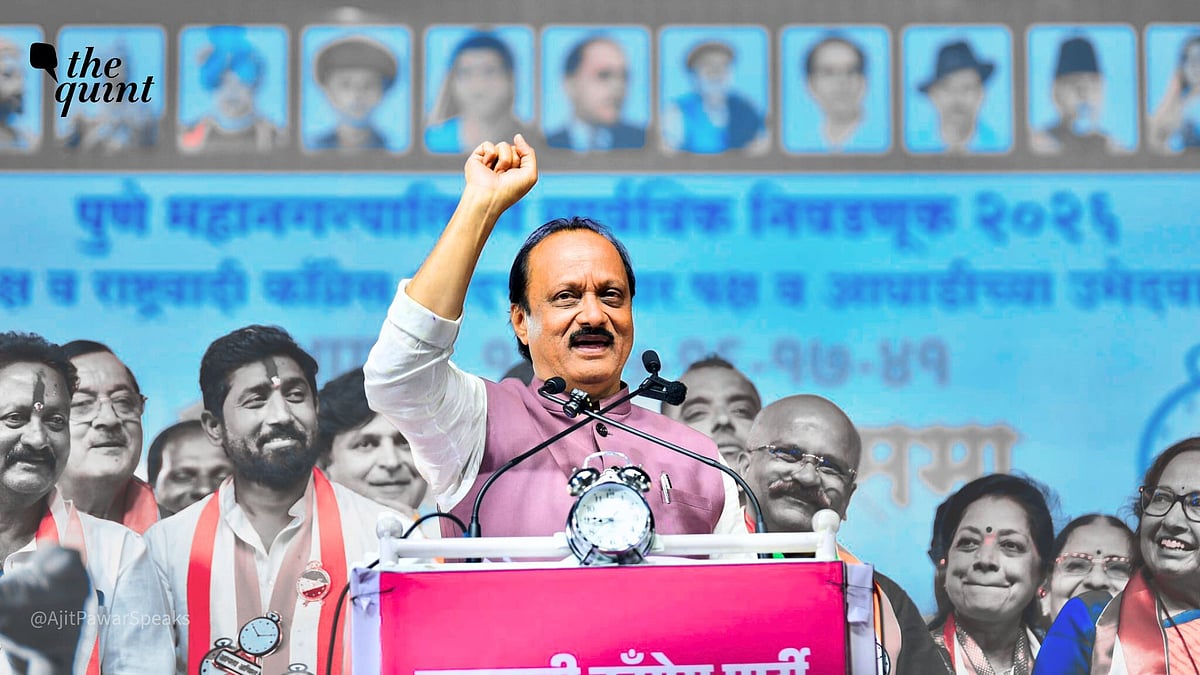
Ajit Pawar meeting a party worker at a party.
(Photo: Facebook/Ajit Pawar)
Hanumant Chandgude, a Baramati-based scholar and poet, expressed disbelief even hours after the news broke.
"My first vote as an eligible voter was for dada in 1991," he said. "I've voted for him ever since."
"I run an organisation that was experiencing some technical issues with grants and permissions being delayed. We went to Mumbai to meet him, and he gave us an appointment at 4:45 a.m. We were perplexed, but when we reached his official residence, there were already people meeting with him before us," Chandgude remembered.
"When we finally met him, he said: 'Why did you come all the way here? I could have met you in Baramati and this would have been sorted,'" Chandgude added.
"We are still in shock. Nobody here in Baramati can process this," he said.
(Photo: Facebook/Ajit Pawar)
Professor Kiran Gadhwe, a teacher and theatre personality from Baramati, said it felt like a member of their own family had passed away.
"I met him multiple times over the years. He was always vocal about the theatre community's issues on our behalf. About a year and a half ago, my colleagues and I went to him to raise the issue of Marathi films and plays not getting enough slots in theatres and auditoriums. Within two weeks, a government resolution was issued to address the matter," Gadhwe recalled.
"Though I had no political association with the party, we don't know how the void he left can ever be filled," Gadhwe said.
The Pawar Who Split Baramati
What earned Ajit Pawar the title of 'Dada' was not just his stern vocabulary, but his commanding presence.
"You should meet him once; you'll understand how stern he appears on the outside, but how caring he truly is on the inside," his supporters in Baramati would often say.
His influence within the NCP, along with his strong following and strategic relationships with supporters, enabled him to maintain complete dominance over the administration and cooperative bodies in Baramati.
(Photo: PTI)
Following the split, Baramati got divided, with every village that had traditionally voted for the Pawars now choosing a side. Those who sided with Sharad Pawar viewed it as a 'betrayal of the family patriarch.' On the other hand, those who backed Ajit Pawar believed he had been 'ill-treated and sidelined for years.' However, across both factions, there remained a common hope for reconciliation.
Indeed, when the two parties reunited for the recently concluded Pune and Pimpri-Chinchwad municipal elections, supporters were elated. While it did not lead to victories in their traditional strongholds, but political observers believe it saved them from complete political annihilation.
The Chief Minister Baramati Never Had
For scores of his supporters in Baramati, Ajit dada was the chief minister Maharashtra never had.
After becoming an MP from Baramati in the 1991 Lok Sabha elections, he vacated the seat for Sharad Pawar, who was appointed the Union Defence Minister in PV Narasimha Rao's cabinet. That same year, Ajit Pawar won the by-election for the Baramati Assembly seat, which he retained until his untimely demise.
(Photo: Facebook/Ajit Pawar)
He served as the deputy CM of Maharashtra six times, and it eventually became a running joke in the state’s politics that, regardless of which party or leader became chief minister, Ajit Pawar would always hold the post of deputy CM.
Ajit continued to remain in Sharad Pawar’s shadow for 28 years until his surprise oath with Devendra Fadnavis in 2019, which made it clear that he was now seeking to carve a new path for himself.
The decision, believed to have been taken without Sharad Pawar’s consent, proved to be short-lived as Ajit Pawar failed to garner support from his party MLAs, and the government fell in just 80 hours. The move deeply dented his reputation, but as often happens in Indian politics, all was forgiven, and he quickly made his way to becoming Uddhav Thackeray’s deputy CM just a week later.
However, his tenure in governance was not without controversy and corruption allegations. The Irrigation Scam (2012), where he was accused of inflating project costs, the Lavasa Scam (2012), involving illegal land allotments, his implication in the Adarsh Society Scam (2010), alleged irregularities in Solapur Municipal Corporation contracts (2014), and the Transfer-Posting Scam (2014) — the list was long.
Nevertheless, none of this dented the faith of his core supporters. For those in Baramati, he was "framed" in most of these cases. So, the clean chit he was granted, especially in the irrigation scam, which had been a target for the BJP until he joined the NDA, was seen as a welcome development by his supporters.
In the final chapter of his political career, Ajit Pawar emerged as a man of his own. He split the NCP with the support of a majority of MLAs, negotiated lucrative portfolios for his leaders in the already overcrowded Mahayuti, and outperformed Sharad Pawar in both Assembly and municipal elections.
"Whether one supported him or not, this is a shocking day for Baramati. It is such a cruel, almost poetic twist of fate that the man who gave so much to Baramati also embraced his death on the same soil," Chandgude said.
- Access to all paywalled content on site
- Ad-free experience across The Quint
- Early previews of our Special Projects
Published: undefined