
Prashant Mishra, KV Viswanathan To Be Sworn-In As SC Judges Tom: Who Are They?
Who are they? And what does their legal career so far look like?
advertisement
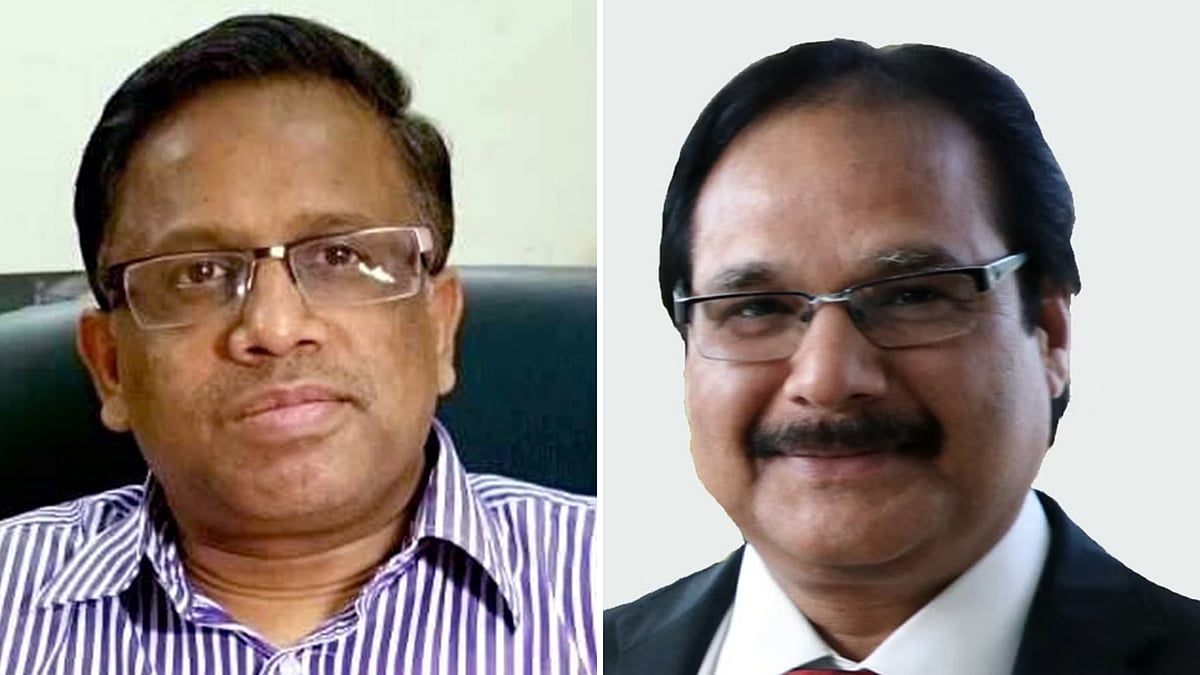
Andhra Pradesh High Court Chief Justice Prashant Kumar Mishra and Senior Advocate KV Viswanathan are scheduled to be sworn-in as Supreme Court judges on Friday, 19 May.
In the aftermath of the retirement of Justices MR Shah and Dinesh Maheshwari, the SC collegium had on Tuesday, 16 May, recommended the names of Mishra and Viswanathan for judgeship at the apex court.
But who are they? And what does their legal career so far look like?
Who is Senior Advocate KV Vishwanathan?
“Shri Viswanathan has a sound understanding of law and is known in the legal fraternity for his integrity and as an upright senior member of the Bar,” the Collegium said in its statement.
Vishwanathan is slated to become the 58th Chief Justice in 2030. In fact, he will join the list of lawyers who became the CJI later after being elevated from the bar.
Senior Advocate KV Vishwanathan.
(Photo: PTI)
Justices SM Sikri and UU Lalit were the two other people who went on to become the Chief Justice of India after being elevated to the post of judge form the bar. Sitting judge Justice P S Narasimha, will become the third CJI who was elevated from the bar.
Vishwanathan, who represented one of the petitioners in the marriage equality case, has been in the profession for more than 30 years.
Earlier this year, he represented the Internet Freedom Foundation (IFF) in a batch of petitions challenging the 2016 WhatsApp privacy policy. At the time, he had informed the top court that there was no regulation with respect to data protection, even though it has the positive obligation to regulate it.
The top court collegium in its statement also praised him for assisting the court on a number of cases.
“Viswanathan has appeared in a wide range of cases on diverse subjects including Constitutional law, criminal law, commercial law, the law of Insolvency, and Arbitration. His stature as an eminent member of the Bar has been recognised by the Supreme Court in numerous cases where he was appointed to assist the Court as amicus curiae,” the notification said.
Recently, when appointed as amicus curae (friend of court) in a case challenging the repeated extensions given to ED Director Sanjay Kumar Mishra, he pointed out: “The extensions are illegal and contrary to the line of judgments. It is not about the incumbent at all but the principle behind such extensions.”
Vishwanathan was formerly an Additional Solicitor General and was designated as a senior advocate in the Supreme Court in 2009.
Who Is Justice Prashant Kumar Mishra?
Before Justice Mishra was appointed as the Chief Justice of the Andhra Pradesh High Court in 2021, he served as the Acting Chief Justice of Chhattisgarh High Court and as Judge of the same court.
The Collegium, in fact, underlined that recommending him was crucial since there was no representation from the Chhattisgarh High Court among top court judges.
"Besides according representation to the State of Chhattisgarh, the appointment of Justice Prashant Kumar Mishra will provide a value addition in terms of his acquired knowledge and experience. Justice Mishra is a judge with integrity," the resolution noted.
In March last year, a bench headed by Justice Mishra had rejected the Andhra Pradesh government's plans to have three state capitals.
The High Court had ruled that the state government does not have legislative competence to pass any resolution or law for change of capital or bifurcating or trifurcating the capital city.
After coming to power in 2019, the YSRC-led Andhra Pradesh government had dropped the plan to develop Amaravati as the capital city and decided to have three capitals -- Amaravati, Visakhapatnam, and Kurnool.
Prior to being a judge, he practised as a lawyer at the Raigarh District Court and later in the Madhya Pradesh and Chhatisgarh High Courts.
What Did The Collegium Consider While Recommending Justice Mishra and Advocate Vishwanathan?
The collegium (including the Chief Justice and senior most judges), in their notification, listed out the factors that were considered while recommending Justice Mishra and Advocate Vishwanathan:
The seniority of Chief Justices and senior puisne Judges in their respective parent High Courts as well as overall seniority of the High Court Judges;
The merit, performance and integrity of the judges under consideration; and
The need to ensure diversity and inclusion in the Supreme Court by:
(i) representation of High Courts which are not represented or are inadequately represented, in the Supreme Court;
(ii) appointment of persons from marginalised and backward segments of society;
(iii) gender diversity; and
(iv) representation of minorities.
- Access to all paywalled content on site
- Ad-free experience across The Quint
- Early previews of our Special Projects
Published: 18 May 2023,10:37 AM IST