A Night in Sathankulam That Changed Lives Forever
In a landmark ruling on the custodial deaths of Jayaraj and Bennix in 2020, nine cops were awarded death penalty.
advertisement
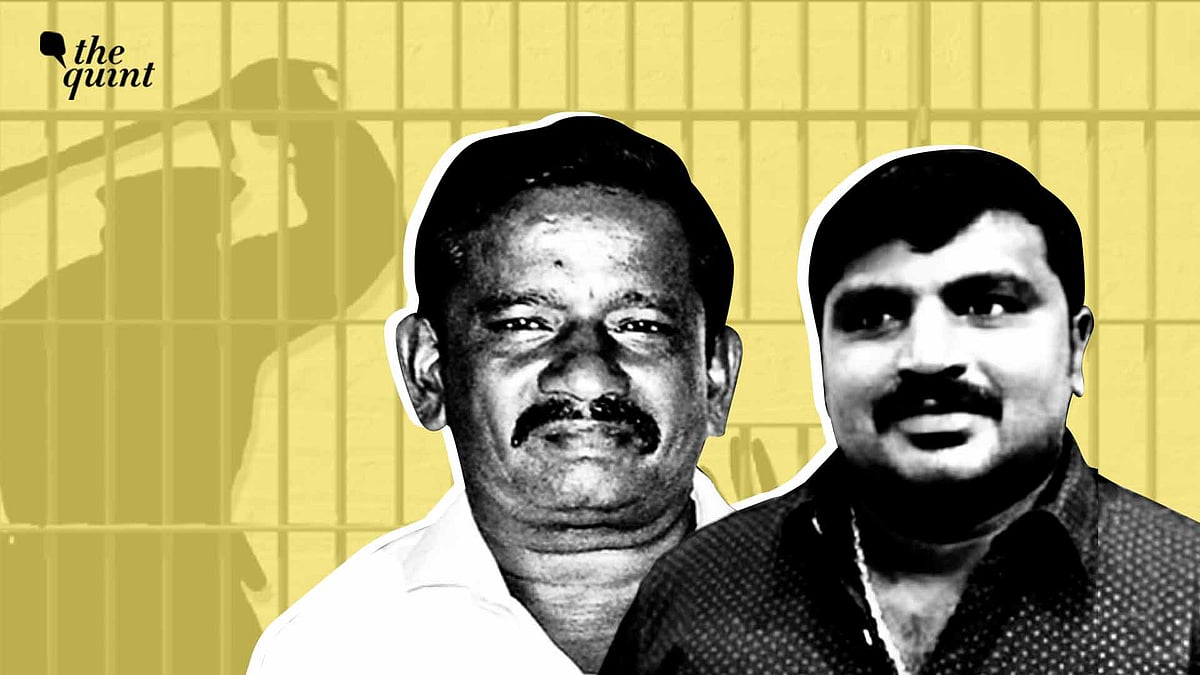
“I sent my son to bring his father back… but neither of them returned,” recalls Selvarani, the wife of Jayaraj and mother of Bennix—the father and son who were brutally tortured and killed in custody inside a Tamil Nadu prison in 2020.
Selvarani was carrying the weight of 2,117 days of grief when, on 6 April, a special court for CBI cases awarded death penalty to nine policemen in the case—a first-of-its-kind ruling in India.
Pronouncing the verdict, Judge G Muthukumaran of the First Additional District and Sessions Court in Madurai, described the case as falling under the “rarest of rare” category, warranting the death penalty.
When Selvarani, along with her two daughters Persis and Beulah, heard the judge award the death penalty, it marked more than a legal milestone. For a moment, the courtroom seemed to lift the burden of years of unanswered questions and delayed hearings—years in which the family moved from one proceeding to another, clinging to the fragile hope that the system would one day recognise their loss and the ordeal they had endured.
The Infamous Sathankulam Case
It all began with a routine COVID-19 enforcement drive in Sathankulam.
On 18 June 2020, a group of daily wage workers had gathered in Kamarajar Chowk, waiting to receive their wages from a work agent. Police personnel allegedly abused them verbally and threatened to file cases if they did not disperse.
A few shopkeepers intervened. Among them was 58-year-old Jayaraj, who was at the mobile shop run by his son Bennix. He asked the workers not to disperse out of fear of the police and to wait for a few more minutes. This exchange was reportedly conveyed by a head constable to other police personnel.
On 19 June, around 7:15 pm, a police team from Sathankulam police station, led by Inspector S Sridhar, reached Kamarajar Chowk. While they were ostensibly enforcing COVID-19 restrictions, witnesses alleged the visit was intended to confront traders.
Sub-Inspector Balakrishnan publicly questioned shopkeepers, shouting,
He then approached Jayaraj, along with constable Muthuraja, and asked, “Is it you who spoke against the police yesterday?” Jayaraj denied the allegation, but he was slapped, dragged to a police vehicle, and taken into custody.
His 31-year-old son Bennix, who witnessed the incident from a short distance, ran towards the police and pleaded with them to leave his father.
Around 7:50 pm, Bennix called his younger sister Beulah, who lived in Pollachi.
“The police have picked up appa… send me uncle’s number,” he told her as Beulah recalls to The Quint. “I immediately sent him the number on WhatsApp. I called him again to know the situation, but he didn’t pick up. He didn’t even see the messages I sent. That silence… it scared me. Then I called my sister Persis to inform her. I tired calling all my relatives. I was very worried about my mother, who was alone.”
Inside the Police Station
Bennix, after informing his relatives and family, went to the police station along with his friend Ravishankar. There, he found his father being assaulted by a group of policemen. He intervened and questioned them. “Why are you beating my father?” he asked, attempting to stop the assault.
According to Ravishankar, "Sub-Inspector Balakrishnan assaulted Bennix and pushed him aside. He tried to evade the force used on him. In the commotion, the officer lost balance and fell."
Ravishankar stated that he was asked to leave the police station—and told that both Jayaraj and Bennix would be released in the morning after an inquiry.
Following this, Inspector Sridhar allegedly ordered the policemen present in the station to attack both the father and son.
By then, some of their relatives and friends gathered outside the station, but they were assured that Jayaraj and his son would be released in the morning. The police, meanwhile, had locked the premises from inside—and continued the assault.
Eight Hours of Brutality
The Central Bureau of Investigation (CBI) later described the brutality of that night in its chargesheet.
It said that in a fit of rage, Bennix was wrongfully kept inside the Sathankulam police station, where Sub-Inspector Balakrishnan and other policemen started beating him severely. Inspector Sridhar kept instigating them, telling them to “give Benniks a good beating to teach him a lesson on how to behave with police,” and pushed them to continue whenever they paused.
Even when Jayaraj pleaded that he had high blood pressure and diabetes and could not bear the pain, the police did not listen and forced them to kneel. According to the CBI, the assault went on for nearly eight hours, from around 8 pm on 19 June till about 3 am on 20 June.
Aftermath: Blood, Fear, and Coercion
By around 3:10 am, Inspector Sridhar left the station. The father and son were allowed to sit, severely injured.
At around 4:00 am, Jayaraj and Bennix were made to wipe the blood that had spilled on the floor using their vest.
At about 6:30 am, Bennix’s friends, Shankaralingam, Sudalaimuthu and Nagarajan, visited the station. Further, a sanitary worker was called and the police made him wash all the blood stains from the wall and floor.
He added that police personnel asked them to bring tea for the injured father and son and to arrange for a car to take Jayaraj and Bennix to the hospital for a medical check-up.
"When I bought the car, a police personnel asked me to get a bedsheet and cover the seat as the duo were bleeding heavily. When I dropped them at the hospital, I saw the bedsheet was soaked in blood and water, and that's when I realised the brutality of the police inflicted on them," Shankaralingam said.
'Fit for Remand': A Paper That Hid the Bruises
The CBI investigation revealed that, as part of a criminal conspiracy allegedly hatched by the accused police officials, a false case was registered against Bennix and Jayaraj.
The father and son were charged under Sections 188 (disobedience of public servent), 269 (negligent act likely to spread infection), 294(b) (obscene acts), 353 (assaulting public servent) and 506(2) (criminal intimidation) of the Indian Penal Code (IPC).
On the morning of 20 June, they were produced before Dr N Vinila, medical officer at Sathankulam Government Hospital, for medical examination.
The chargesheet stated, "In addition to other ailments like high blood pressure and sugar, they were declared 'fit for remand' by the medical officer of Sathankulam Government Hospital. Blood-stained clothes of both Benniks and Jayaraj were changed twice i.e. before taking them to the hospital, and again at the hospital before taking them to the court, but the same were thrown in the dustbin of Sathankulam Government Hospital by the accused police officials just with an intention to destroy the evidence. Thereafter, they were produced by the accused police officials before the Judicial Magistrate, Sathankulam who remanded them to judicial custody."
According to the testimonies, the duo was threatened not to reveal the torture inflicted on them to the magistrate. Around 2:30 pm on 20 June, they were lodged in the Sathankulam sub-jail.
The Final Hours of Bennix and Jayaraj
The sub-jail superintendent, Shankar, initially refused admission, citing their condition. However, the police insisted, citing the judicial order.
During the court deposition, he stated,
He revealed that on 22 June, at 6 am, Bennix approached him and said that he couldn't bear the pain. "I saw him bleeding from his buttocks. We informed his relatives and rushed him to Kovilpatti Government Hospital."
The same evening, Bennix’s condition worsened due to haemorrhage. He became unconscious and died in the hospital.
Later that night, jail authorities rushed Jayaraj to the hospital after he complained of severe chest pain. On 23 June, Jayaraj, too, succumbed to injuries.
'I Didn’t Know They Wouldn’t Come Back'
Selvarani recalls those days as a blur of fear, confusion, and irreversible loss. “That evening, everything was normal. They were at the shop… we never imagined something like this would happen,” she says.
When Jayaraj was taken by the police, the family believed it was a routine issue that would be resolved quickly. “We thought they would question him and let him go. These things happen… we didn’t think it would become something this serious."
But when Bennix followed his father to the police station, her worry deepened.
As the hours passed, there was no information. “We kept waiting… no calls, no message. The whole night we didn’t know what was happening inside," Selvarani recalls. The next morning, when the reality began to surface, it was already too late.
“When we heard they were beaten, we were shocked. But we still didn’t know how badly they were injured,” she says.
She recalls seeing them after the assault.
“They couldn’t even stand properly. Their bodies were weak… they were in pain. But they didn’t say much. Maybe they were scared. The days that followed were unbearable. First, my son… then my husband. Within two days, I lost both of them.”
Her voice, she says, has not been the same since.
Her daughter Persis says the family initially knew that both her father and brother had been assaulted in custody. But the true extent of the violence, she says, only became clear when they received the postmortem report.
“We knew that our father and brother were assaulted by the police. But we had no idea how brutal it was… not until the postmortem report came to us,” she says. “The moment we read it, we broke down. We were shattered to the core. It is something no family should ever have to go through.”
Struggling to describe what the report revealed, Persis says, “They had brutally assaulted my brother Bennix. A baton was inserted into their anus, which led to uncontrollable bleeding. After that, a fluid kept leaking continuously… it would not stop, for both of them.”
She says the family is still unable to process the scale of violence.
“We couldn’t believe humans could do this to another human. We are still not able to come to terms with it," Persis tells The Quint.
Outrage and Judicial Intervention
The deaths triggered massive protests across Tamil Nadu. Human rights organisations and activists condemned the alleged custodial torture and questioned the role of the magistrate and the medical officer.
On 24 June, a Division Bench of Justices PN Prakash and B Pugalendhi of the Madurai Bench of the Madras High Court initiated suo motu proceedings. The court ordered a judicial inquiry and said it would monitor the case. The probe was later transferred to the CBI.
Despite the Madras High Court directing a day-to-day trial, proceedings in the case saw repeated delays.
From 2020, additional time was granted as the presiding officer’s post remained vacant, with the case handled by an Additional District Judge as an additional charge. By June 2025, the high court was informed that the accused had engaged in prolonged cross-examinations—the Judicial Magistrate over 26 hearings and the Investigating Officer over 21 hearings—indicating attempts to slow down the trial.
The court was told that these were deliberate efforts to delay proceedings and prevent early disposal of the case. Multiple bail petitions were dismissed. In another move, the prime accused, Sridhar, sought to turn approver.
The personnel were found guilty under multiple provisions of the then IPC: Section 302 (murder), 342 (wrongful confinement), 201 (causing disappearance of evidence), 182 (false information), 193 (fabrication of false evidence), 211 (false charge), 218 (public servant framing incorrect record), 120B (criminal conspiracy), and 34 (common intention). The court also ordered a total compensation of Rs 1.4 crore payable by the officers to the family of the deceased.
'We Stood Firm… We Believed Justice Would Prevail'
Persis says the family’s fight did not end with the funerals. In the days and months that followed, the courtroom became their only space for hope. Along with her sister and mother, she attended every hearing, determined not to let the case fade, for nearly five and a half years.
“All three of us were present for every hearing. We did not want to miss anything. This was not just a case for us… it was about our father and our brother,” she says.
She recalls that the path to justice was far from easy.
Despite the pressure, the family chose to hold on to the legal process. “We just believed in the court. We believed that justice would prevail if we stayed strong and did not give up.”
However, she alleges that there were attempts to silence them. “At the time of their deaths, the accused policemen tried to lure us with money. There were indirect threats, too. They wanted us to step back.”
The family refused.
“We were clear from the beginning. No amount of money could bring back our father and brother. We decided we would never compromise. We stood firm. Our only aim was to get justice for them, and I hope justice is served, not only for us but for those who were affected by custodial violence and we believe it will be as a protective shield for others in future too," Persis says.
(Vinodh Arulappan is an independent journalist with over 15 years of experience covering Tamil Nadu politics, socio-culture issues, courts, and crime in newspapers, television, and digital platforms.)