Under the Skin: Meet India’s Only Official Taxidermist
A self-taught taxidermist, Gaikwad is the only person authorised to stuff wild animals in the country.
advertisement
As the country’s only practicing taxidermist, Dr Santosh Gaikwad has difficulty understanding his obsession with the lost British art. Back in the day, taxidermists were employed by maharajas, who wished to preserve their catch, especially the big cats, and have them on pompous display in their elaborate mansions.
But with the kings disappearing, the art too lost its prevalence in India, only retained in the exotic birds and animals preserved by Gaikwad.
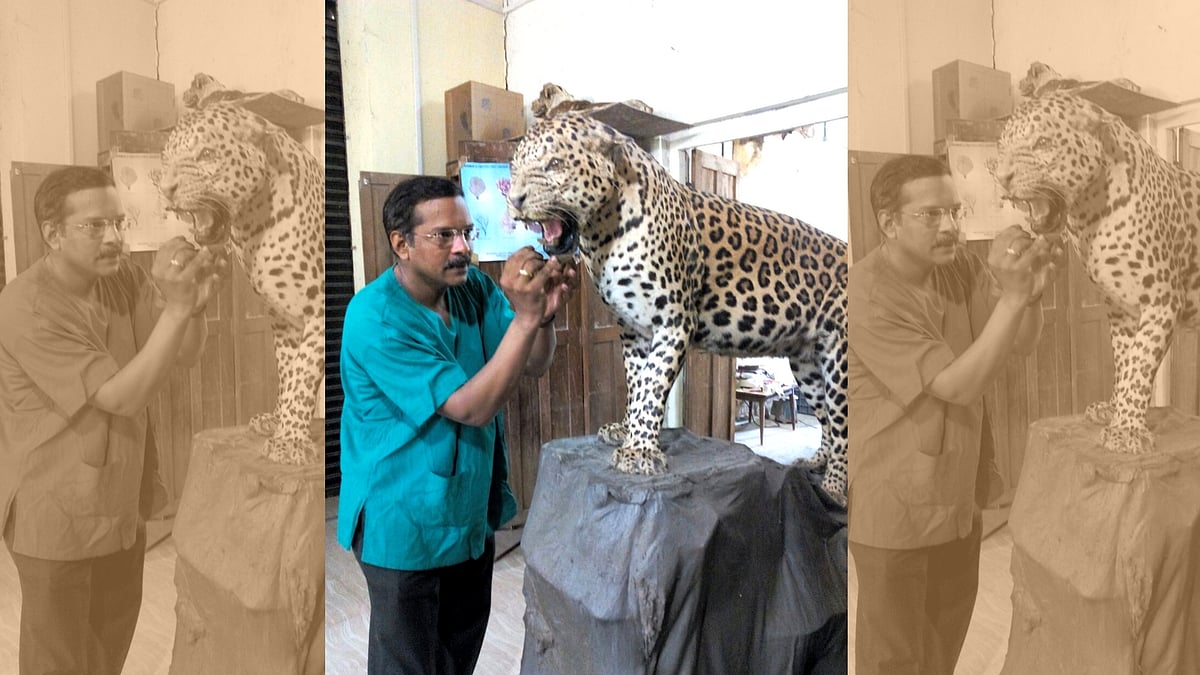
A self-taught taxidermist, Gaikwad is the only person authorised to stuff wild animals in the country, and has preserved hundreds of birds and animals for forest and government authorities, apart from beloved dead pets of private individuals.
A professor with the Bombay Veterinary College, Dr Gaikwad heads the Wildlife Taxidermy Centre at Mumbai’s Sanjay Gandhi National Park (SGNP), the only such institute in the country. Taxidermy, he says, is a combination of 5 arts:
- Anatomy
- Sculpting
- Painting
- Carpentry
- Cobblery
It involves skinning the dead animal, after which the skin is stuffed with fibre and paper mache, and the animal is restored to its original appearance in the form of a life-size replica.
Although Dr Gaikwad has stuffed over 500 birds, 300 fishes and reptiles, and around 13 big cats, when he was beginning to understand the nuances of the craft, he had little academic or professional support.
It took Gaikwad tens of birds before he was completely satisfied with his creations. Having mastered birds, he graduated to fishes, skinning and stuffing them after picking them up from fish markets. And soon, he was working on smaller animals like cats and dogs. As word spread, Gaikwad started being summoned by various forest and government officials in the country to preserve their dead birds and animals.
Gaikwad, who got over the awkward intricacies of the work with the joy of creativity, preserved the country’s last Siberian tiger in 2008 after being invited by the Bharat Ratna Pandit GB Pant High Altitude Zoo in Nainital.
When I explained my purpose to them, they were surprised. They probably didn’t understand, and asked me to carry the skin, and leave the bones behind. They were convinced only when I produced the paperwork,” he laughs, adding that he had to miss his flight over the “confusion”, and was accommodated in the next one.
Like the Siberian tiger, Gaikwad has several other notable preservations to his credit. These include Rani, a snow leopard for the Nainital zoo, a mule for the Indian Army’s Artillery Centre in Nashik, two peacocks from the Raj Bhavan garden, and four silver pigeons, a brown owl, among others. Having recently preserved a 19-year-old leopardess for SGNP, which was mounted at the park earlier this month, Gaikwad is currently working on a third peacock from the Raj Bhavan garden. He says that several private individuals also approach him, trying to restore their dead pets.
Gaikwad stated that the crux of his passion for taxidermy lies in emotions, and he fears that the art will die with him. He says that several people in the country are working on conserving exotic animals and birds, however, there is little enthusiasm for preserving them. Preservation is as important as conservation, he feels, believing that in face of extinction, there would be no way of telling the future generations about the beautiful birds and animals that walked the planet before them.
“Taxidermy, to me, is life after death. After a living being’s death, taxidermy helps the being start the second phase of its existence. To illustrate, there were two big cats at SGNP – Raja, a leopard and Krishna, a leopardess. For the past eighteen years, the two would always remain together. But last year, Raja passed away, and six months ago, Krishna followed too. Now, I’ve preserved Krishna, and she is mounted right next to Raja at the national park. They’re together again,” smiles Gaikwad
(The writer is a journalist, and author of the critically-acclaimed true crime book, ‘The Front Page Murders.’)