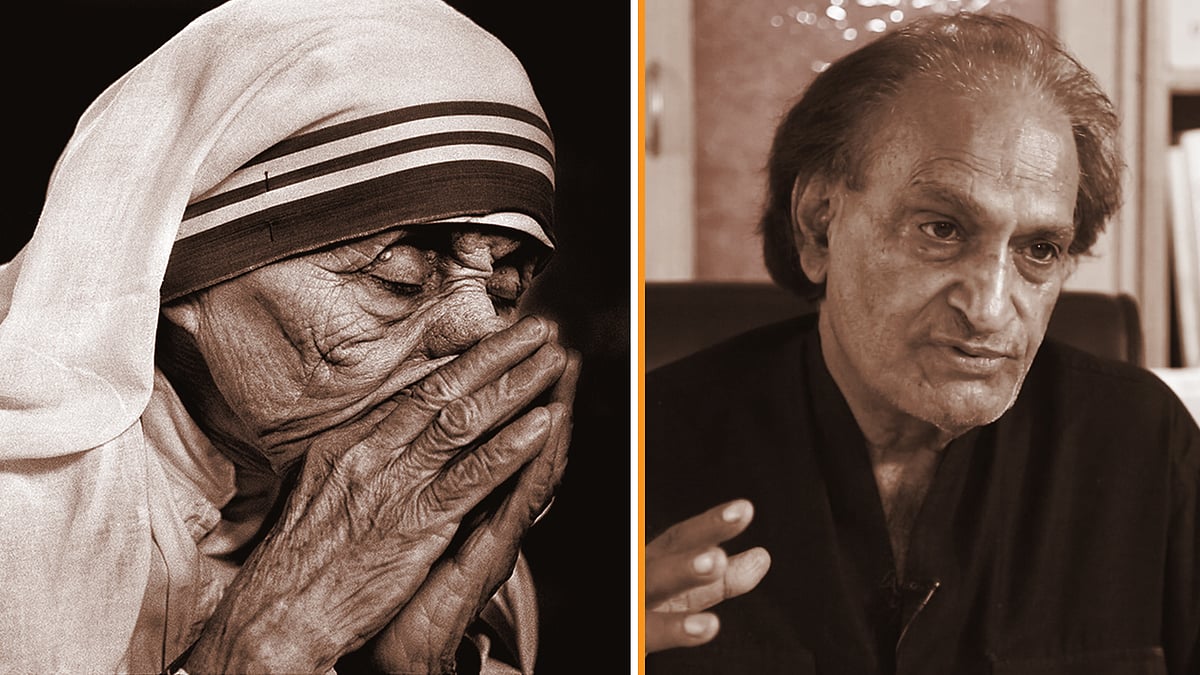
Raghu Rai Passes Away at 83: The Story Behind His Five Most Iconic Photographs
An interview with Raghu Rai, India’s best-known photojournalist on his five most iconic photographs.
advertisement
(Raghu Rai, the celebrated photojournalist and Padma Shri awardee, passed away on 26 April 2026 at the age of 83. This interview was first published in 2015, and has been republished from The Quint’s archives.)
Raghu Rai has witnessed India’s sojourn in the last five decades through the lens of his camera. As a veteran photojournalist and chronicler, he has first-hand accounts of events that have had a definitive impact on the country’s destiny.
Though it doesn’t do complete justice to Rai’s body of work, he shared the story behind five of his most iconic photographs with The Quint.
Humayun’s Tomb, 1965
(Photo Courtesy: Raghu Rai)
“Way back in 1965, when I started using a camera, Delhi’s landscape was very different. I was near the Ring Road and saw Humayun’s Tomb. At that time there was a railway track and wheat fields in front of it. After the harvest, bullocks were working in the field and there was a train in the backdrop. When you look at that picture today, it looks like a photo history of another century, which amazes me as well when.”
A Day in the Life of Indira Gandhi, 1967
(Photo Courtesy: Raghu Rai)
“There was nobody else in the Congress as strong-minded and as powerful as her. I was spending a day with Indira Gandhi. A delegation of Congress men was visiting her in the Parliament House. All these senior Congress men were standing and waiting for her while she signed some papers. I took a picture from over her shoulder. It showed the power of a woman prime minister.”
Mother Teresa’s Faith, 1990s
(Photo Courtesy: Raghu Rai)
“Mother Teresa was a mother to everybody. She believed in compassion and seva. To rejuvenate herself, she would sit and pray to god. You can see her connect with the lord.”
A Lonely, Tortured Man – Manmohan Singh, 2014
(Photo Courtesy: Raghu Rai)
“Since the 90s, I had almost given up photographing politicians since I felt none of them were worth spending time with. Before the 2014 general elections, I thought of checking out what was the latest in the political arena. There was a Congress session a few months before the elections, and I had not attended one in 20 years. All senior Congress leaders were sitting on the stage. Then Sonia Gandhi, Manmohan Singh and Rahul Gandhi entered.“
“I was there for five long hours. He did not speak to anybody. No one spoke with him. He was a lonely, tortured man. As if he did not exist, leave alone being the prime minister of a country. It was shameful and shocking.”
Modi‘s Charm
(Photo Courtesy: Raghu Rai)
“At the BJP sessions (before the elections and a day after the Congress session), Modi was being projected as the prime ministerial candidate. I saw LK Advani, Arun Jaitley and everyone else looking very serious. Modi entered and the crowd went ‘Modi, Modi, Modi’. And Modi spoke with all the gestures and style that he had acquired.”
Rai covered both Modi and Manmohan in a book – The Outgoing Prime Minister.
Raghu Rai began his career in photography in 1965. His photos have been published in Time, Life, The New York Times, and Sunday Times. Rai was conferred the Lifetime Achievement Award at the 6th National Photography Awards on 23 March 2017.