In Pictures: The Majestic Ruins of Bidar in Karnataka
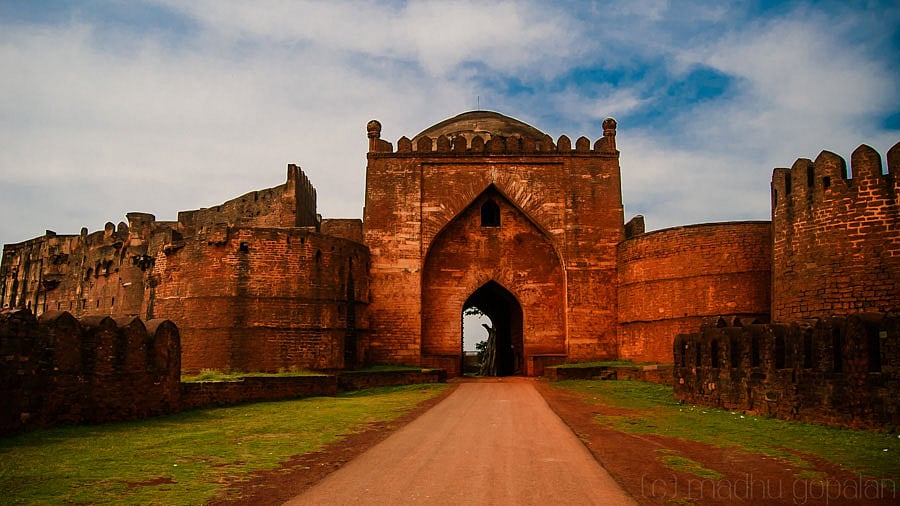
The Bidar fort in Karnataka is a treasure trove of magnificent old ruins that hint at a glorious past.
advertisement
The first Muslim kingdom of the Deccan was formed in the 14th century by Alauddin Hassan Bahman Shah, a commander in the Tughlaq army. In the 16th century, the Deccan was rocked by rebellion, and the governors of five provinces declared independence from the Bahmani Sultanate, forming the five Deccan Sultanates of Ahmednagar, Berar, Bijapur, Bidar and Golconda.
Almost everyone has heard of Golconda (Hyderabad) and Bijapur, but very few know that a small town called Bidar, at the north-eastern tip of Karnataka, is a treasure trove of magnificent old ruins that hint at a glorious past.
Bidar served as the capital of the Bahmani Sultanate – and later, the Bidar Sultanate, under the Barid Shahi dynasty. The Bidar Sultanate was small and not very strong, and merged with the Bijapur Sultanate a century later. It was eventually taken over by the Mughals.
Why Bidar is the Ideal Day-trip Destination
Bidar is perfect for a day trip from Hyderabad, at a distance of just about 140 kms. The best place to start exploring its ruins is the Chaubara, an imposing 71 feet tall watch tower, built in the 15th century to keep an eye on the medieval town.
Not far from the Chaubara is Bidar’s most beautiful building – the Mahmood Gawan Madrasa. The center of learning was built by Khwaja Mahmood Gawan, the 3rd Bahmani Sultan’s Prime Minister. It attracted learned men from all over the Islamic world, and had a library with thousands of manuscripts.
When the kingdom was taken over by the Mughals, the building served as Aurangzeb’s military barracks until an accidental gunpowder explosion destroyed a large portion.
The Bidar Fort has seen the rise and fall of many powerful dynasties. It is said to have been built during the reign of the Chalukyas, and passed on to the Kakatiyas. It was later modified and expanded by the Bahmani and Barid Shahi Sultans.
Unusual Tombs and Fascinating Legends
The Sultans of the Bahmani dynasty are buried in Ashtur, about 4 kms from the fort. The lofty structures are decorated with calligraphy and beautiful mosaic tiled panels, some of which are still intact.
The most fascinating mausoleum here is that of Sultan Humayun Shah, the 11th Bahmani ruler. It was struck by lightning and split right open many years ago. Since only half of the dome exists now, you can see both the inside and the outside. A popular legend is that the tomb was struck by lightning to punish Humayun, who was a very unpopular king – called Zalim (cruel) by his subjects.
Another unusual tomb is the octogonal Chaukhandi, where a spiritual teacher named Hazrat Khalil Ullah is buried.
Of the Ancient Art of Bidri
Bidar isn’t about its monuments alone – the ancient art of Bidri was born here, under the Bahmani Sultanate. It is said that Abdullah bin Kaiser, a master craftsman who came from Iran on a royal invitation to decorate Bidar’s buildings, worked with local artisans to develop the art.
Bidriware is made with a blackish alloy of zinc, inlaid with thin silver wires. The older part of the town has many small workshops where gorgeous Bidri items are still created.
Bidar today is mostly in ruins, but incredible as it may seem, this sleepy little town played a huge role in shaping the history of the Deccan.