How These Once Homeless Teens Conquered the World with a Football
Dream of playing football? These kids from slums across India will inspire you to not let anything come in your way.
advertisement
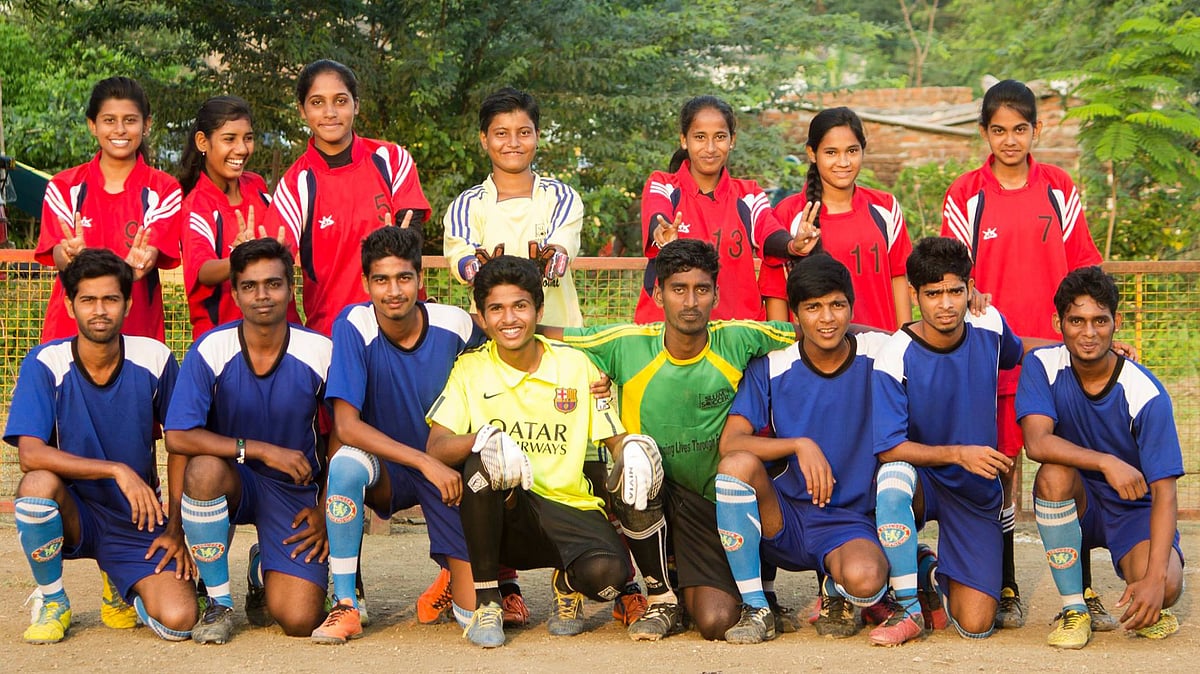
When 17-year-old Shrutika Kamble watched boys play football in her school, she felt wronged. She knew it was considered immoral for girls from her village, Korada in Maharashtra, to play alongside boys; yet she was determined to challenge the stereotype.
There were guidelines set for girls at every age, and we were supposed to adhere to them. I often found myself unsupported in my quest to challenge these.
— Shrutika Kamble
When she voiced her concerns to her school’s football coach, Om Kant, he supported her efforts and introduced her to Slum Soccer.
Slum Soccer is an initiative that reaches out to underprivileged children and youth using football as a tool for social empowerment.
Shrutika’s first steps outside the four walls of her home were welcomed by fellow footballers at the initiative. Eighteen-year-old Subham Varma was especially happy. His concerns for women empowerment echoed with those of Shrutika.
When Subham was approached by Slum Soccer, he was similarly embattled. He had lost his parents and had unwittingly taken to drugs and alcoholism.
I was in eight standard with no parents and a younger brother. I was living with my uncle who was barely able to eke out a living for himself and his family. Nasha seemed to be the only escape for me.
— Subham Varma
For Subham football was a fresh lease of life, as were Slum Soccer’s counsellors.
Bhaiyas from Slum Soccer would counsel me and explain the ill-effects of addiction. They literally pushed me out on the ground and gave me a football. Every time I felt the need to take drugs, I had to score a goal.
— Subham Varma
The road towards de-addiction was long and hard, yet Subham didn’t lose hope. His grit kept him going and he soon became the most bankable goal scorer for his team.
His performance and determination earned him a berth in the national football team at The Homeless World Cup.
Just like Subham, Anikesh Tandekar’s life underwent a complete transformation when he began playing football under Slum Soccer’s guidance.
He was among the most boisterous in Nagpur’s Siddhartha Nagar slum. Disrupting school proceedings, picking petty fights and indulging in substance abuse were among the many anti-social activities he was involved in.
Studies bored me. Outdoor activities kept me engaged. Since picking up a sport was rarely an option for anyone in my community, my energies were thus spent in being a trouble-maker.
— Anikesh Tandekar
When asked how Slum Soccer helped him, he said:
Scoring a goal gave me a high and so did winning matches. In the process of winning and losing, from a student of football, I became a master and eventually a mentor. The transformation was almost magical!
— Anikesh Tandekar
The three footballers fought against all odds to represent India at the Homeless Football World Cup in Amsterdam. Their relentless dedication towards the sport helped the country lift the prestigious Sports Gen Cup.
Football is not just a sport, but a way of life for them. Shrutika challenged patriarchy, Subham battled an addiction problem and Anikesh fought a tough battle overcoming his destructive instincts.
We are fondly called the football bhaiyas and didis by children in our communities. We want to make football accessible to every child in the country, so that they too benefit from it, just as we did.
— Anikesh Tandekar
(Video shot by Shubroto Dey and edited by Sunil Goswami)