Scientists are Waking Up a Prehistoric Virus to Conduct Studies
Scientists are re-awakening a 30,000-year-old prehistoric virus which has lain dormant since the last Ice Age.
advertisement
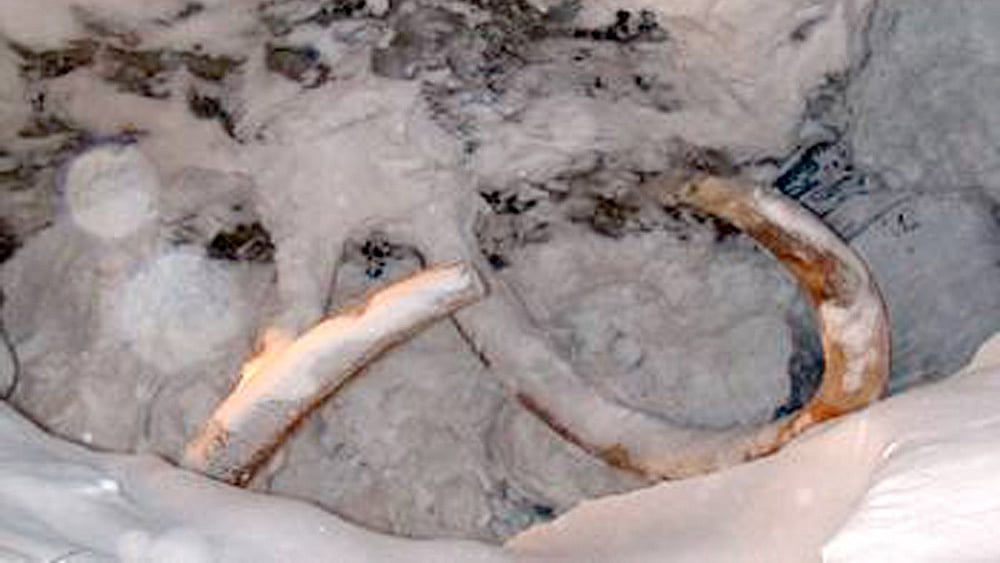
Scientists have discovered a prehistoric virus called Mollivirus sibericum in the Siberian permafrost, which they now plan to ‘re-awaken.’ It has been dormant since the last Ice Age and is 30,000 years old. The good news is that it cannot harm humans and animals. The study aims to shed insight into ancient dormant viruses that could proliferate as permafrost retreats due to climate change.
The French National Centre for Scientific Research, announced its plans in a study published on Tuesday in the Proceedings of the National Academy of Sciences (PNAS) journal. The virus is classified as a “giant” virus because it is visible by light microscopy.
Mollivirus sibericum carries a complex genetic structure which has more than 500 genes, according to the study’s abstract. The influenza virus, in comparison, has only 8 genes.
The same team that discovered Mollivirus sibericum found another 30,000-year-old virus, Pithovirus sibericum, in the same Russian permafrost. As described in PNAS last year, scientists revived a sample of Pithovirus sibericum in safe lab conditions and determined it was still infectious, though only in amoebas.
These cases raise concerns about such viruses in the context of melting permafrost.
The fact that two different viruses retain their infectivity in pre historical permafrost layers should be of concern in the context of global warming. Giant viruses’ diversity remains to be fully explored.
— Excerpt, PNAS Study Abstract
Read the full story here.