Trump Imposes New 10% Global Tariff After US Supreme Court Blocks Previous Levy
US Supreme Court strikes down Trump’s global tariffs; Trump imposes new 10% global tariff in response.
advertisement
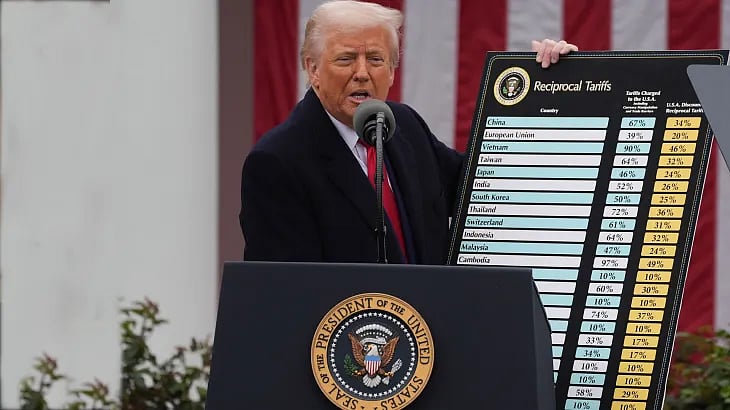
The United States Supreme Court ruled on 21 February 2026 that President Donald Trump’s sweeping global tariffs, imposed under emergency economic powers, were unlawful. The 6-3 decision invalidated tariffs affecting multiple countries, including India, Canada, China, and Mexico. In response, President Trump announced a new 10% global tariff on all US trading partners, effective for 150 days under Section 122 of the Trade Act of 1974. The ruling has significant implications for international trade and ongoing US trade agreements.
According to The Hindu, more than $175 billion in US tariff collections are now subject to potential refunds following the Supreme Court’s decision. The court found that the International Emergency Economic Powers Act (IEEPA) did not authorise the imposition of tariffs, opening the door for affected companies to seek refunds. The White House confirmed that the new 10% tariff would apply to all trading partners, including those with existing deals, but described the measure as temporary while alternative legal authorities are pursued.
As reported by undefined, President Trump stated that the US-India trade deal remains unchanged despite the Supreme Court ruling. He reiterated that India would continue to pay tariffs, and the new framework would not affect the terms agreed earlier in February. Trump also claimed that his use of tariffs had influenced India’s energy imports and regional security dynamics, particularly regarding India-Pakistan relations.
As highlighted by Hindustan Times, Trump criticised the Supreme Court’s decision, arguing that it restricted his ability to impose even minimal tariffs while allowing more severe trade actions. He announced the new 10% global tariff under Section 122, which permits temporary duties for up to 150 days to address balance-of-payments issues. Legal experts noted that this new measure could also face judicial scrutiny, but its temporary nature may limit the impact of any legal challenge.
“To show you how ridiculous the opinion is, however, the court said that I'm not allowed to charge even $1. I can't charge $1… Can't charge $1 to any country under IEEPA. Not $1,” Trump said, as quoted in the press conference following the ruling.
Analysis showed that Trump’s response to the ruling was unusually personal, as he publicly criticised the six justices who formed the majority, including two of his own appointees. He accused the court of being influenced by foreign interests and expressed disappointment in the justices’ courage. Trump praised the three dissenting justices, Clarence Thomas, Samuel Alito, and Brett Kavanaugh, for supporting his tariff authority.
Canadian officials responded to the Supreme Court’s decision by reaffirming their stance that the tariffs were unjustified following coverage. However, the practical impact on Canadian exports was limited, as most trade with the US remains exempt under the USMCA agreement. Canadian business groups emphasised the need for predictable, rules-based trade and called for successful renewal of the USMCA to avoid further disruptions.
Trump’s remarks at the White House included direct criticism of Justices Neil Gorsuch and Amy Coney Barrett, both of whom he appointed, for joining the majority opinion as reporting indicated. He praised Justice Brett Kavanaugh for his dissent, which argued that the ruling did not preclude the president from imposing similar tariffs under other statutory authorities. Trump also accused the three liberal justices of consistently opposing measures he described as strengthening the US.
“The Supreme Court's ruling on tariffs is deeply disappointing. And I'm ashamed of certain members of the court—absolutely ashamed—for not having the courage to do what's right for our country,” Trump stated during his remarks.
Financial implications of the ruling have drawn attention to Commerce Secretary Howard Lutnick and his family, who have been linked to potential gains from tariff refunds as coverage revealed. The Penn Wharton Budget Model projected up to $175 billion in possible refunds, and commentators noted that Cantor Fitzgerald, led by Lutnick’s sons, could benefit from trading rights to these refunds. Neither Lutnick nor his family has commented on these allegations.
Trump’s announcement of the new 10% global tariff was made hours after the Supreme Court setback at the end of the press conference. He stated that the measure would be “over and above our normal tariffs” and that further investigations under Section 301 and other trade laws would be initiated to address unfair trading practices. Trump also repeated claims that foreign interests had undue influence over the Supreme Court’s decision.
Note: This article is produced using AI-assisted tools and is based on publicly available information. It has been reviewed by The Quint's editorial team before publishing.