Trump Launches ‘Board of Peace’ for Gaza; Pakistan Among Members, India Absent
Donald Trump formally launched the Board of Peace for Gaza, with multiple nations joining and global debate ensuing.
advertisement
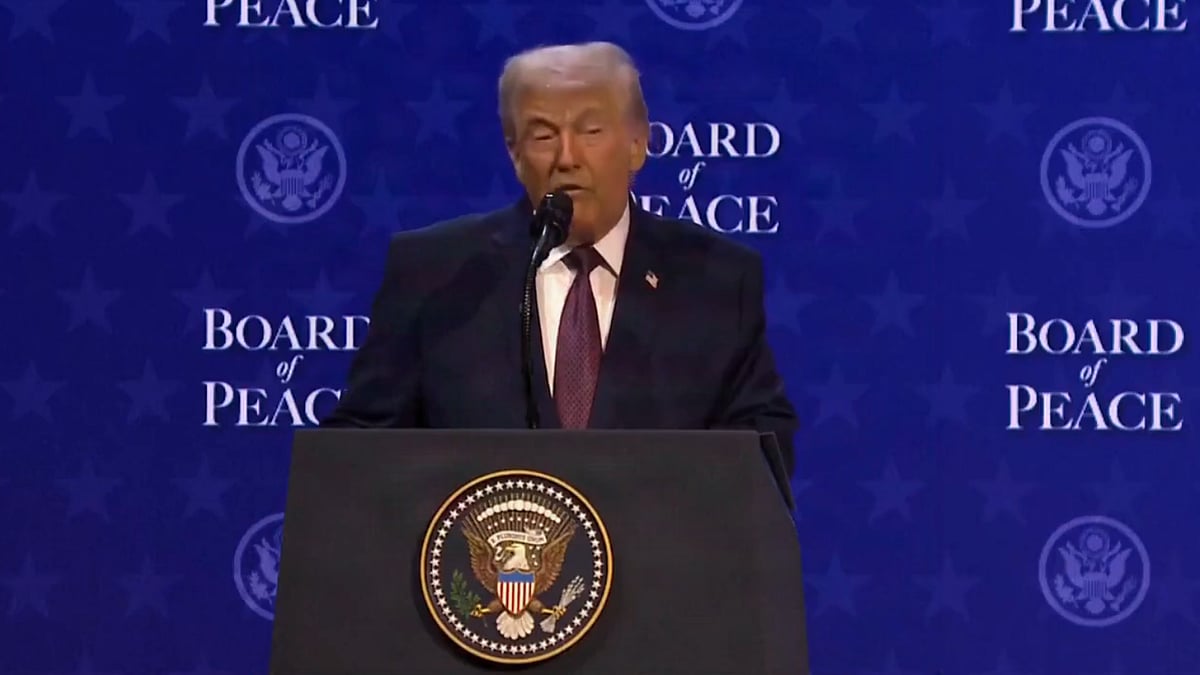
Donald Trump officially launched the ‘Board of Peace’ for Gaza during the World Economic Forum in Davos on 22 January 2026. The initiative, originally intended to address the Gaza conflict, has expanded to include a broader mandate for resolving global disputes. Several countries, including Pakistan, Morocco, Israel, Azerbaijan, and the UAE, have agreed to join as founding members. The board’s creation follows a United Nations Security Council resolution endorsing its role in Gaza’s postwar transition.
As reported by Deccan Herald, Trump described the board as “one of the most consequential bodies ever created” and stated that “every country wants to be a part of it.” Permanent members are required to contribute $1 billion each. The board’s charter was signed in Davos, with White House Press Secretary Karoline Leavitt confirming its official status as an international organization.
According to The Hindu, Trump emphasized the commitment to demilitarise Gaza and ensure its reconstruction. The board’s membership invitations have been extended to leaders such as Vladimir Putin, Benjamin Netanyahu, and Viktor Orban. While Russia is considering participation, France and the United Kingdom have declined or withheld acceptance. The board’s $1 billion membership fee and its broad remit have drawn both interest and skepticism from the international community.
As coverage revealed, Israeli Prime Minister Benjamin Netanyahu accepted Trump’s invitation to join, despite initial reservations about the board’s executive committee composition. The executive board includes U.S. Secretary of State Marco Rubio, World Bank President Ajay Banga, former UK Prime Minister Tony Blair, and other prominent figures. The Gaza Executive Board, a separate entity, will oversee the implementation of the ceasefire’s second phase, including security and reconstruction efforts.
As analysis showed, Australia has not joined the board, with officials expressing concerns about its structure and the potential risks of association. The board’s approach, which includes property developers and lacks direct Palestinian representation, has been criticized by some as prioritizing self-interest over genuine multilateralism. The price of a permanent seat and the board’s authority have raised questions about its alignment with international law and the existing global order.
“Today the world is richer, safer, and much more peaceful than it was just one year ago. We put out all those fires... We were very happy to stop the war that had started with India and Pakistan, two nuclear nations,” Trump stated at the Davos event.
In further developments, reporting indicated that Morocco’s King Mohammed VI accepted the invitation to join as a founding member, supporting the second phase of Trump’s peace plan and the establishment of a transitional governance body for Gaza. France, however, has declined to participate, citing concerns about the board’s structure and objectives.
As details emerged, the board’s executive members are tasked with overseeing portfolios such as governance, reconstruction, investment, and security. Major General Jasper Jeffers will command the International Stabilisation Force, responsible for demilitarisation and humanitarian aid delivery. The plan includes a special economic zone and aims to attract international investment for Gaza’s redevelopment.
In addition, further updates confirmed that Pakistan’s decision to join is part of its support for the Gaza plan under the UN Security Council framework. Pakistan’s Foreign Ministry expressed hope for concrete steps toward a permanent ceasefire and increased aid for Gaza’s reconstruction.
As information clarified, the board will supervise a technocratic Palestinian committee managing Gaza’s day-to-day affairs. The plan’s second phase is underway, but unresolved issues remain, including the timetable for Israeli military withdrawal and Hamas’s disarmament. The board’s authority and effectiveness continue to be subjects of international debate.
Note: This article is produced using AI-assisted tools and is based on publicly available information. It has been reviewed by The Quint's editorial team before publishing.