Trump Reverses Tariff Threat Against Europe Following Greenland Deal Framework
Trump reverses tariff threats at Davos after Greenland deal talks with NATO leaders.
advertisement
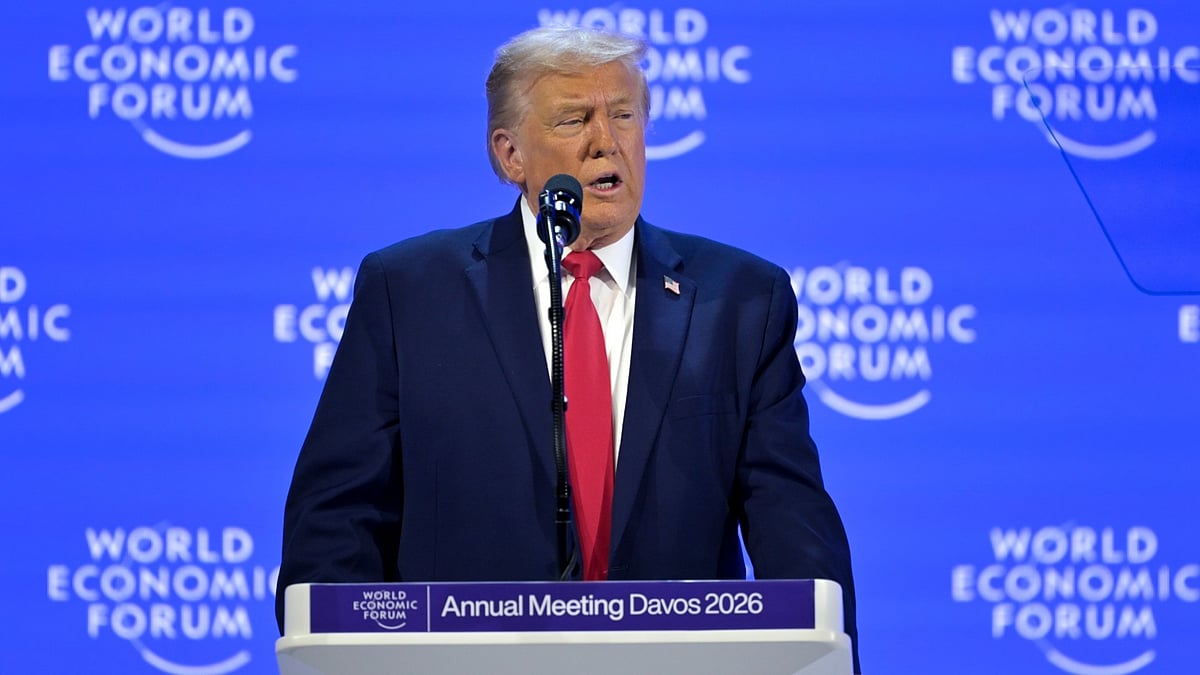
United States President Donald Trump reversed his earlier threats to impose tariffs on European allies after announcing a framework for a potential deal regarding Greenland at the World Economic Forum in Davos. The announcement followed a meeting with NATO Secretary General Mark Rutte, where Trump stated that the United States would not use military force to acquire Greenland and would instead pursue negotiations. The tariff threats, which had targeted several European countries, were withdrawn as discussions on the Greenland issue progressed.
According to BBC, Trump had previously warned of imposing a 10% tariff on goods from the United Kingdom and other NATO member states starting 1 February, with the rate set to increase to 25% by June if no agreement was reached on Greenland. After the meeting with Rutte, Trump announced on social media that the tariffs would not be implemented, citing the formation of a “framework of a future deal” concerning Greenland and the broader Arctic region.
As reported by Hindustan Times, Trump’s reversal on tariffs was met with significant attention online, with critics highlighting the abrupt change in policy. Trump stated that further discussions would involve Vice President JD Vance, Secretary of State Marco Rubio, and Special Envoy Steve Witkoff, who would report directly to him as negotiations continued. The president described the solution as beneficial for both the United States and NATO nations.
As highlighted by The Indian Express, Trump’s Davos speech reiterated his intention to acquire Greenland through negotiations rather than force, emphasizing American contributions to European security. European leaders, including French President Emmanuel Macron, publicly opposed Trump’s approach, leading to the European Parliament suspending ratification of the EU-US trade deal. Trump’s subsequent announcement of a deal framework and tariff withdrawal was seen as a response to this coordinated pushback.
In the hours following Trump’s announcement, market coverage indicated that gold prices, which had surged amid trade tensions, cooled as investor concerns eased. The decision to halt tariffs contributed to a more stable outlook for commodities and currencies, with the Bloomberg Dollar Spot Index remaining largely unchanged and gold retreating from its all-time high.
“Based upon this understanding, I will not be imposing the Tariffs that were scheduled to go into effect on February 1st,” Trump stated on social media, as cited in multiple reports.
Analysis showed that Trump’s tariff threats had contributed to volatility in global markets, with Asian indices and US futures reacting to developments at Davos. The tariffs, originally announced as part of the so-called “Liberation Day” measures, were linked to the Greenland negotiations and broader US trade policy.
Indian business leaders closely monitored the situation, as reporting indicated that over 100 Indian CEOs attended the Davos summit, where Trump’s trade and tariff policies were a central concern. Indian exporters had faced a 50% tariff for several months, and the reversal of US tariff threats was seen as a significant development for ongoing India-US trade negotiations.
Further developments at Davos included a temporary evacuation of the Congress Centre due to a fire, but updates confirmed that the incident did not affect President Trump or the ongoing negotiations. Trump continued to emphasize the long-term nature of the Greenland deal, describing it as a “deal that’s forever” and highlighting its importance for security and mineral resources.
“It’s a long-term deal. It’s the ultimate long-term deal. It puts everybody in a really good position, especially as it pertains to security and to minerals,” Trump told reporters after the NATO meeting.
California Governor Gavin Newsom, present at Davos, was denied entry to a US pavilion event, which coverage revealed was attributed to the Trump administration’s decision. Newsom, a critic of Trump, was among those in attendance during the president’s speech, which included renewed calls for Denmark to cede control of Greenland and further commentary on US-European relations.
Note: This article is produced using AI-assisted tools and is based on publicly available information. It has been reviewed by The Quint's editorial team before publishing.