SC Issues Notices to Govt Over Delhi Protests, Crackdown on Journalists
<p>Supreme Court addresses journalists’ safety, police conduct, and protest regulations after Delhi demonstrations.</p>
advertisement
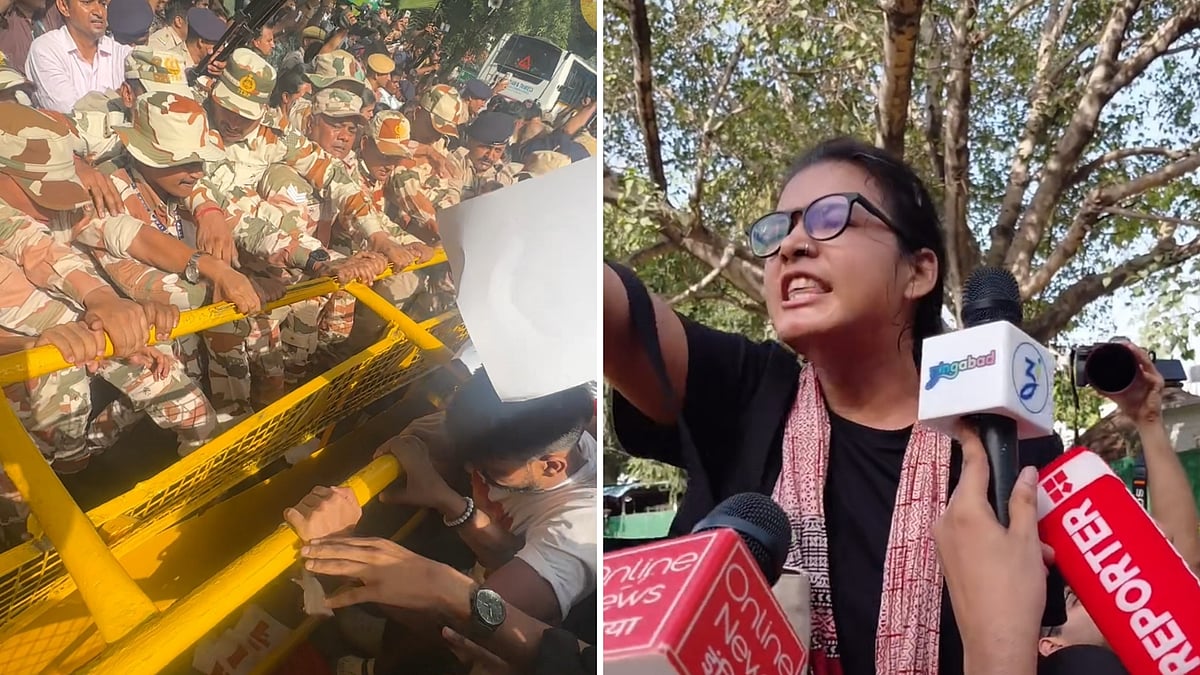
On 15 October 2026, the Supreme Court of India addressed multiple petitions arising from recent protests in Delhi, including allegations of police excesses, sexual violence against women journalists, and calls for regulatory guidelines on demonstrations near court premises. The bench, led by Chief Justice Surya Kant and Justice Joymalya Bagchi, issued directions for the preservation of digital evidence and considered the formation of a special inquiry panel to investigate complaints by journalists.
According to Bar and Bench, the Supreme Court grouped 46 petitions related to the protests, which included issues of police action against protestors and journalists, as well as the Election Commission’s Special Intensive Revision exercise. The bench directed law enforcement agencies to preserve all CCTV footage and digital material connected to the protests, emphasizing the importance of evidence retention for ongoing investigations.
As reported by The Indian Express, the Court indicated it would constitute a committee predominantly or exclusively composed of women, including retired judges and IPS officers, to examine allegations of sexual violence against women journalists during the protests. Senior Advocate Indira Jaising argued that women journalists face unique vulnerabilities at protest sites, stating, “They go there to perform their duties in the exercise of the right to work. Now, being women, they are particularly vulnerable to sexual abuse, being pushed and pulled around, especially by male police officers.”
Court directions required the Delhi Police to submit prohibitory orders issued under Section 163 of the Bharatiya Nagarik Suraksha Sanhita and to clarify the number of persons detained during the protests. The Court also sought responses on the constitutional validity of Section 172 BNSS, which allows police to detain individuals for disregarding lawful directions, following concerns about potential misuse and lack of safeguards.
Midway through the proceedings, petitions highlighted allegations of physical assault, illegal detention, and selective police action against protestors, including journalists and minors. Petitioners claimed that women were detained after 6 p.m., subjected to physical and sexual assault, and denied access to legal counsel or information about their detention.
“Several persons were detained in areas where Section 163 of the BNSS had not been promulgated; several were not informed of the grounds of their detention or were detained by purported police personnel displaying no name tags on their uniform; and many others were denied access to legal counsel,” one petition stated.
Further coverage revealed that the Court asked Indira Jaising to submit names of potential committee members in a sealed envelope and to provide details of affected journalists confidentially. The Court stressed the need for sensitivity and confidentiality in handling these complaints, agreeing to consider compensation for those who experienced violence.
At the start of the hearing, petitions sought uniform guidelines to regulate political processions and demonstrations near court premises, including a prohibition on protests inside court buildings. The plea also requested preservation of CCTV footage and security records from the day of the protests, and raised concerns about public campaigns targeting judges.
In addition, analysis showed that Solicitor General Tushar Mehta objected to media reports suggesting the government had issued an unconditional apology for its conduct, clarifying that such language is standard in responses to contempt notices and does not indicate an admission of wrongdoing.
At the end of the session, the Court issued notices to the Union government and Delhi Police on all pending petitions, urging parties to appoint nodal counsel to streamline the litigation and avoid repetitive filings. The bench reiterated the importance of protecting journalists’ rights and ensuring accountability for any violations during the protests.
Note: This article is produced using AI-assisted tools and is based on publicly available information. It has been reviewed by The Quint's editorial team before publishing.