18 Killed as Thousands Breach Border Between Morocco & Spanish Enclave of Ceuta
Spain deploys military to Ceuta after thousands cross from Morocco, with at least 18 migrant deaths reported.
advertisement
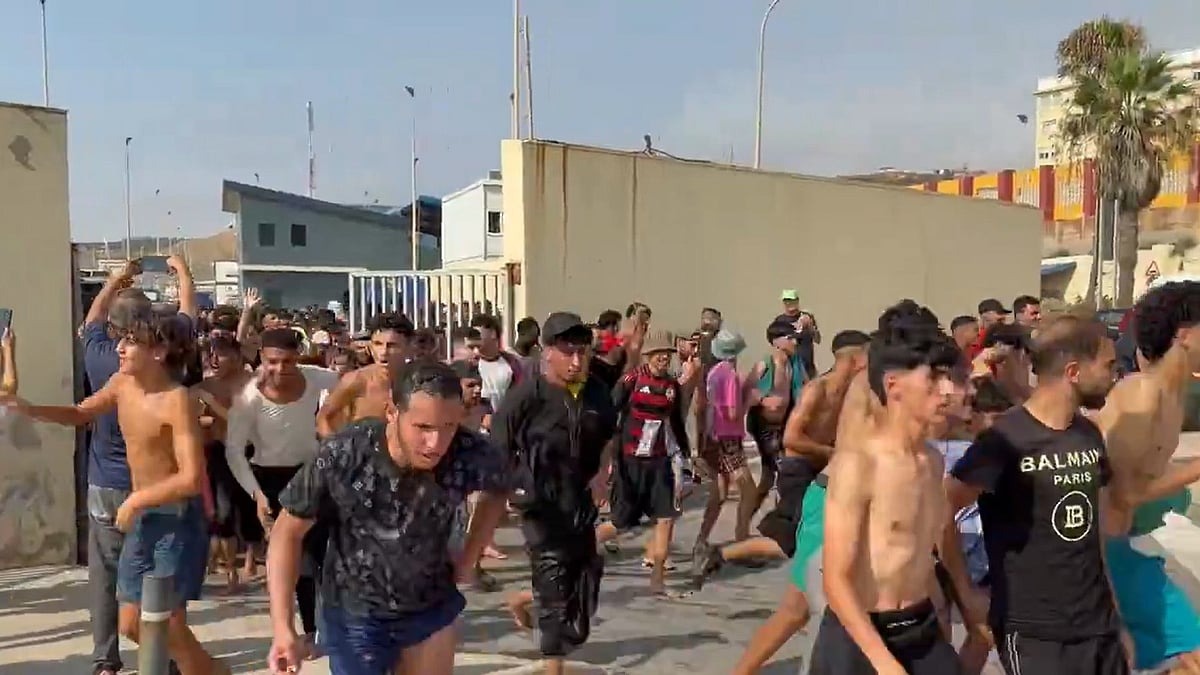
Thousands of migrants crossed from Morocco into Spain’s North African enclave of Ceuta between 30 and 31 July 2026, resulting in at least 18 deaths. The Spanish government responded by deploying military forces to restore order, as local authorities reported overwhelmed resources and chaotic conditions. Many migrants attempted the crossing by swimming, while others breached border fences. The incident has intensified scrutiny of Spain’s border policies and its diplomatic relationship with Morocco.
According to Hindustan Times, the Spanish Prime Minister Pedro Sánchez and Interior Minister Fernando Grande-Marlaska planned to visit Ceuta following the surge. Local Civil Guard representatives described the situation as a “serious humanitarian crisis,” with thousands of migrants, including unaccompanied children, left without shelter and sleeping in public spaces.
As reported by Deccan Herald, Spanish state television estimated that between 2,000 and 3,000 people crossed into Ceuta on 30 July 2026. Most crossings occurred before midday, and the Spanish military and police were sent to reinforce border security after the influx.
As highlighted by The Hindu, the Spanish government stated that the Armed Forces would support the Civil Guard in maintaining security. The border crisis was described as “absolute chaos” by local officials, with thousands of migrants crossing and the border “totally collapsed.”
Ceuta’s unique status as an autonomous Spanish city on the African continent, and its role as one of the European Union’s only land borders with Africa, has made it a recurring flashpoint for migration and diplomatic tensions. Analysis showed that Ceuta’s immigration policy involves strict border controls, with many migrants returned to Morocco under bilateral agreements, while others are processed for asylum under Spanish law.
Video footage from the scene showed large groups, including families with children, entering Ceuta by walking around breakwaters or swimming from Moroccan coastal towns. Coverage revealed that at least nine people died during the initial chaos, with bodies seen floating in the water. Local authorities linked the surge to a recent Spanish Supreme Court ruling affecting migrant returns by sea, though activists doubted this was widely known among migrants.
“The situation is absolute chaos. It’s not possible to give precise numbers, but there are thousands of migrants crossing,” said Rachid Sbihi, head of the association representing Spain’s Civil Guard officers in Ceuta.
On 31 July 2026, reporting indicated that local officials in Ceuta requested the Spanish government declare a national emergency, but the Interior Ministry declined, stating it would guarantee border integrity and citizen safety. Videos circulated widely, showing migrants using flotation devices to swim into Ceuta and others running through border gates.
Hundreds of migrants continued to gather on the Moroccan side, waiting to cross, while Spanish authorities worked to manage the humanitarian response. Following reports, the Spanish government nearly doubled the Civil Guard’s strength in Ceuta and sent additional resources, including diving teams and coastguard ships.
Spain’s Interior Ministry stated that Moroccan authorities were cooperating to stop further crossings and facilitate the return of those who entered illegally. As details emerged, the ministry confirmed that nearly 3,000 migrants had entered Ceuta by land or sea in 2026 up to mid-July, and that government agencies were coordinating a rapid response to the crisis.
Note: This article is produced using AI-assisted tools and is based on publicly available information. It has been reviewed by The Quint's editorial team before publishing.