'Silence is Abdication': Sonia Gandhi Questions PM's Silence on Iran
Sonia Gandhi criticises Modi government's silence on Khamenei's killing amid Iran war.
advertisement
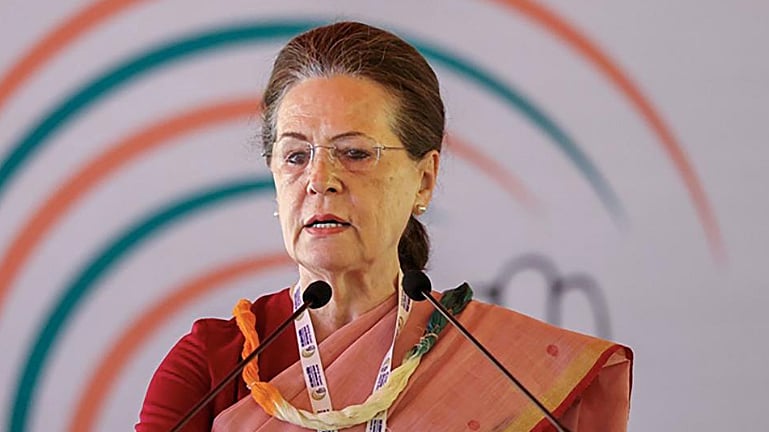
Congress Parliamentary Party chairperson Sonia Gandhi has publicly criticised the Indian government’s response to the recent escalation in West Asia following the assassination of Iranian Supreme Leader Ayatollah Ali Khamenei. Gandhi questioned the timing of Prime Minister Narendra Modi’s visit to Israel and described the government’s silence on the targeted killing as a departure from India’s traditional foreign policy principles.
According to Hindustan Times, Sonia Gandhi stated that the lack of a clear response from India on the killing of a foreign leader raises doubts about the direction and credibility of the country’s foreign policy. She cited Article 2(4) of the United Nations Charter, emphasising that the use of force against the territorial integrity or political independence of any state is prohibited, and argued that the killing of Khamenei violated these principles.
As reported by Deccan Herald, Gandhi described the government’s silence as “not neutral, but abdication,” and called for a Parliamentary debate on the issue. She highlighted that India’s credibility as an independent actor in international affairs is at stake, especially given the presence of nearly 10 million Indians living and working across the Gulf region.
In her remarks, Gandhi referenced former Prime Minister Atal Bihari Vajpayee’s 2001 visit to Tehran, noting that India’s longstanding civilisational and contemporary ties with Iran should inform its diplomatic approach. She argued that India’s ability to safeguard its citizens abroad has historically depended on its reputation for principled, non-aligned foreign policy. Coverage revealed that Gandhi urged the government to articulate its position with clarity and commitment, stating, “A clear articulation of India's position is overdue. Democratic accountability demands no less, and strategic clarity requires
Gandhi also pointed out that India’s recent high-profile political endorsement of Israel, without moral clarity, marks a visible and troubling departure from its traditional stance. She warned that such actions could erode international norms and diminish India’s standing among countries in the Global South. The analysis showed that Gandhi’s statements have prompted renewed debate about India’s diplomatic positioning amid the ongoing conflict.
Gandhi further argued that India’s foreign policy should be anchored in the peaceful settlement of disputes, as reflected in Article 51 of the Constitution. She reiterated that principles such as sovereign equality, non-intervention, and the promotion of peace have historically been integral to India’s diplomatic identity. Reporting indicated that Gandhi called for India to rediscover its moral strength and to act as a conscience-keeper on the global stage.
Gandhi’s criticism comes as the region faces continued instability, with airspace closures, flight disruptions, and heightened security risks for Indian nationals in the Gulf. The government’s response to these developments, and to Gandhi’s demands for a Parliamentary debate, remains under close scrutiny as details emerged.
Note: This article is produced using AI-assisted tools and is based on publicly available information. It has been reviewed by The Quint's editorial team before publishing.