Sanctioned Tanker Rich Starry Forced Back Due To US Blockade of Strait of Hormuz
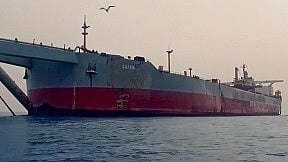
US-sanctioned tanker Rich Starry reversed course to the Strait of Hormuz after failing to breach the US blockade.
advertisement
The US-imposed naval blockade on Iranian ports in the Strait of Hormuz has resulted in the US-sanctioned tanker Rich Starry reversing course and returning to the strait after an unsuccessful attempt to exit the Gulf. The blockade, announced after failed peace talks between the United States and Iran, has halted vessel movements to and from Iranian ports, with several ships complying with US Navy instructions to turn back.
According to The Hindu, the Rich Starry, which had exited the Gulf, made its way back to the Strait of Hormuz on 15 April 2026. The tanker was among at least eight ships that crossed the waterway on the first day of the US blockade, but ultimately failed to break through the restrictions imposed on vessels calling at Iranian ports.
As reported by The Indian Express, US Central Command confirmed that in the first 24 hours of the blockade, no ships made it past the US naval restriction, and six merchant vessels were directed to return to Iranian ports. The US Navy destroyer intercepted two oil tankers attempting to leave Iran, instructing them to turn around after departing from Chabahar port in the Gulf of Oman.
As highlighted by Hindustan Times, the Rich Starry, a Chinese-owned and US-sanctioned vessel, initially appeared to have crossed the Strait of Hormuz but reversed direction later that day. Tracking data indicated the ship turned around at approximately 1 pm London time, reflecting the challenges faced by sanctioned vessels under heightened US scrutiny.
Military statements indicated that the US blockade was being enforced impartially against all vessels entering or departing Iranian ports, regardless of their flag. The US Central Command stated, “During the first 24 hours, no ships made it past the US blockade and 6 merchant vessels complied with direction from US forces to turn around to re-enter an Iranian port on the Gulf of Oman.”
Legal complexities surrounding the Strait of Hormuz have contributed to the ongoing tensions. Analysis showed that the United States and Iran interpret the legal status of the strait differently, with the US viewing it as an international waterway and Iran asserting territorial rights, complicating enforcement and navigation rights for international shipping.
Economic impacts are also emerging as a result of the blockade and tanker movements. Coverage revealed that disruptions in the Strait of Hormuz are expected to increase freight rates, insurance premiums, and delivered costs for major importers such as India, as risk perception rises and alternative supply routes are sought.
The blockade’s effect on global oil flows is significant, with China and India both adjusting their sourcing strategies. Reporting indicated that Indian refiners are unlikely to purchase oil from recently arrived Iranian tankers due to the risk of secondary US sanctions, while China may absorb some of the displaced cargoes.
“The Strait of Hormuz shock has already turned supply from a policy variable into a logistics variable: the question is no longer only who has crude, but which barrels can still move, at what freight, insurance and political premium,” said Priya Walia, Vice President, Commodity Markets – Oil at Rystad Energy.
Geopolitical developments continue to influence the situation. Following reports, diplomatic efforts between the US and Iran are ongoing, with discussions about potential peace talks and the future of the blockade, while regional actors monitor the evolving security environment in the Gulf.
Note: This article is produced using AI-assisted tools and is based on publicly available information. It has been reviewed by The Quint's editorial team before publishing.