Rohingyas Called 'Muslim Dogs': ICJ Hears Case on Rohingyas in Myanmar
ICJ hears evidence of Rohingya Muslims being called "Muslim dogs" before attacks in Myanmar.
advertisement
The International Court of Justice (ICJ) in The Hague is currently hearing a case concerning allegations of genocide against the Rohingya Muslim minority in Myanmar. The proceedings include evidence that members of Myanmar’s military repeatedly referred to Rohingya as “Muslim dogs” prior to violent attacks. The Gambia, representing the case, has accused Myanmar of using hate speech and force to incite violence, with hearings scheduled to continue until 29 January 2026.
According to Maktoob Media, The Gambia’s legal team presented arguments before the ICJ, highlighting years of vilification and hate speech by senior Myanmar military officials. The legal team cited a 2017 video posted on Facebook, in which soldiers were seen encouraging violence against the Rohingya, using dehumanising language and urging others to attack the community.
As reported, the evidence included direct quotes from the video, such as, “We will clear the villages where those animals live. We have guns, we have bullets. That’s what we came with, ammunition and the spirit to attack the animals. If you can carry a sword, carry a sword. If you can carry a stick, then carry a stick. Carry whatever you can and bravely face these animals.”
The Gambia’s case alleges that the Myanmar military committed acts of genocide between 2016 and 2018 in northern Rakhine State, including mass executions, indiscriminate killings of over 10,000 civilians, the burning of more than 100 villages, and widespread sexual violence. Coverage revealed that women and children were specifically targeted during these attacks.
In 2020, the ICJ ordered Myanmar to take provisional measures to prevent acts of genocide. Myanmar has denied the allegations, stating that its actions were part of a counter-insurgency operation. Analysis showed that the case has received support from the 57 member states of the Organisation of Islamic Cooperation (OIC).
“He told them, and I quote, ‘We will clear the villages where those animals live. We have guns, we have bullets. That’s what we came with, ammunition and the spirit to attack the animals. If you can carry a sword, carry a sword. If you can carry a stick, then carry a stick. Carry whatever you can and bravely face these animals.’”
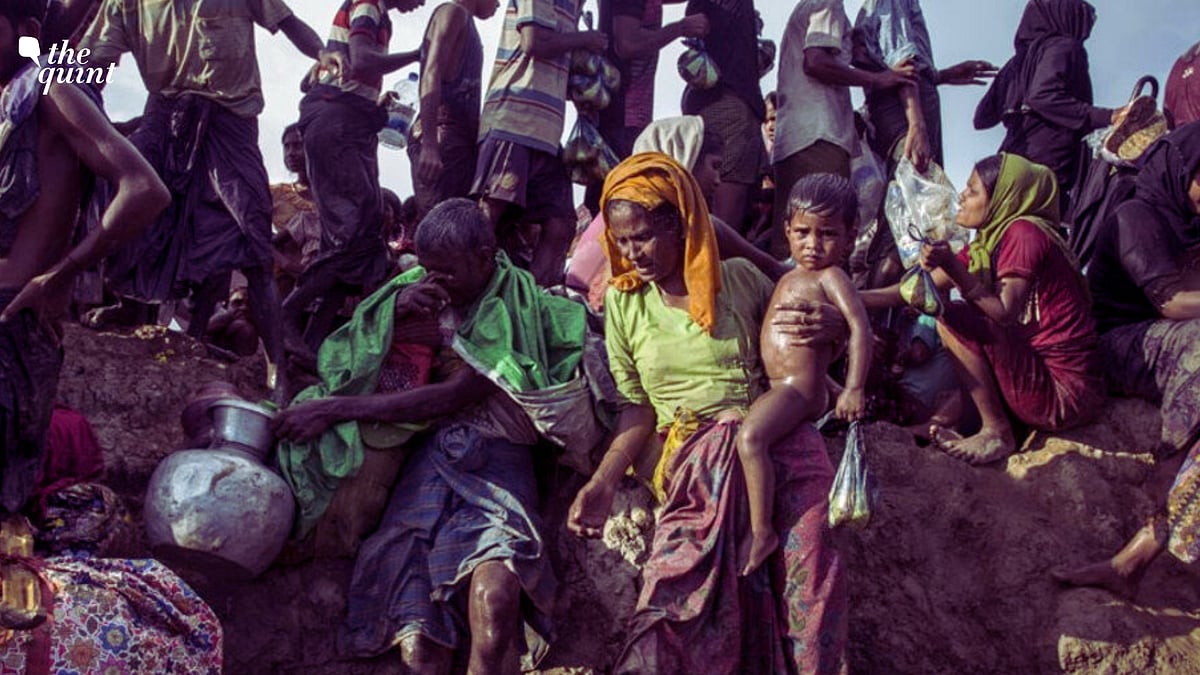
Former United Nations human rights chief Zeid Ra’ad Al Hussein previously described the 2017 violence against the Rohingya as a “textbook example of ethnic cleansing.” More than 700,000 Rohingya fled to neighbouring countries during this period. The hearings at the ICJ are expected to continue until the end of January, with further evidence and arguments to be presented as details emerge.
Note: This article is produced using AI-assisted tools and is based on publicly available information. It has been reviewed by The Quint's editorial team before publishing.