Iran Revolutionary Guard Corp Announces 'Total Control' of Strait of Hormuz
Iran’s Revolutionary Guard closes Strait of Hormuz amid escalating Gulf conflict.
advertisement
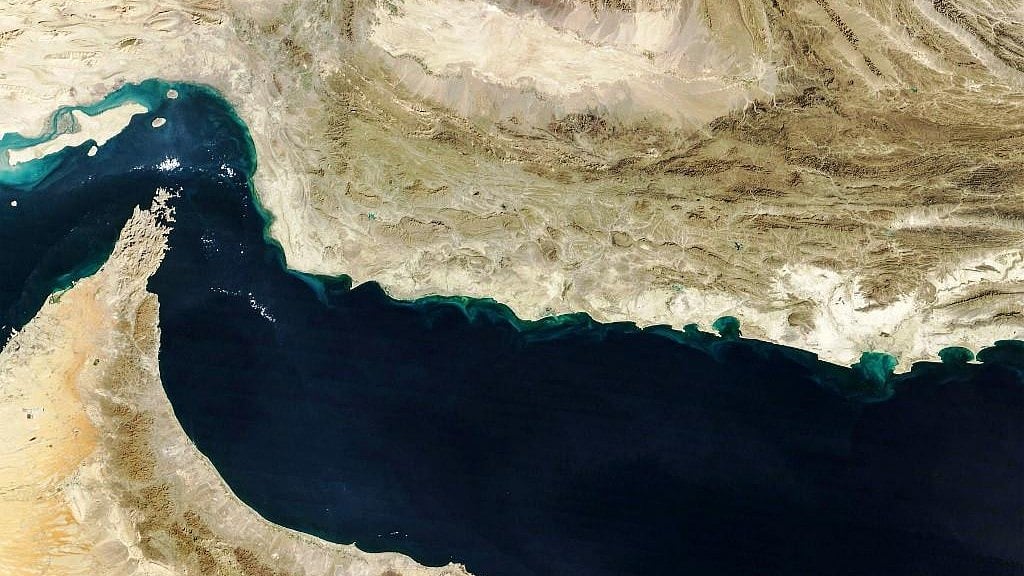
The Islamic Revolutionary Guard Corps (IRGC) has announced the closure of the Strait of Hormuz, a critical maritime chokepoint for global oil shipments, as Iran retaliates against U.S. and Israeli military actions. The closure has halted the passage of oil tankers, causing immediate disruptions to global energy markets and intensifying the ongoing conflict across the Gulf region.
According to The Hindu, the IRGC’s move to close the Strait of Hormuz has effectively stopped the transit of approximately 20% of the world’s oil exports. The closure was enforced through threats, mine-laying, and direct military action, impacting oil shipments from major producers such as Saudi Arabia, Iraq, and the United Arab Emirates.
As reported by The Indian Express, Iranian officials have declared that any vessel attempting to pass through the Strait will be targeted. Ebrahim Jabari, a senior IRGC adviser, stated, “Any ship that tries to pass the Strait of Hormuz will be set on fire. We will also attack oil pipelines and will not allow a single drop of oil to leave the region.”
Coverage revealed that the closure has led to a surge in oil prices, with Brent crude trading above $85 per barrel. The disruption has forced Qatar and Iraq to halt production at major energy sites, and shipping insurance premiums have risen sharply due to increased risks in the Gulf.
As highlighted by The Guardian, China has called for the protection of vessels in the Strait of Hormuz, reflecting concerns from major oil-importing nations. Middle East airlines have suspended flights, and global stock markets have experienced significant volatility as a result of the escalating conflict and energy uncertainty.
“Oil and gas prices have surged following the closure of the Strait of Hormuz, a gateway to 20% of the world’s oil exports from the Gulf,” the IRGC announced, as cited in official statements.
Analysis showed that the IRGC’s actions are part of a broader Iranian response to U.S. and Israeli strikes, which have targeted military and leadership sites across Iran. The IRGC has also launched missile and drone attacks at U.S. bases in Qatar, the UAE, and other Gulf states, further destabilising the region.
In addition, reporting indicated that the IRGC’s influence extends beyond military operations, with its support for regional groups such as Hezbollah and the Houthis contributing to the wider conflict. The IRGC’s actions have drawn condemnation from neighbouring Gulf states, which have urged de-escalation and the protection of civilian infrastructure.
As details emerged, the United States has responded by preparing to escort oil tankers through the Strait of Hormuz and providing insurance for shipping. President Donald Trump stated that the U.S. Navy would ensure the free flow of energy to the world, despite the heightened risks posed by the IRGC’s threats.
“If necessary, the United States Navy will begin escorting tankers through the Strait of Hormuz, as soon as possible. No matter what, the United States will ensure the FREE FLOW of ENERGY to the WORLD,” President Trump said.
Further coverage noted that the IRGC’s actions coincide with a leadership transition in Iran following the death of Supreme Leader Ayatollah Ali Khamenei. The Assembly of Experts is deliberating on succession, with Mojtaba Khamenei, who has close ties to the IRGC, emerging as a leading contender.
As events unfolded, the IRGC’s closure of the Strait of Hormuz and its broader military campaign have intensified regional instability, with significant implications for global energy security and international maritime trade.
Note: This article is produced using AI-assisted tools and is based on publicly available information. It has been reviewed by The Quint's editorial team before publishing.