Pakistan Conducts Ground Ops Along Afghan Border After Karachi Attack, 29 Killed
Pakistan launched ground and air operations along the Afghanistan border, killing 29 militants after Karachi attack.
advertisement
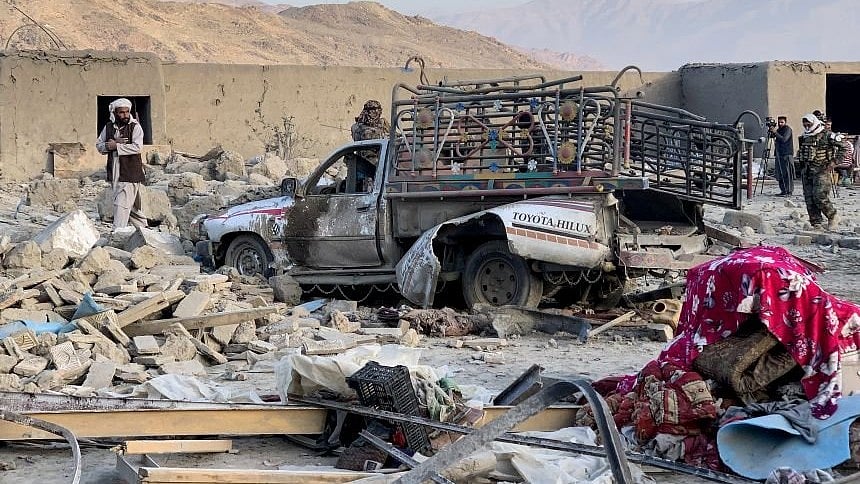
On 29 June 2026, Pakistan’s security forces conducted a ground operation and subsequent airstrikes along the Afghanistan border, resulting in the deaths of 29 militants. The operations were launched in response to a deadly attack on a paramilitary Rangers facility in Karachi, which killed three soldiers. The targeted militants were reportedly linked to Jamaat-ul-Ahrar, a faction associated with Tehrik-e-Taliban Pakistan (TTP). Afghan authorities have claimed civilian casualties from the strikes, while Pakistan maintains the targets were militant hideouts.
According to The Guardian, Pakistan’s information minister Attaullah Tarar stated that the operations aimed at groups responsible for the Karachi attack. The strikes targeted locations in three eastern Afghan provinces. Afghan government spokesperson Zabihullah Mujahid condemned the action, describing it as a “cowardly act of aggression” and reported dozens of civilian casualties.
As reported by Siasat, the Pakistani military described the operation as “calibrated strikes” following an intelligence-based ground operation. The military identified one of the detained attackers from the Karachi incident as an Afghan national. The escalation follows months of tit-for-tat military actions between the two countries, with hundreds killed in cross-border fighting since February.
As highlighted by Hindustan Times, the Karachi attack involved militants detonating explosives and opening fire at the Rangers’ compound, leading to a prolonged gun battle. Jamaat-ul-Ahrar claimed responsibility for the attack. The following day, Pakistan launched operations targeting the group’s hideouts in Afghanistan, destroying three targets in Paktia, Paktika, and Kunar provinces.
“Pakistan’s latest operation along the Afghan border targeted the hideouts and safe havens of Jamaat-ul-Ahrar and Fitna al-Khwarij, a term Pakistan uses for the Pakistani Taliban,” the information minister said.
As noted in an article by Scroll, the Indian Ministry of External Affairs rejected Pakistan’s allegations linking India to the Karachi attack, urging Islamabad to focus on addressing terrorism within its own borders. The ministry’s spokesperson stated that Pakistan should “take credible action against the terror infrastructure on its territory.”
Reporting indicated that Pakistan’s strikes were in direct response to recent terrorist incidents, with the government claiming the elimination of a senior militant commander. There was no immediate response from Afghanistan’s Taliban government regarding the strikes.
As coverage revealed, the Karachi attack was one of several recent events exposing internal security challenges in Pakistan. The incident underscored the persistent threat posed by militant groups, even in major urban centres, and highlighted ongoing tensions with Afghanistan over alleged militant sanctuaries.
Analysis showed that diplomatic efforts to resolve the conflict have so far failed. Multiple rounds of internationally mediated talks, including those hosted by China, have not produced a lasting ceasefire. The relationship between Islamabad and Kabul remains strained, with both sides accusing each other of harbouring militants.
The situation escalated further as details emerged of Pakistan’s continued operations along the border and inside Afghanistan since last year. Pakistan asserts that its actions are necessary for national security, while Afghanistan denies providing sanctuary to militants. The ongoing violence has resulted in significant casualties and displacement on both sides of the border.
“Pakistan has always strived for maintaining peace and stability in the region, but at the same time shall not compromise on the safety and security of our citizens, which remains our top priority,” said Information Minister Attaullah Tarar.
Note: This article is produced using AI-assisted tools and is based on publicly available information. It has been reviewed by The Quint's editorial team before publishing.