Oil Tanker with 15 Indian Crew Members Hit Off Oman Coast, All Evacuated
Oil tanker with 15 Indian crew members attacked off Oman amid escalating Middle East conflict.
advertisement
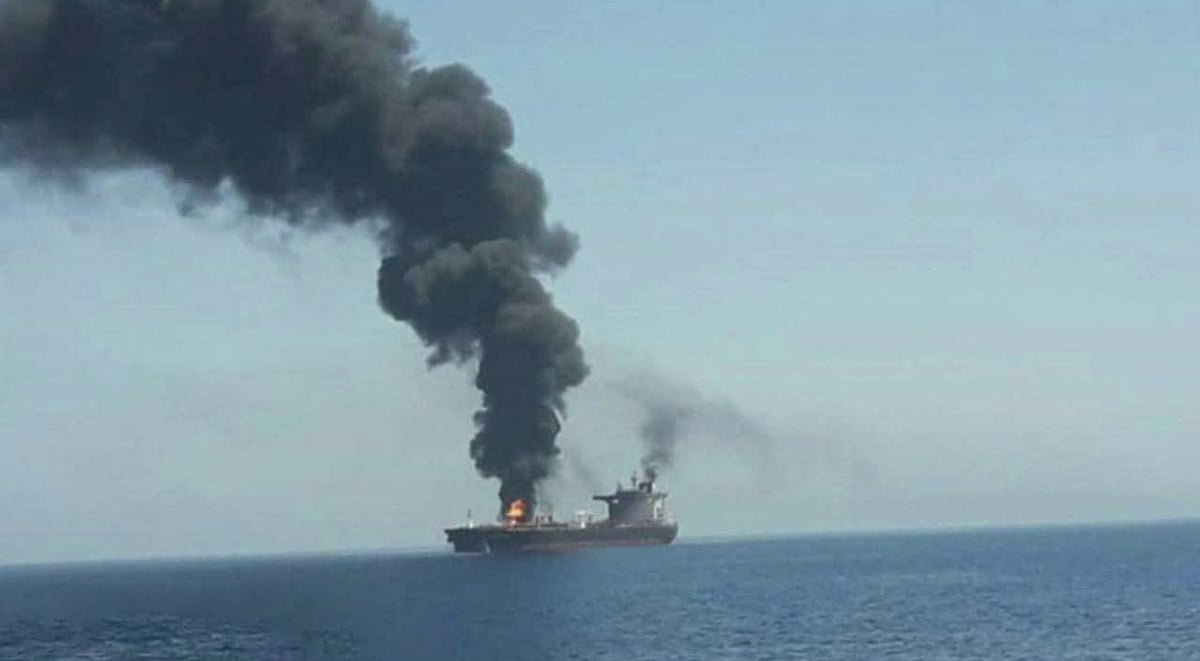
An oil tanker flagged to Palau and carrying a crew of 20, including 15 Indian nationals, was attacked on 1 March 2026 off the coast of Oman near the Musandam peninsula. The incident resulted in injuries to four crew members, who were subsequently evacuated for medical treatment. The attack occurred approximately five nautical miles north of Khasab Port in the strategic Strait of Hormuz, a critical maritime route for global oil shipments.
According to The Indian Express, the vessel, identified as the Skylight, was subjected to an attack while navigating the Strait of Hormuz. The Oman Maritime Security Centre confirmed that the entire crew, comprising 15 Indian and five Iranian nationals, was safely evacuated following the incident. Preliminary reports indicated that four crew members sustained injuries of varying severity and were transported for medical care.
As reported by Hindustan Times, the attack on the tanker coincided with heightened military activity in the region, including missile and drone strikes involving Iran, the United States, and Israel. The broader conflict has led to increased security risks for commercial vessels operating in the Gulf and adjacent waters.
As highlighted by The Hindu, the Oman Maritime Security Centre did not specify the nature of the weapon or device that struck the tanker. The incident marks the first reported attack on a vessel in or near Oman following a series of retaliatory strikes by Tehran after joint US-Israeli military operations in Iran. The Indian Embassy in Iran and Israel has issued advisories urging Indian nationals to exercise caution and avoid unnecessary movement in affected areas.
Further details emerged regarding the strategic significance of the Strait of Hormuz, through which approximately one-fifth of global oil consumption passes. Disruptions in this corridor have the potential to impact international oil markets and maritime insurance rates. The attack on the Skylight tanker has raised concerns about the safety of shipping lanes and the possibility of further incidents as regional tensions persist.
“The entire crew of twenty individuals—comprising fifteen Indian nationals and five Iranian nationals—has been safely evacuated. Preliminary reports indicate that four crew members sustained injuries of varying degrees and have been transported to receive requisite medical care,” the Oman News Agency stated, as cited by multiple sources.
Analysis showed that the incident has contributed to volatility in global oil prices, with markets anticipating a surge due to the risk of further disruptions in the Strait of Hormuz. Several tanker owners and trading houses have reportedly suspended shipments through the area, and insurance costs for vessels operating in the region have increased.
Regional authorities responded quickly following reports of the attack, coordinating evacuation and medical assistance for the affected crew. The Indian government is monitoring the situation and maintaining contact with local authorities to ensure the safety of its nationals.
The broader context as details emerged includes ongoing military operations and retaliatory actions in the Middle East, which have led to the closure of airspace in several countries and disruptions to commercial shipping and aviation.
“Oman’s Musandam peninsula shares control of the Strait of Hormuz with Iran, a vital strategic chokepoint through which roughly a fifth of global oil consumption flows,” noted the Oman Maritime Security Centre, as referenced by Indian and international news agencies.
Global energy analysts indicated that even limited disruptions in the Strait of Hormuz can have significant effects on oil supply chains and pricing. The incident underscores the vulnerability of maritime infrastructure in conflict zones and the importance of coordinated international response to ensure the safety of seafarers and the continuity of global trade.
Note: This article is produced using AI-assisted tools and is based on publicly available information. It has been reviewed by The Quint's editorial team before publishing.