Two Suspected Nipah Cases Detected in Bengal, Centre Responds
The two patients are healthcare workers. Contact tracing and treatment plans are underway.
advertisement
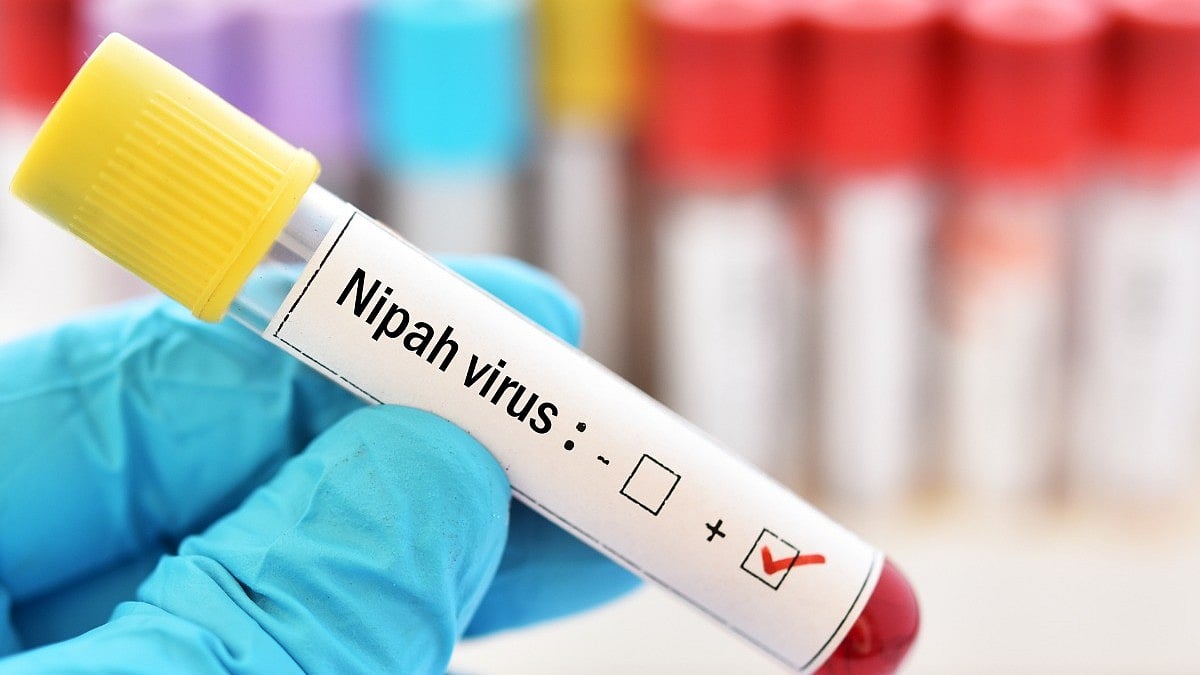
Two healthcare workers in Barasat city, North 24 Parganas district, West Bengal, suspected of being infected with the Nipah virus are currently under treatment.
The cases were detected at the All India Institute of Medical Sciences-Kalyani in Nadia district on the night of 11 January 2026. Both patients are hospital employees, and their identities and the facility name have not been disclosed to protect privacy.
Contact tracing and treatment plans are underway, and the patients had not travelled outside West Bengal recently.
According to The Hindu, West Bengal Chief Secretary Nandini Chakraborty confirmed that the patients are under observation and urged the public to remain calm, avoid misinformation, and follow hygiene precautions. The State government has launched three helpline numbers for public queries and is conducting contact tracing in North 24 Parganas, Purba Bardhaman, and Nadia districts, as the patients had travelled to Purba Bardhaman for personal reasons.
Health Secretary Narayan Swaroop Nigam, present at the official briefing, declined to share further patient details, citing privacy concerns as coverage revealed.
Authorities are in contact with the families of the affected individuals, and all primary and secondary contacts are being traced to prevent further spread.
The Union Health Ministry has deployed a national joint outbreak response team to support the State government in containment and public health response measures.
The team includes experts from the All India Institute of Health and Public Hygiene, Kolkata; National Institute of Virology, Pune; National Institute of Epidemiology, Chennai; AIIMS-Kalyani; and the Department of Wildlife under the Ministry of Environment, Forest and Climate Change following reports.
The Public Health Emergency Operations Centre at the National Centre for Disease Control, Delhi, has also been activated to coordinate the national response.
“Given the serious nature of Nipah virus infection, which is a zoonotic disease with high mortality and potential for rapid spread, the situation is being handled with utmost priority,” a senior Health Ministry official stated.
Union Health Minister JP Nadda has written to West Bengal Chief Minister Mamata Banerjee, assuring full support from the Centre.
He also spoke to the Chief Minister by telephone and reiterated the Centre’s commitment to extend all necessary assistance in managing the situation as details emerged.
The Centre is providing technical, logistical, and operational support, including laboratory services, enhanced surveillance, case management, infection prevention and control, and expert guidance.
State officials have been advised to ensure close coordination with the deployed teams and to carry out meticulous contact tracing and containment measures.
The last Nipah virus outbreak in West Bengal occurred in 2007, while the most recent outbreak in India was in Kerala in August 2025 according to official updates.
Nipah virus is a bat-borne disease, but it can also spread from pigs in certain cases.
The incubation period ranges from four to fourteen days, and symptoms include fever, muscle pain, sore throat, and respiratory problems.
Severe cases may result in respiratory distress and convulsions. There are currently no vaccines for Nipah virus, and patients are treated in isolation. Medical experts emphasise the importance of extensive contact tracing, as some patients may be asymptomatic carriers as analysis showed.
Dr Subarna Goswami, a senior public health specialist, stated, “The government must publish a route map of the two patients to help in contact-tracing and self-reporting by people who may have come in contact with the two patients.”
Officials have advised the public to avoid consuming raw date sap, as bats may contaminate it, and to opt for boiled or processed jaggery instead. The State government continues to monitor the situation and has urged the public to remain vigilant and follow official health advisories at this stage.
Note: This article is produced using AI-assisted tools and is based on publicly available information. It has been reviewed by The Quint's editorial team before publishing.