Naseeruddin Shah 'Disinvited at the Last Moment' From Mumbai University Event
“The ‘thought police’ and ‘doublespeak’ have been deployed in full force, as has surveillance,” Shah lamented.
advertisement
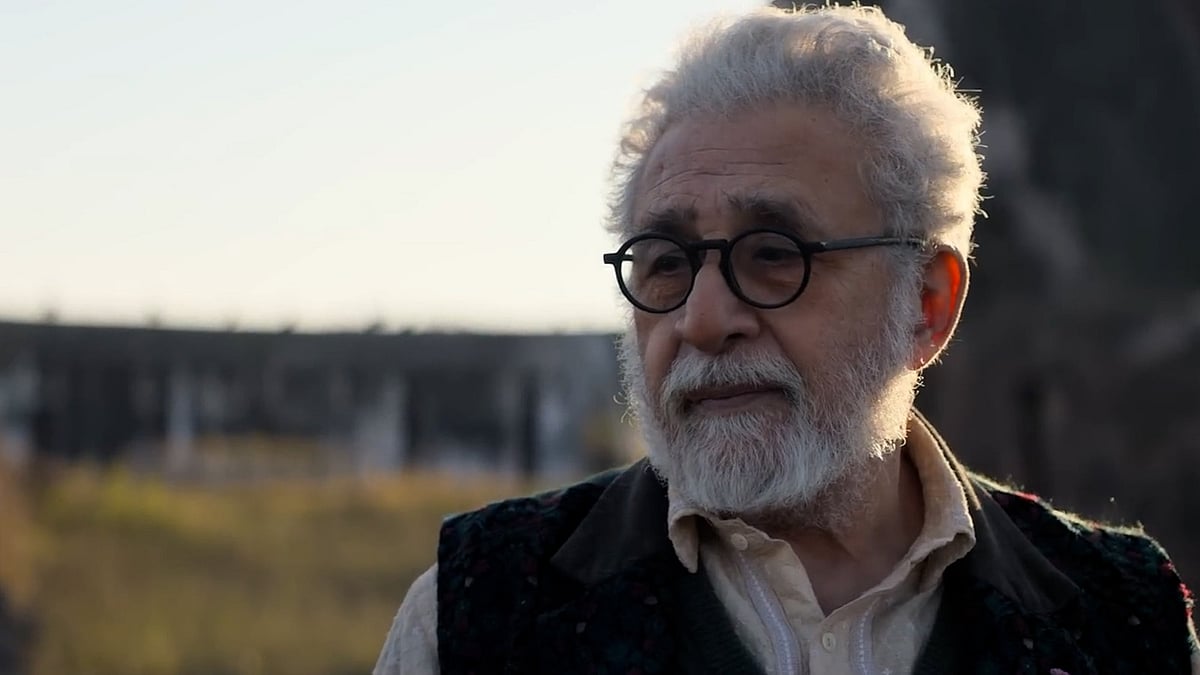
Veteran actor Naseeruddin Shah was disinvited from the Jashn-e-Urdu event organised by Mumbai University’s Urdu department, which was scheduled for 1 February. The university informed Shah on the night of 31 January that he need not attend, without providing a reason. The event proceeded without his participation, and the university announced to attendees that Shah had refused to be present.
According to Deccan Herald, Shah expressed disappointment over the disinvitation, stating that teaching and engaging with students had been among the most rewarding experiences of his career. He questioned the university’s decision and linked it to his public criticism of the current political climate, noting that the official reason for his exclusion was not explicitly stated.
As reported by coverage revealed, Shah was informed at the last minute that he was not required to attend, and the university subsequently told the audience that he had declined the invitation. Shah challenged university officials to produce any statement in which he had spoken against the country, emphasising his commitment to mentoring students and participating in their growth.
He further stated, “This is not the country I grew up in and was taught to love. The ‘thought police’ and ‘doublespeak’ have been deployed in full force, as has surveillance.”
In addition, further analysis indicated that Shah’s criticism extended to broader issues, including the treatment of student activists, the rewriting of history, and the prevalence of hate speech. He questioned, “Just how long can this hatred be sustained?” and drew parallels to George Orwell’s 1984, referencing the expectation to praise the “great leader.”
“Sure, I have never praised the self-proclaimed ‘Vishwaguru’. In fact, I have been critical of the way he conducts himself. His narcissism offends me and I haven’t been impressed by a single thing he’s done in 10 years,” Shah wrote.
At the start of February, reporting indicated that the disinvitation has prompted discussion about academic freedom and the space for dissent in Indian universities. Shah’s statements have been widely circulated, with commentators noting the implications for freedom of expression and the responsibilities of educational institutions.
Shah’s experience at Mumbai University follows other recent cancellations of academic and cultural events, raising concerns about the autonomy of universities and the influence of external pressures as details emerged.
Note: This article is produced using AI-assisted tools and is based on publicly available information. It has been reviewed by The Quint's editorial team before publishing.