Manipur Protests Intensify Over Kuki-Zo MLAs Joining State Government
Protests intensify in Manipur’s hill districts over Kuki-Zo MLAs joining the state government.
advertisement
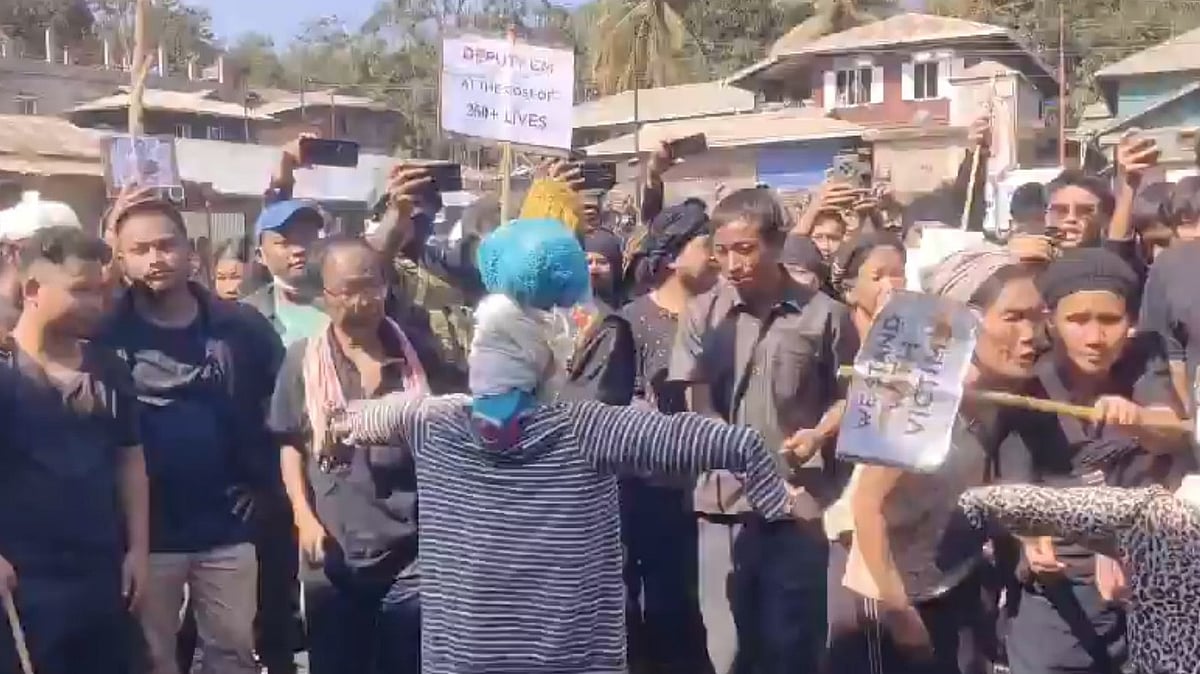
Protests escalated in Manipur’s hill districts on 6 and 7 February 2026, as Kuki-Zo groups demonstrated against three Bharatiya Janata Party (BJP) legislators from their community who joined the new state government. The demonstrations included a 24-hour shutdown in Churachandpur and other Kuki-Zo areas, effigy burnings, and calls for a social boycott of the MLAs. The unrest followed the MLAs’ participation in the formation of a government led by Yumnam Khemchand Singh.
According to The Hindu, the shutdown was enforced by the Kuki Students’ Organisation and supported by several other groups. Effigies of Deputy Chief Minister Nemcha Kipgen, former Director General of Police L. M. Khaute, and MLA Ngursanglur Sanate were burned at a public rally in Churachandpur. The Kuki-Zo Council, representing the community, stated that the protests reflected “deep anguish, anger, and collective rejection” of the MLAs’ actions.
As reported by The Indian Express, Ngursanglur Sanate, one of the MLAs facing boycott, explained that joining the government was intended to advance the peace process and address the suffering of displaced people. He emphasised that the decision was made in consultation with his constituents and not as an act of surrender. Sanate stated, “For any problem, the solution has to be arrived at at the table, not by guns, not by fighting and killing. And we have to be part of that table.”
In Churachandpur district’s B. Vengnom village, locals publicly supported four other Kuki-Zo MLAs who did not join the government, as coverage revealed. The majority of the Kuki-Zo community has demanded that their MLAs refrain from joining the state government until the central government considers their request for a separate Union Territory-like administration.
“The overwhelming participation of the people reflects the deep anguish, anger, and collective rejection of the actions of those Kuki-Zo MLAs who have chosen to join the formation of the Manipur government, in complete disregard of the people’s sentiments, collective resolutions, and the immense suffering endured by our community,” the Kuki-Zo Council stated.
Security concerns were also raised, with the Indigenous Tribes Advocacy Committee (ITAC) of Pherzawl and Jiribam districts warning against any attempt to intimidate or harm MLA Sanate. The ITAC described him as the “legitimate and constitutional representative” of their area, as analysis showed. The committee appealed for unity and cautioned against actions that could create animosity among tribal groups.
More than 260 people have been killed and approximately 62,000 displaced since the outbreak of ethnic conflict between the Kuki-Zo and Meitei communities in Manipur on 3 May 2023, as details emerged. The recent protests have further highlighted the divisions within the Kuki-Zo community and the ongoing demand for a separate administrative arrangement.
Political leaders have also commented on the situation. In New Delhi, Manipur’s Congress MP Angomcha Bimal Akoijam attributed the violence to “radical fringe elements” opposed to a peaceful resolution, according to reporting. He stated that such elements have obstructed efforts to restore normalcy since the ethnic violence began.
Sanate clarified, “We are supporting the government so that there can be a lasting solution and peace. We are not against the people.”
Internal differences within the Kuki-Zo community have become more visible, with some organisations rejecting the call for a social boycott and others supporting it, as further coverage indicated. The Zomi Council, for example, did not endorse the boycott, highlighting the complexity of community responses to the political developments.
Note: This article is produced using AI-assisted tools and is based on publicly available information. It has been reviewed by The Quint's editorial team before publishing.